
An emergency manager wants every Copilot draft to mark unverified field reports as preliminary. What should they configure?
Select an answer to reveal the explanation.
Short Explanation
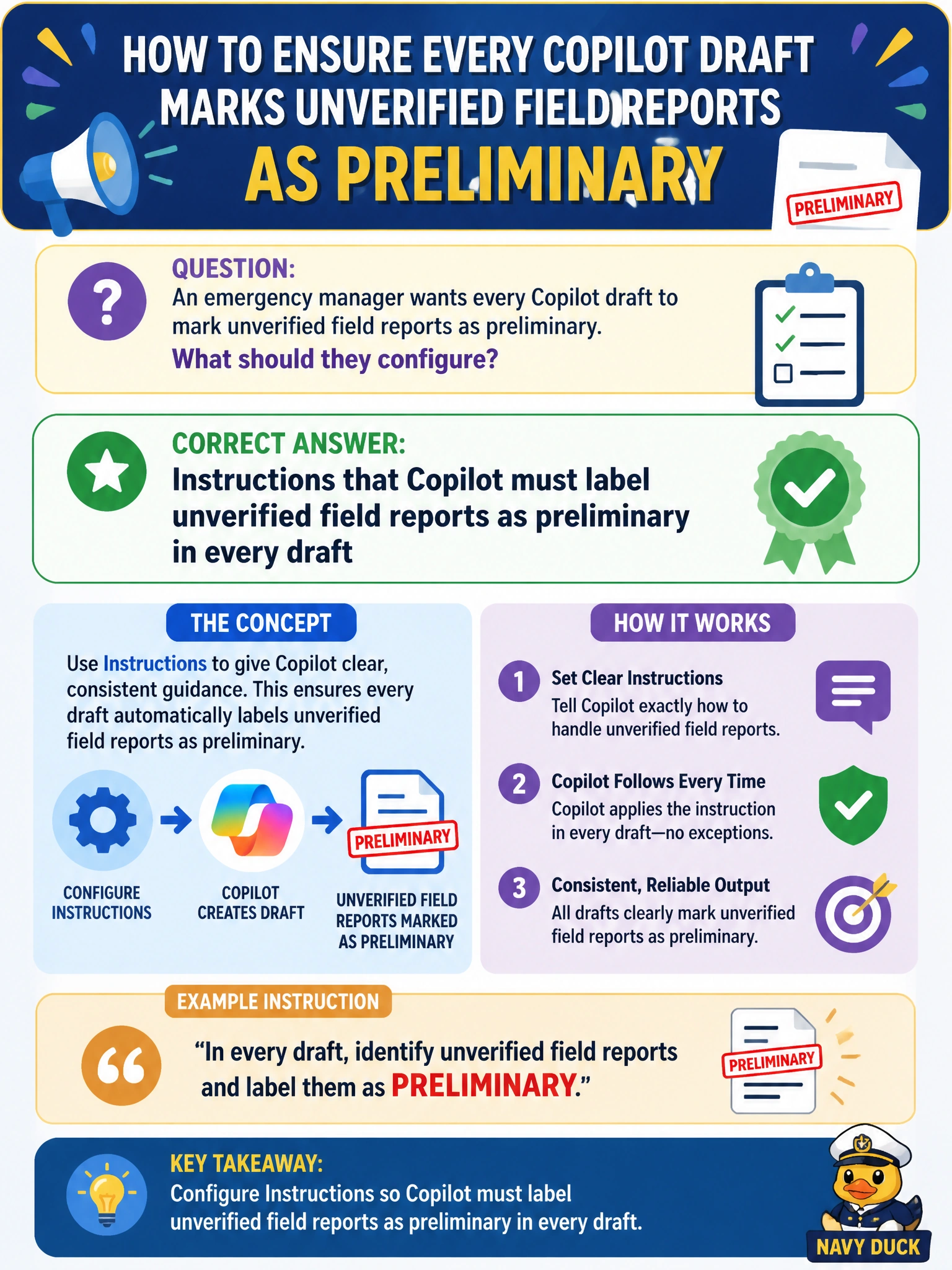
Unverified field chatter isn’t gospel—set instructions so Copilot labels those reports as preliminary in every draft. That’s how responsible communication norms stick.
Full Explanation
Emergency managers need drafts that preserve epistemic humility when field reports are unverified. Configuring instructions that Copilot must label unverified field reports as preliminary in every draft is correct because instructions encode a responsible communication norm across all future outputs. In municipal emergency operations, preliminary labeling prevents unverified sightings, damage claims, or casualty rumors from being presented as confirmed facts to leadership or the public.
A setting that presents unverified field reports as confirmed facts automatically fails truthfulness and can drive wrongful resource allocation or public panic. A rule to strip all uncertainty language from incident communications fails risk communication; uncertainty markers are often exactly what decision-makers need. An instruction to publish raw unverified reports to the public without review fails release control and can spread harmful misinformation.
Exam caveat: labeling content preliminary does not remove the duty to verify, escalate, or correct reports—instructions shape wording, while ops processes still confirm or retire claims. Operational check: add the preliminary-label instruction, test a draft that mixes verified and unverified inputs, confirm only unverified items are marked preliminary, and keep public release behind human review even after labels are applied.