
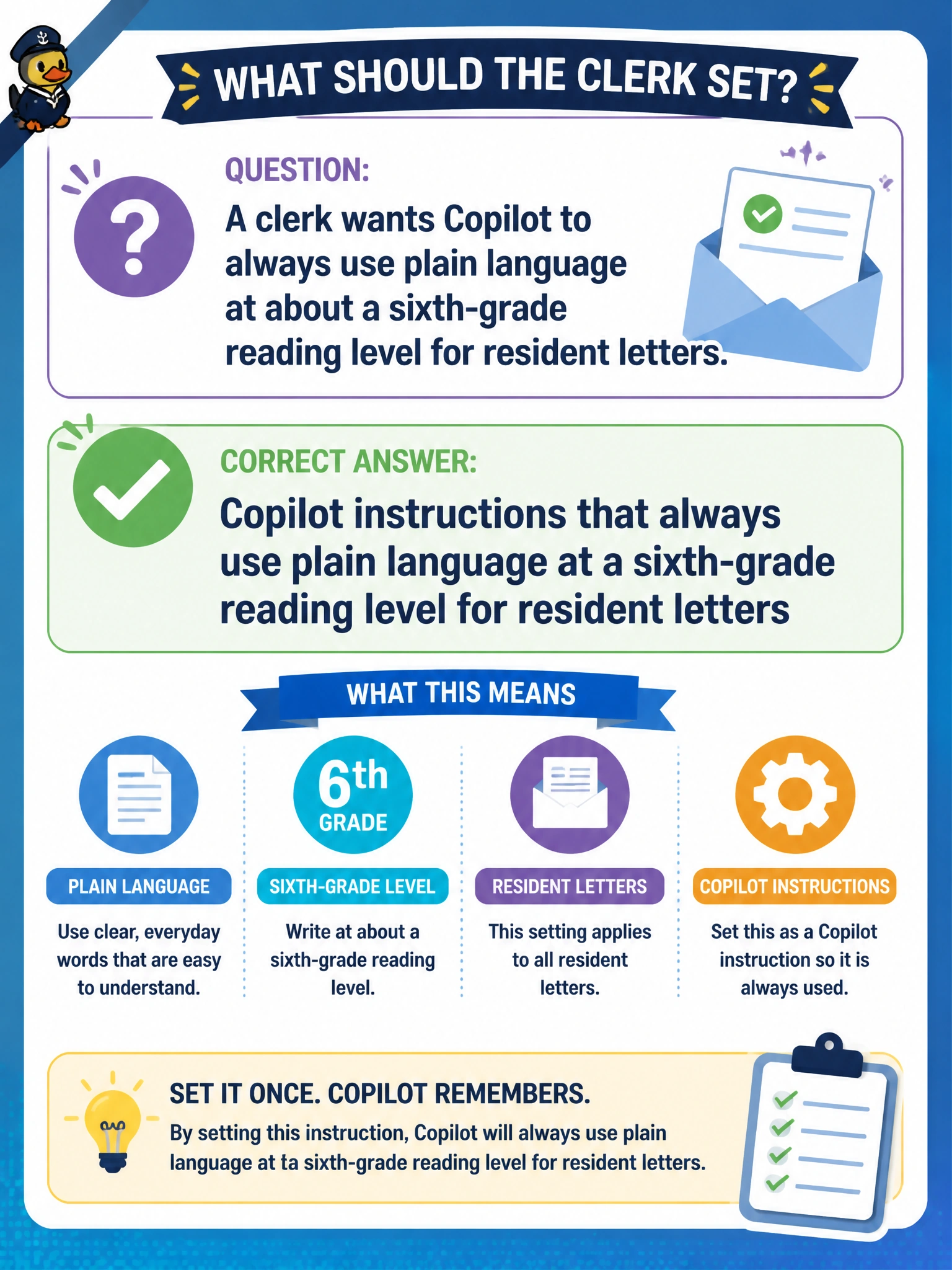
A clerk wants Copilot to always use plain language at about a sixth-grade reading level for resident letters. What should they set?
Select an answer to reveal the explanation.
Short Explanation
Tired of re-explaining “keep it simple” every time? Set Copilot instructions for plain language at about a sixth-grade level on resident letters. Standing instructions shape ongoing behavior.
Full Explanation
Resident-facing letters improve when plain-language expectations are durable rather than re-explained every prompt. Setting Copilot instructions that always use plain language at about a sixth-grade reading level for resident letters is correct because instructions encode standing drafting behavior across sessions. Municipal clerks and program staff serve diverse literacy needs; consistent plain language reduces confusion about fees, deadlines, hearings, and benefits.
Setting nothing and hoping each one-off prompt remembers the reading-level preference fails persistence; one-off prompts do not reliably become ongoing policy for the assistant. A rule that every letter must include medical diagnoses pulled from case files fails privacy and relevance—most resident letters have no lawful or operational need for diagnoses. Instructions that force legal jargon denser than the current ordinance text fail the plain-language goal and actively harm comprehension.
Exam caveat: plain-language instructions shape style but do not authorize omitting legally required notices, rights, or appeal language when statute or ordinance mandates specific wording. Operational check: save the sixth-grade plain-language instruction, generate a sample letter, verify required legal elements remain present, and spot-check readability before the template is used at scale.