
After a city attorney’s scheduling meeting, counsel needs what was agreed about hearing dates. What should they ask Copilot?
Select an answer to reveal the explanation.
Short Explanation
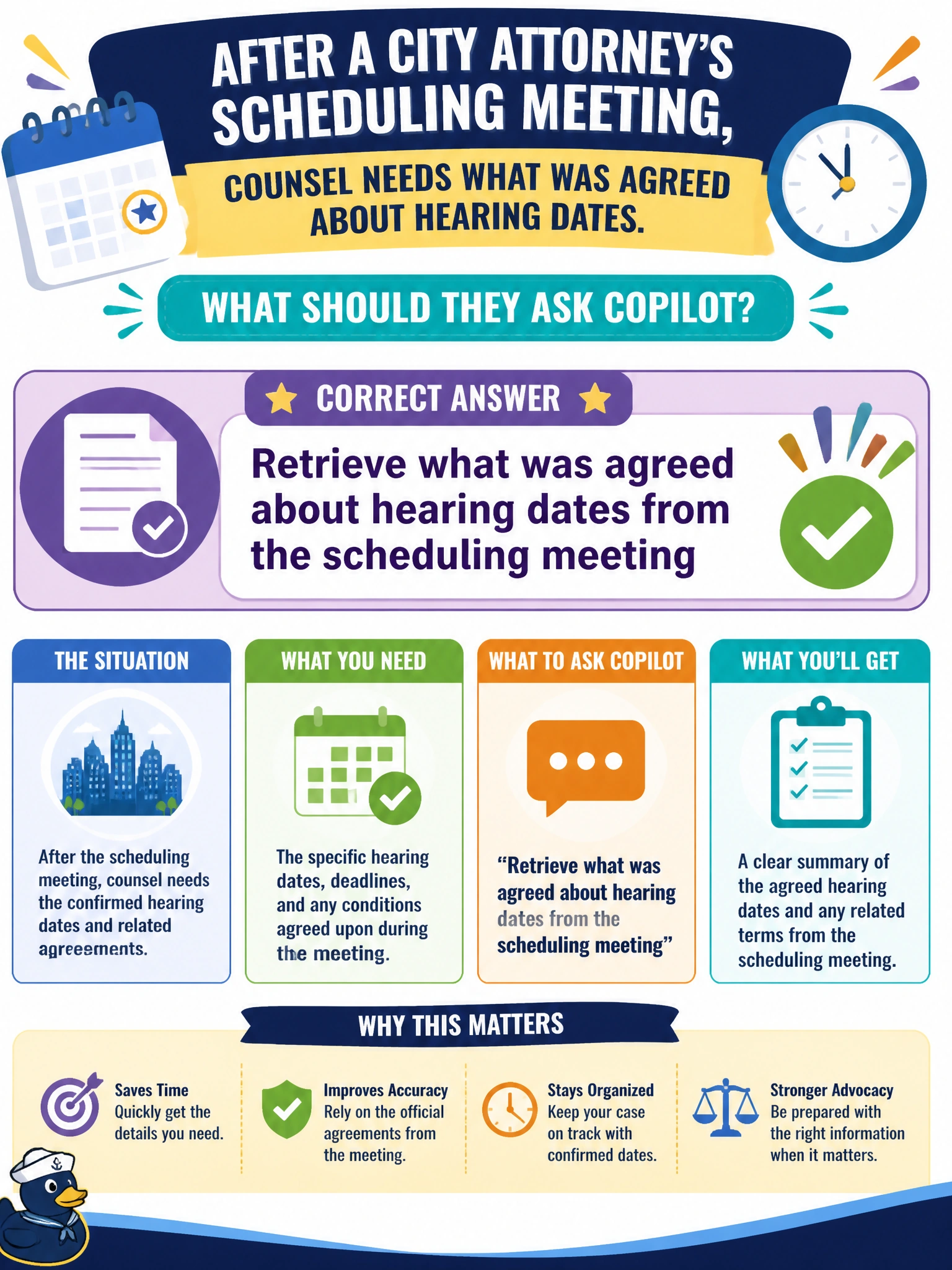
Need the deal on hearing dates? Ask Copilot to pull what was agreed in the city attorney’s scheduling meeting. You’re retrieving decisions, not making new ones up.
Full Explanation
After a city attorney’s scheduling meeting, counsel needs faithful retrieval of agreements—not improvisation. Asking Copilot to retrieve what was agreed about hearing dates from the scheduling meeting is correct because Meeting Copilot can surface decisions and commitments already stated in the session, helping attorneys and aides reconstruct calendaring without replaying the entire call. In municipal legal operations, accurate hearing-date agreements drive clerk notices, witness coordination, and continuance strategy; retrieving the spoken agreement keeps the AI use case aligned to memory and search rather than invention.
Ignoring the meeting and inventing hearing dates that fit the attorney’s calendar fails because fabricated dates are not court-aligned reality and can create missed appearances or unauthorized schedule changes. Publishing sealed case strategy notes from the call to an open SharePoint site fails privilege and access control. Strategy discussed in counsel meetings is often confidential; opening it broadly risks waiver and opposing-party exposure. Asking Copilot to cancel all hearings without confirming with the court clerk fails process authority. Copilot cannot unilaterally cancel dockets; cancellations require proper court and clerk procedures.
Exam caveat: retrieved meeting content can be incomplete or mis-attributed, so hearing dates pulled by Copilot must be confirmed against the clerk’s calendar or official notice before anyone relies on them externally. Operational check: cross-check Copilot’s retrieved dates with the scheduling notes and court docket, confirm who owns each filing or continuance action, and keep sealed strategy out of any broadly shared retrieval summary.