
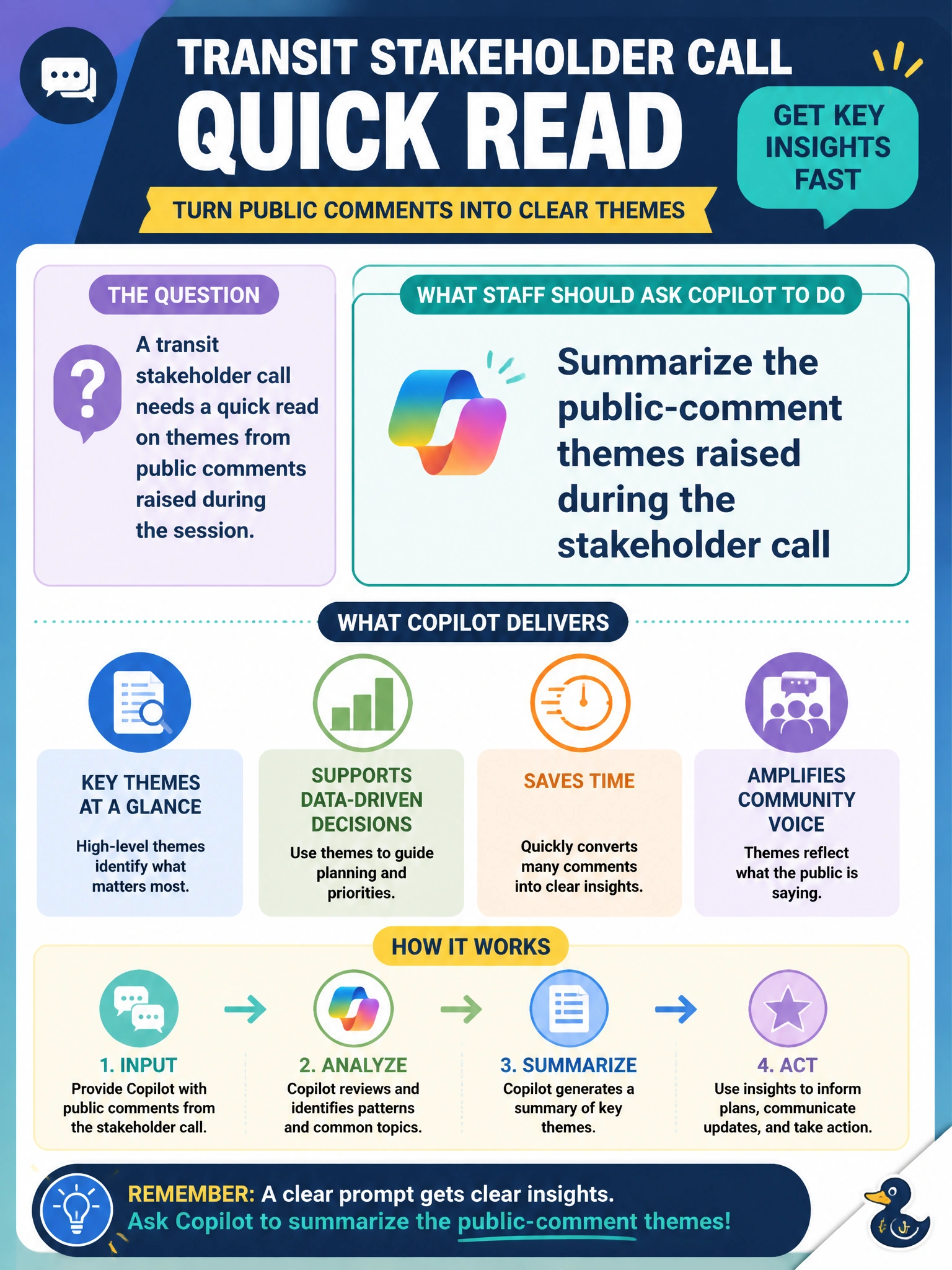
A transit stakeholder call needs a quick read on themes from public comments raised during the session. What should staff ask Copilot to do?
Select an answer to reveal the explanation.
Short Explanation
Think of Copilot as a highlighter for the meeting: ask it to summarize the public-comment themes from the transit stakeholder call. You’re capturing what people actually said, not rewriting history.
Full Explanation
In a transit stakeholder session, Meeting Copilot’s highest-value use is turning spoken public comment into a usable theme summary so staff can brief leadership and track follow-ups without rewatching the full recording. Asking Copilot to summarize the public-comment themes raised during the call is correct because it stays grounded in what riders and advocates actually said, preserves the municipal duty to listen, and produces an artifact the team can verify against the transcript or recording. Theme extraction is an assistive synthesis task: it clusters recurring concerns (service frequency, safety, fare equity, accessibility) and surfaces minority but material points so they are not lost in volume.
Deleting the meeting recording so public comments cannot be reviewed later fails on records and accountability grounds. Stakeholder input often becomes part of the public process; destroying the source prevents verification, undermines trust, and may conflict with retention rules. Inventing supportive comments that were never spoken to “balance the record” is fabrication. Copilot must not invent speech; stuffing false praise into the record misrepresents the public and can taint later policy decisions. Emailing every rider’s home address listed in the chat to the media fails on privacy and disclosure. Chat participants’ personal contact data are not a press kit; releasing them without authorization creates harm and legal exposure.
Exam caveat: summarization is not automatic adoption of every comment as policy, and Copilot themes still need human review for accuracy, attribution, and sensitivity before they appear in council packets or public replies. Operational check: after generating the theme digest, spot-check two or three themes against the recording, confirm no personally identifiable rider data leaked into the summary, and route the verified digest to the assigned follow-up owners with clear next steps.