
A public-health director wants a management summary that highlights risks and actions in an after-action report. What should they request?
Select an answer to reveal the explanation.
Short Explanation
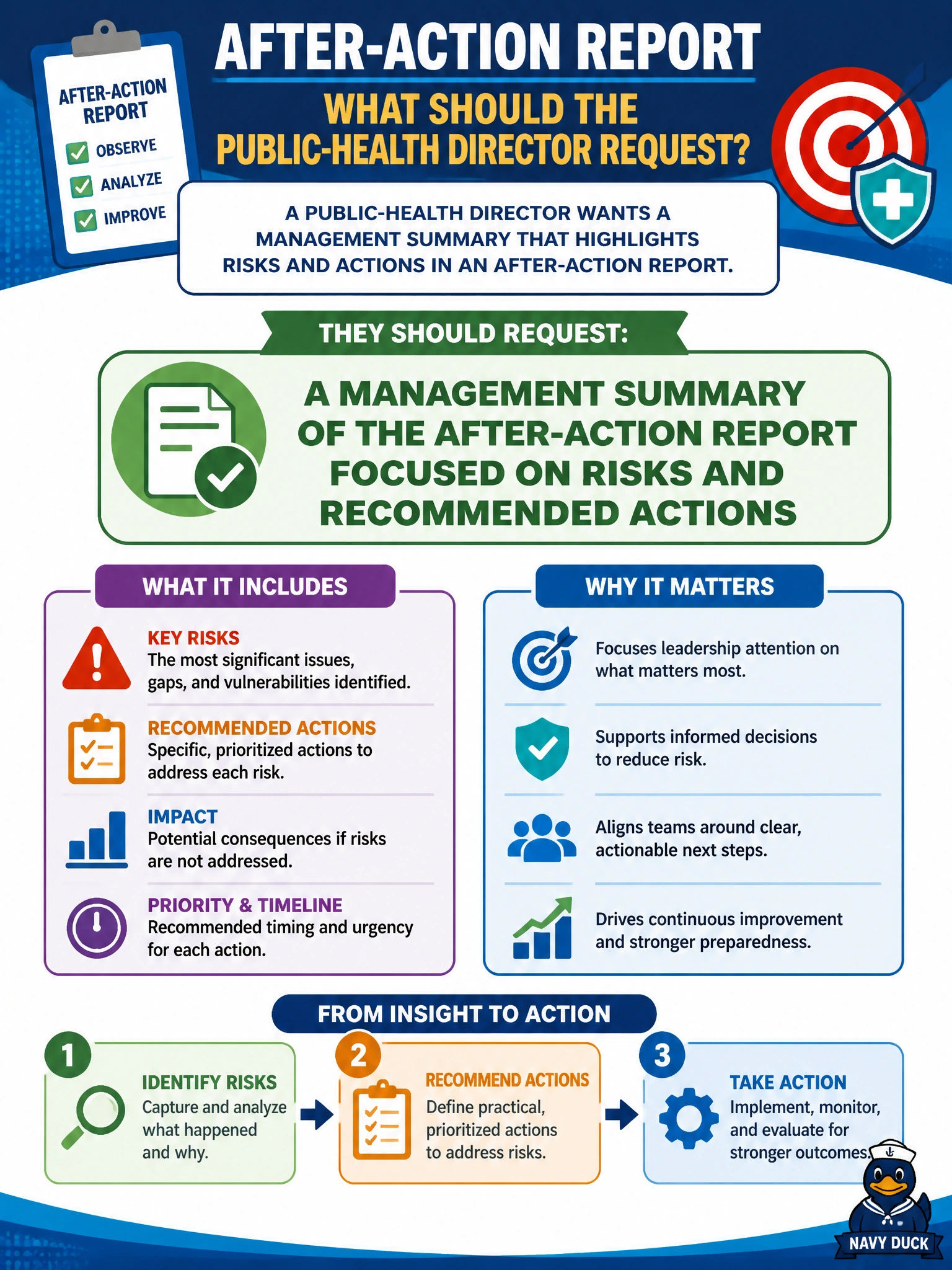
Directors need risks and next steps, not a victory lap—ask Copilot for a management summary of the after-action report that surfaces risks and actions. Keep patient identifiers out.
Full Explanation
After-action reports exist to surface what went wrong and what to fix. A public-health director should request a management summary of the after-action report focused on risks and recommended actions so leadership can prioritize remediation. That framing keeps Copilot’s summary decision-useful rather than ceremonial, while still requiring humans to protect patient privacy and validate that listed actions actually appear in the source report.
A rewrite that hides all risks so the summary only lists successes fails learning and accountability—after-action value is lost if risks are buried. A summary that invents corrective actions never listed in the after-action report fails traceability and can assign work nobody owned. A full dump of protected patient identifiers into the management briefing fails HIPAA-style and municipal privacy duties.
Exam caveat: when the stem stresses risks and actions in an after-action report, choose a risk-and-action management summary—not a sanitized success-only rewrite, invented actions, or PHI dumps.
Operational check: summarize risks and recommended actions present in the after-action report only, strip patient identifiers, confirm owners and due dates with program leads, and file the summary with the source report for continuous-improvement tracking.