
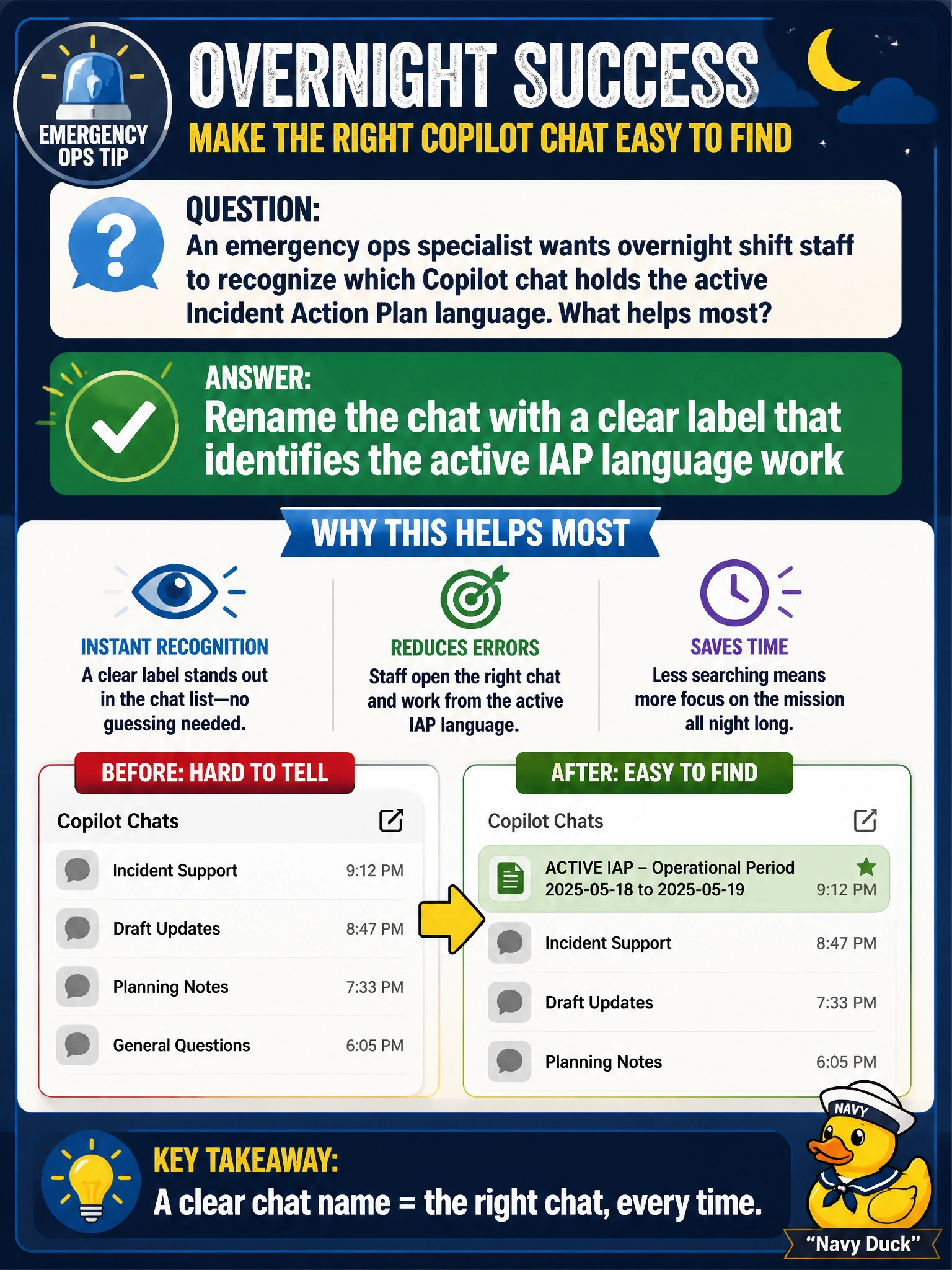
An emergency ops specialist wants overnight shift staff to recognize which Copilot chat holds the active Incident Action Plan language. What helps most?
Select an answer to reveal the explanation.
Short Explanation
Overnight crews shouldn’t play hide-and-seek with IAP wording—give that chat a clear name. A labeled thread is like tagging the live binder on the ops desk.
Full Explanation
Multi-shift emergency operations depend on shared recognition of the live work product. The correct practice is to rename the Copilot chat with a clear label that identifies the active Incident Action Plan (IAP) language so overnight staff can open the right thread immediately. A named IAP conversation reduces duplicate drafting, prevents stale language from being treated as current, and supports continuity when municipal emergency specialists hand off between shifts.
Leaving the default untitled chat fails because each shift must then search by first-message time or skim content, which is unreliable under time pressure. Renaming to a single letter fails by concept: extreme brevity removes meaning and does not tell overnight crews that the thread holds active IAP language. Asking every shift to start a brand-new untitled chat fails continuity—fragmented threads scatter decisions, break version sense, and force staff to reconstruct which wording is authoritative.
Exam caveat: a clear chat name marks the active language workspace; it does not replace official IAP document control, ICS approvals, or the incident’s system of record. Treat the Copilot thread as drafting support unless local policy designates it otherwise.
Operational check: rename the live IAP language chat with an unmistakable label, verify overnight staff can identify it from the history list without opening other threads, and include the naming rule in the shift handoff checklist so new operators do not create competing untitled chats.