
A housing worker exported the final approved resident letter into the case file and no longer needs the Copilot drafting chat. What action fits that lifecycle?
Select an answer to reveal the explanation.
Short Explanation
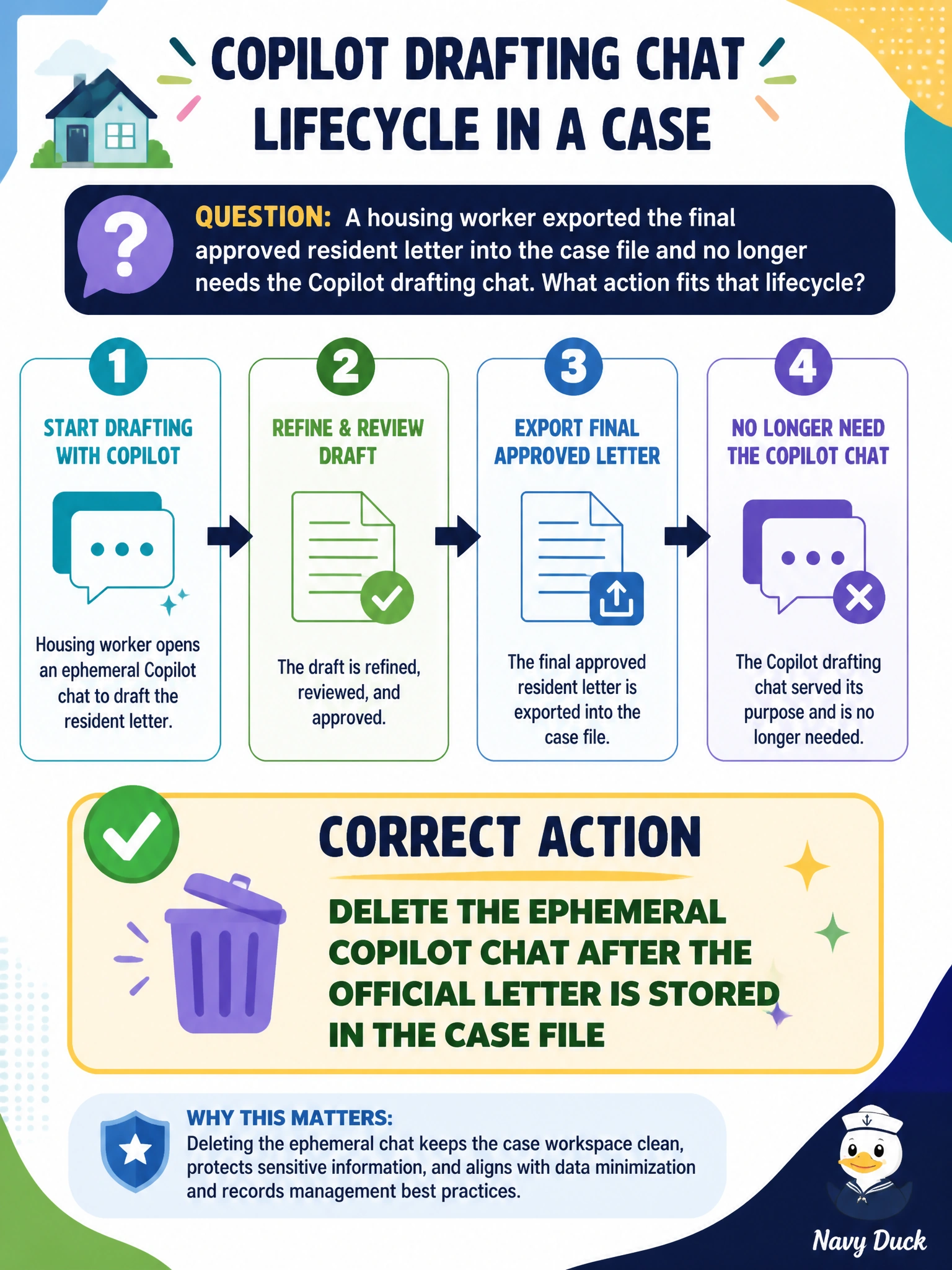
Official letter’s in the case file—now you can drop the scratch chat. Keep the record where records belong, and delete the ephemeral drafting thread when it’s done.
Full Explanation
A housing worker who exported the final approved resident letter into the case file and no longer needs the Copilot drafting chat should delete the ephemeral Copilot chat after the official letter is stored in the case file. This matches a sound municipal lifecycle: the system of record holds the approved letter; the Copilot thread was a drafting aid whose intermediate sensitive iterations need not remain in chat history indefinitely once the official artifact is filed.
Leaving sensitive draft iterations in chat forever with no further management increases unnecessary exposure of in-progress resident wording. Emailing the entire chat transcript to an unmonitored public distribution list fails confidentiality catastrophically. Replacing the case-file letter with an unsaved chat snippet as the only record fails records integrity—the case file letter is the official artifact, not a transient chat fragment.
Exam caveat: delete the ephemeral drafting chat only after confirming the approved letter is correctly stored in the case file and that retention rules do not require keeping the chat. If legal hold applies, follow counsel guidance before deletion.
Operational check: verify the final letter is in the case file with correct version and approval marks, delete the Copilot drafting thread, confirm resident-sensitive draft text no longer appears in chat search, and continue casework from the official file.