
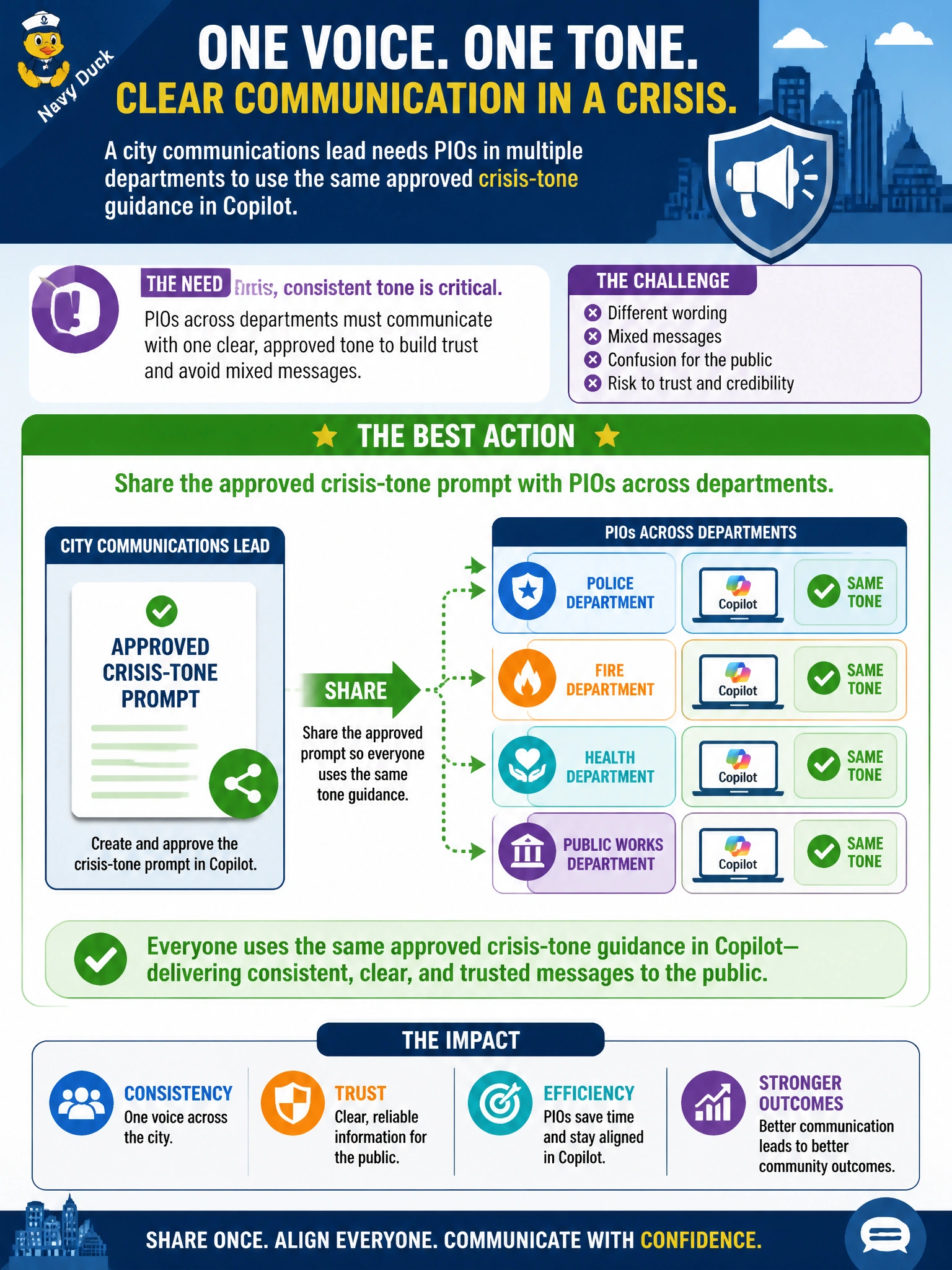
A city communications lead needs PIOs in multiple departments to use the same approved crisis-tone guidance in Copilot. What action best supports that?
Select an answer to reveal the explanation.
Short Explanation
Crisis tone can’t be a secret handshake in one office. Share the approved prompt with PIOs across departments so everyone pulls from the same playbook.
Full Explanation
A city communications lead who needs PIOs in multiple departments to use the same approved crisis-tone guidance in Copilot should share the approved crisis-tone prompt with PIOs across departments. Cross-department sharing of a single approved prompt creates a common playbook for urgency markers, empathy language, speculation bans, and pointers to official channels during incidents. That alignment matters in municipal crises when parks, transit, police, and utilities PIOs may all speak within hours of each other.
Keeping the crisis-tone prompt private so only one PIO can ever open it fails multi-department coordination and creates a single point of failure. Emailing crisis drafts to personal Gmail accounts outside the city’s tenant fails security and records control—crisis work belongs in the city Microsoft 365 tenant under policy. Requiring each department to invent conflicting crisis tone rules from scratch guarantees inconsistent public messaging under stress.
Exam caveat: sharing an approved tone prompt standardizes voice; it does not authorize release of unverified incident facts. PIOs must still clear operational details with incident command, and the shared prompt should forbid fabrication of casualty counts, shelter capacities, or closure lists.
Operational check: distribute the prompt to the PIO distribution group inside the tenant, run a tabletop prompt test across two departments, and confirm both outputs follow the same tone rules and escalation-to-official-source language before the next exercise or real event.