
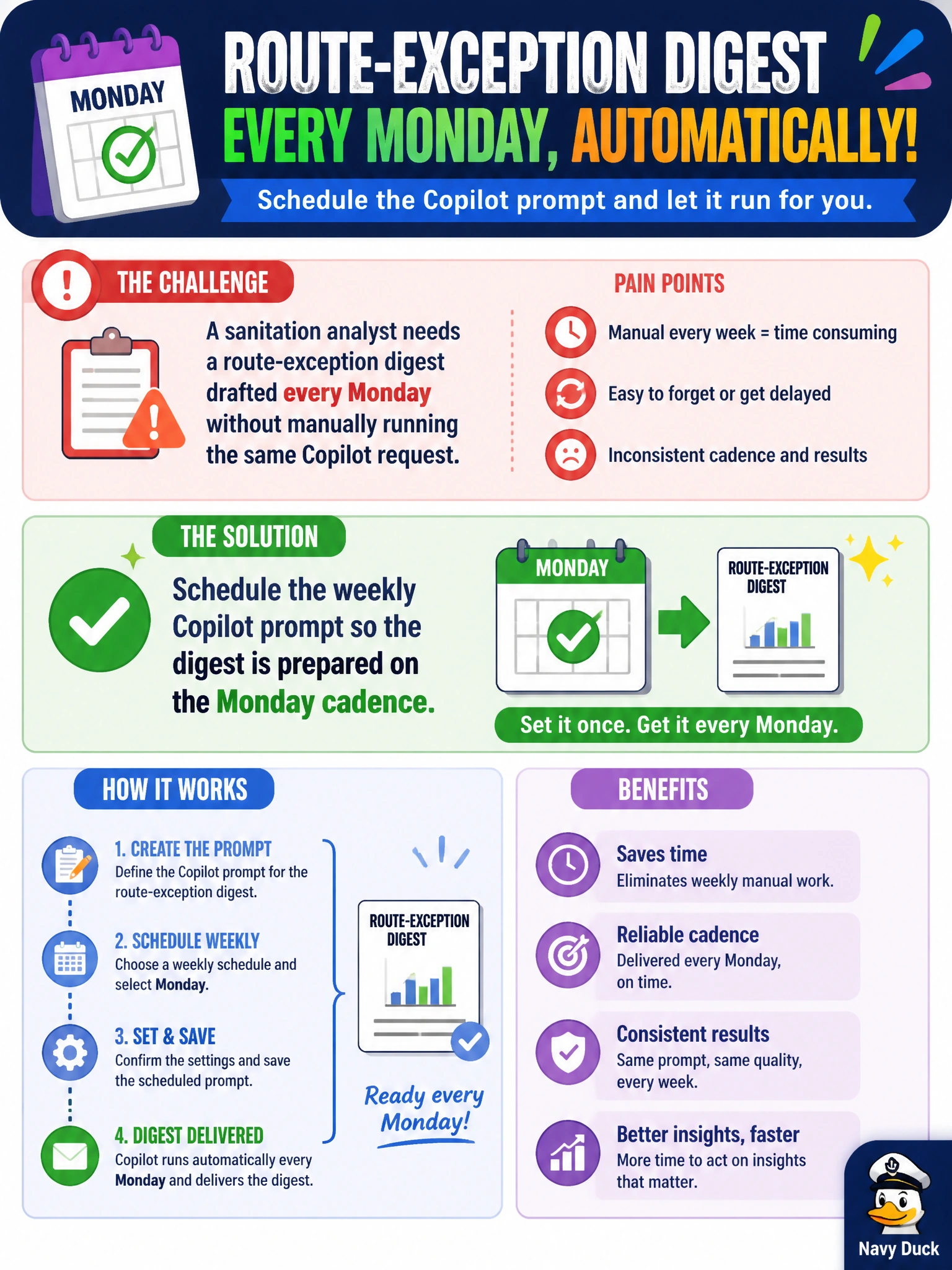
A sanitation analyst needs a route-exception digest drafted every Monday without manually running the same Copilot request. What should the analyst do?
Select an answer to reveal the explanation.
Short Explanation
Same digest, same Monday—you don’t have to babysit it. Schedule the prompt so Copilot prepares the route-exception draft on your weekly rhythm, like a recurring reminder for the truck board.
Full Explanation
A sanitation analyst who needs a route-exception digest every Monday should schedule the weekly Copilot prompt to prepare the digest on that cadence. Scheduling makes a repetitive reporting task calendar-driven: the same validated instructions run each week, producing a draft for operations review without requiring you to relaunch the prompt. This supports consistent Monday visibility into missed stops, weather delays, and temporary barriers for dispatch and supervisory follow-up. Running the prompt once in January and never revisiting route exceptions fails because exceptions are continuous operational events, not a once-a-year snapshot. Saving the prompt as a mailbox draft and manually sending it to the route team each Monday still requires repeated manual action, so it does not meet the goal of avoiding the same request each week. Renaming an unrelated chat changes its name, not its delivery schedule, and therefore does not create recurring prompt runs. Exam caveat: a scheduled digest remains a draft for human review; verify exceptions against source route systems before acting, and adjust or pause schedules when holidays shift Monday operations. Practical check: test the Monday schedule with a sample exception extract, confirm the draft arrives before the morning operations huddle, and ensure it excludes resident PII beyond what digest policy allows.