
Budget analysts rewrite the same capital improvement plan (CIP) narrative instructions from scratch each cycle. What Copilot prompt action best reduces that wasted effort?
Select an answer to reveal the explanation.
Short Explanation
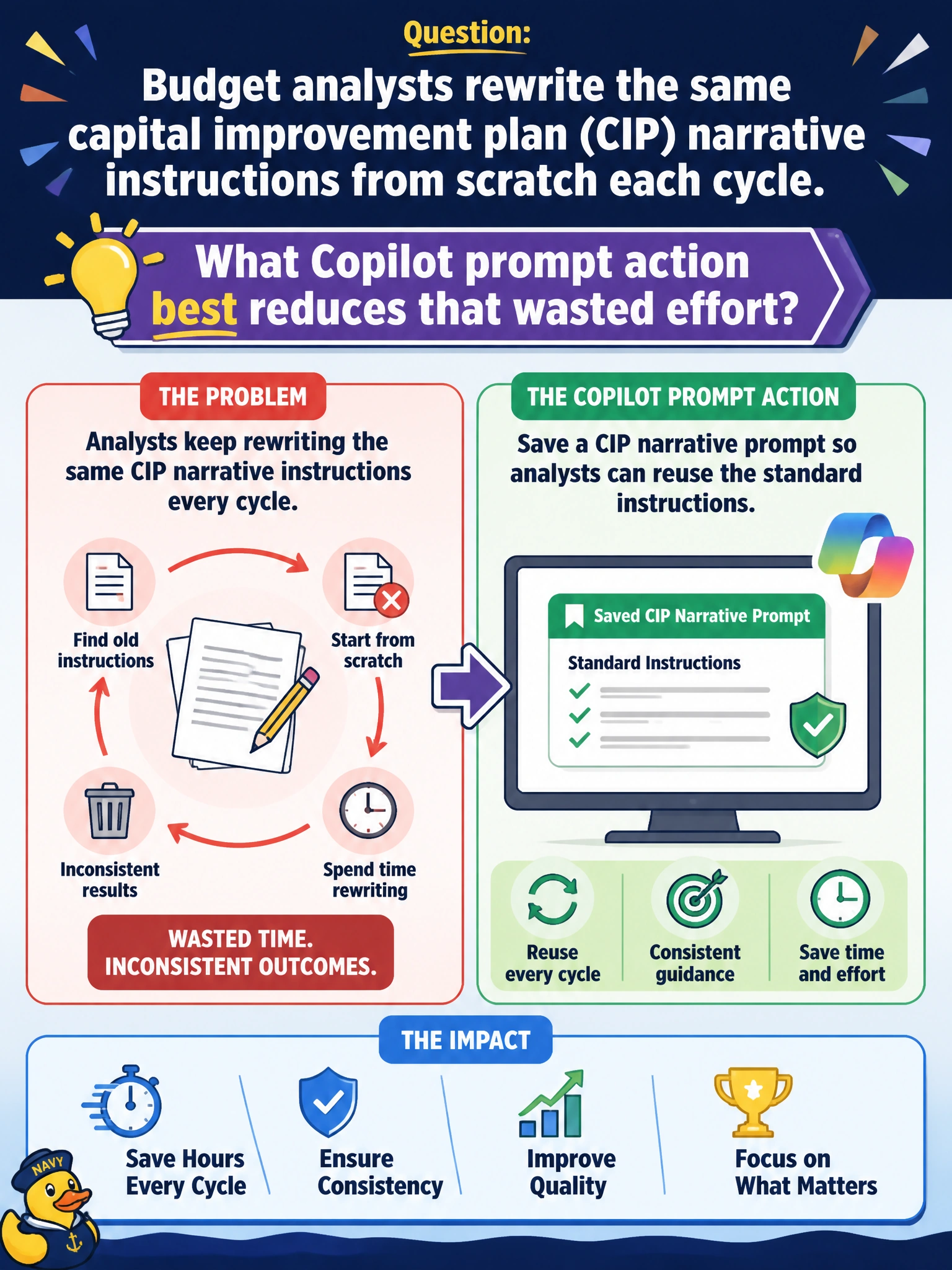
If everyone keeps retyping the same CIP narrative instructions, you’re burning hours. Save the prompt once—like keeping a standard memo template in the shared drawer—and reuse it each cycle.
Full Explanation
Budget analysts who rewrite the same capital improvement plan (CIP) narrative instructions from scratch each cycle waste effort that Copilot prompt reuse is designed to eliminate. The best action is to save a CIP narrative prompt so analysts can reuse the standard instructions—section order, fiscal-year framing, project-status language, risk caveats, and city style—without retyping the instruction block every budget cycle. A saved prompt becomes a shared procedural asset for the budget office, shortening cycle time and keeping CIP narratives aligned to the same professional structure across analysts.
Requiring every analyst to paste CIP numbers into a public social feed before drafting fails confidentiality and process: capital figures and internal narratives belong in controlled Microsoft 365 workspaces, not public social channels. Forbidding saving any prompt so each CIP cycle starts with a blank chat only fails efficiency and consistency; it institutionalizes rework. Replacing the CIP workbook with an unsigned personal scratch note as the only source fails data integrity—the narrative prompt must ground on authorized CIP workbooks and official figures, not informal personal notes.
Exam caveat: a saved CIP narrative prompt still depends on current authorized numbers; analysts must attach or reference the current-cycle workbook and never treat last year’s generated narrative as automatically still accurate. Distinguish prompt reuse (instruction persistence) from document version control of the CIP itself.
Operational check: at cycle kickoff, open the saved CIP narrative prompt, point it at the current-year CIP workbook excerpt, generate one sample project narrative, and have a senior budget analyst verify section order, disclaimer language, and figure fidelity before the team uses the prompt citywide.