
In a Copilot Studio multi-agent solution, the orchestrator agent collects the user's name and issue category before routing to a specialist agent. The specialist agent needs both pieces of information to provide a personalized response. How should the orchestrator pass this context to the specialist?
Select an answer to reveal the explanation.
Short Explanation and Infographic
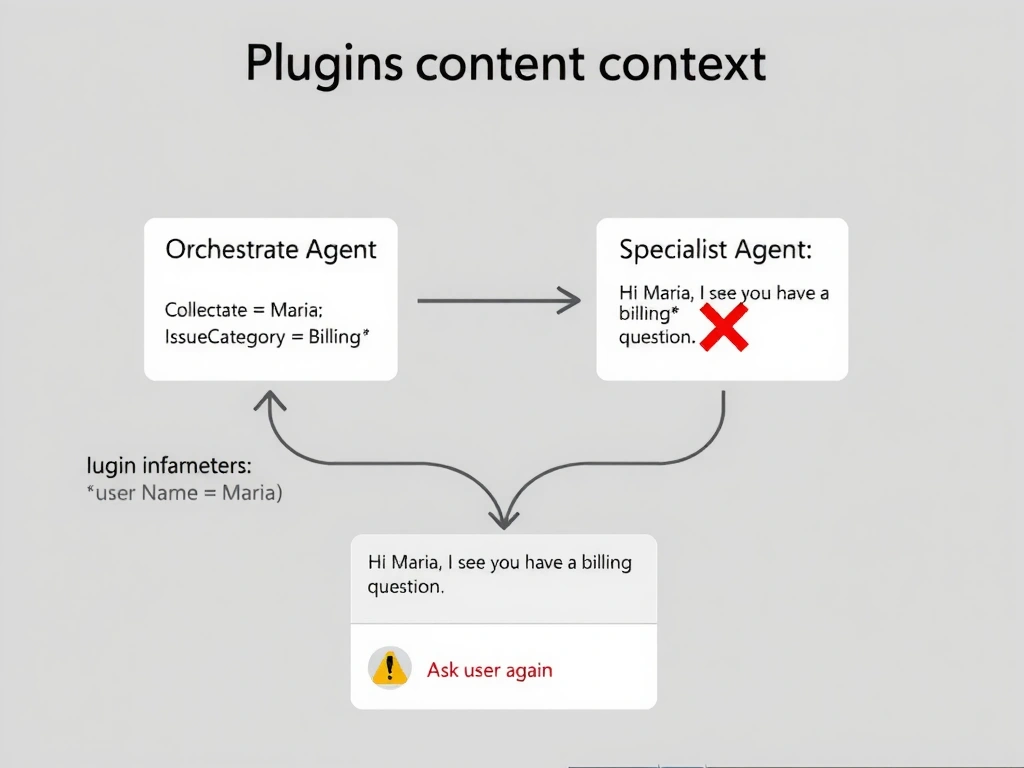
Passing context between agents is like a nurse handing off a patient chart to the specialist — structured, explicit, and complete. The orchestrator packages the context as input parameters when calling the specialist plugin. The correct answer is B.
Full explanation below image
Full Explanation
## Why B is Correct When the orchestrator invokes a specialist agent as a plugin/action, it can pass data as input parameters defined in the specialist's plugin interface. The orchestrator maps its collected variables (userName, issueCategory) to the specialist's input parameters before invoking. The specialist receives the pre-collected information and can immediately provide a personalized response without re-asking the user.
## Why the Distractors Are Wrong A (Global variables auto-inherited): Global variables are session-scoped to each agent instance. They are not automatically shared across agent boundaries in a multi-agent solution. Agents run in separate execution contexts.
C (Shared Dataverse table): Using a database for real-time context passing between agents in the same conversation adds unnecessary latency and complexity. Input parameters are the correct mechanism for synchronous, within-conversation context passing.
D (Ask user to re-state): Requiring users to repeat themselves is a poor experience and negates the benefit of the orchestrator collecting context upfront. This is an anti-pattern in multi-agent design.
## Exam Tip Context passing in multi-agent: Input parameters on the specialist plugin receive data from the orchestrator. Design the specialist's plugin interface with all the parameters the orchestrator needs to supply.