
A Copilot Studio topic calls a Power Automate flow to retrieve customer data. Sometimes the flow fails due to downstream API timeouts. The developer wants to display a user-friendly error message and offer to retry when the flow fails, rather than showing a generic system error. How should the developer implement this?
Select an answer to reveal the explanation.
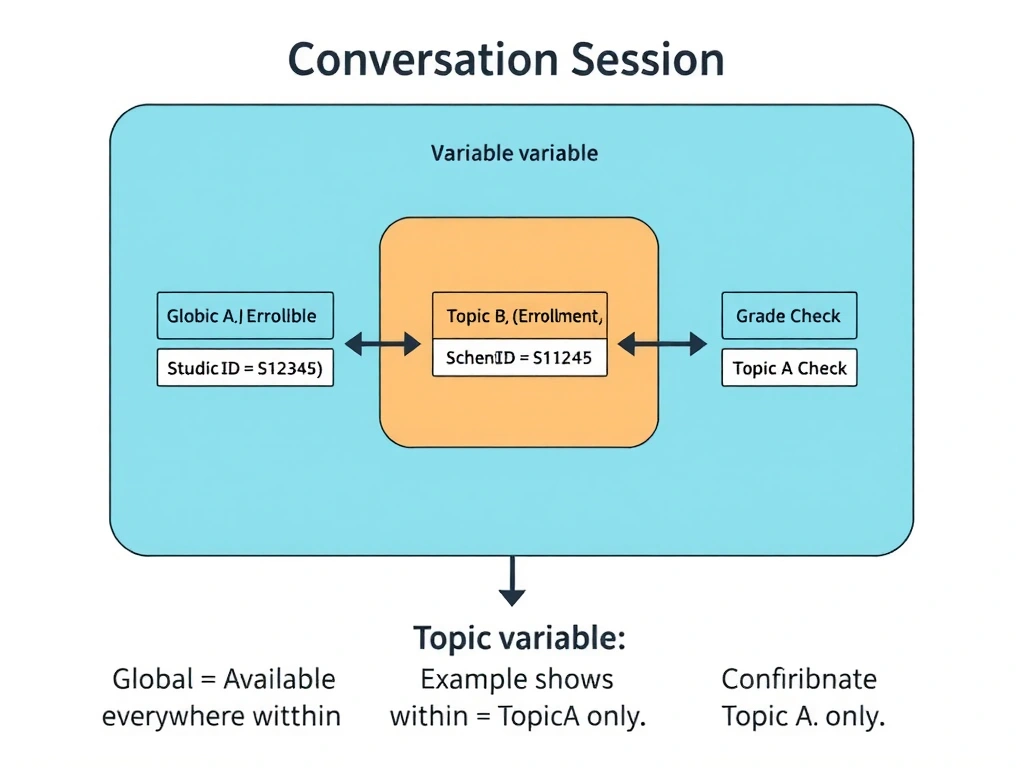
Short Explanation and Infographic
Check the flow's status output with a condition node after the call — branch to a friendly error message and retry button when it signals failure. That's your try-catch in Copilot Studio. Answer: B.
Full explanation below image
Full Explanation
Copilot Studio does not have native try-catch syntax, but flow error handling is achieved through the flow's return outputs combined with condition branching.
Option B is correct. The Power Automate flow is designed to catch its own errors (using 'Configure run after' settings or a try-catch pattern inside the flow) and return a status output — such as 'Success' or 'Error' — along with an error message string. In the Copilot Studio topic, after the flow action node, the developer adds a Condition node: if Topic.FlowStatus equals 'Error', route to an error handling path that displays a user-friendly message ('Sorry, we couldn't retrieve your data right now') and a 'Try Again' quick reply that redirects back to the flow call. The success path continues normally.
Option A is incorrect. Copilot Studio topic designer does not support try-catch block syntax. Power Fx is used for expressions in condition nodes, variable assignments, and Adaptive Card formulas — not for exception handling around action nodes.
Option C is incorrect. The 'On Error' system topic fires for unhandled system-level errors within topics themselves (like infinite redirect loops or topic configuration errors). It does not intercept flow invocation failures at the action level.
Option D is incorrect. There is no automatic fallback mechanism between sequential flow action nodes. If the first flow fails, the topic would proceed to the second flow call regardless, potentially compounding the error. Condition-based routing is required.