
A solution architect at Adatum Corporation is designing a Copilot Studio multi-agent system. She needs to choose between a 'vertical' multi-agent pattern (each agent handles one domain end-to-end) and a 'horizontal' pattern (a shared orchestrator routes all domains). When is the vertical pattern preferred?
Select an answer to reveal the explanation.
Short Explanation
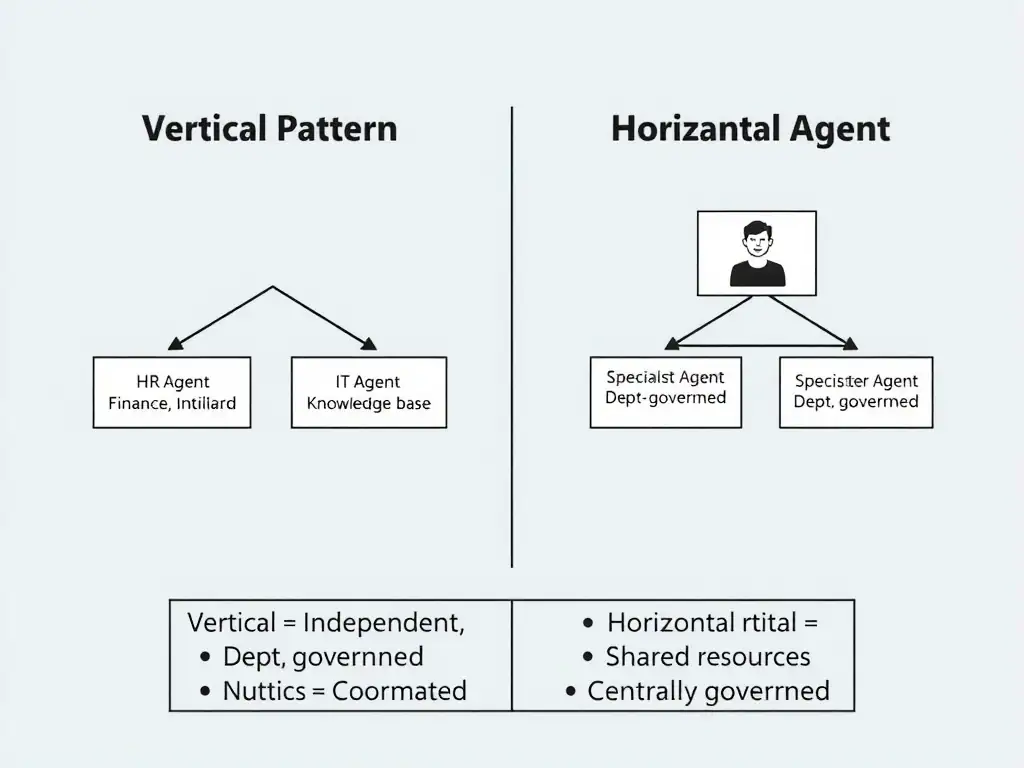
Vertical multi-agent means each agent is its own complete service — like separate department clinics vs. one central hospital. When departments have different audiences, governance, and content, separate agents keep complexity clean. The correct answer is B.
Full Explanation
## Why B is Correct The vertical pattern (multiple independent agents, one per domain) is preferred when: - Each department has its own governance team and release cadence - Audiences are distinct (e.g., HR agent for employees only, Sales agent for partners only) - Domain knowledge and topics do not overlap significantly - Department teams need autonomy to update their agent without impacting others
## Why the Distractors Are Wrong A (Overlapping domains, cross-domain questions): When users regularly ask questions that span multiple domains, a horizontal pattern with a single orchestrator is better — it can coordinate responses from multiple specialists in one conversation.
C (Same knowledge sources for all): Shared knowledge sources favor a horizontal approach where one orchestrator queries common knowledge. The vertical pattern would require each agent to separately configure the same knowledge source.
D (Single team, minimize environments): A desire to minimize environments and simplify management is an argument FOR the horizontal pattern (one orchestrator), not the vertical pattern (multiple independent agents).
## Exam Tip Vertical = autonomy and isolation per domain. Horizontal = coordination and shared resources. The exam may describe an organizational scenario and ask you to recommend the pattern.