
A company wants to deploy a Copilot Studio agent on their internal SharePoint intranet site accessible to 500 employees. The IT manager asks which licensing model applies to this scenario. Which statement correctly describes the licensing for internal users accessing a Copilot Studio agent embedded on SharePoint?
Select an answer to reveal the explanation.
Short Explanation
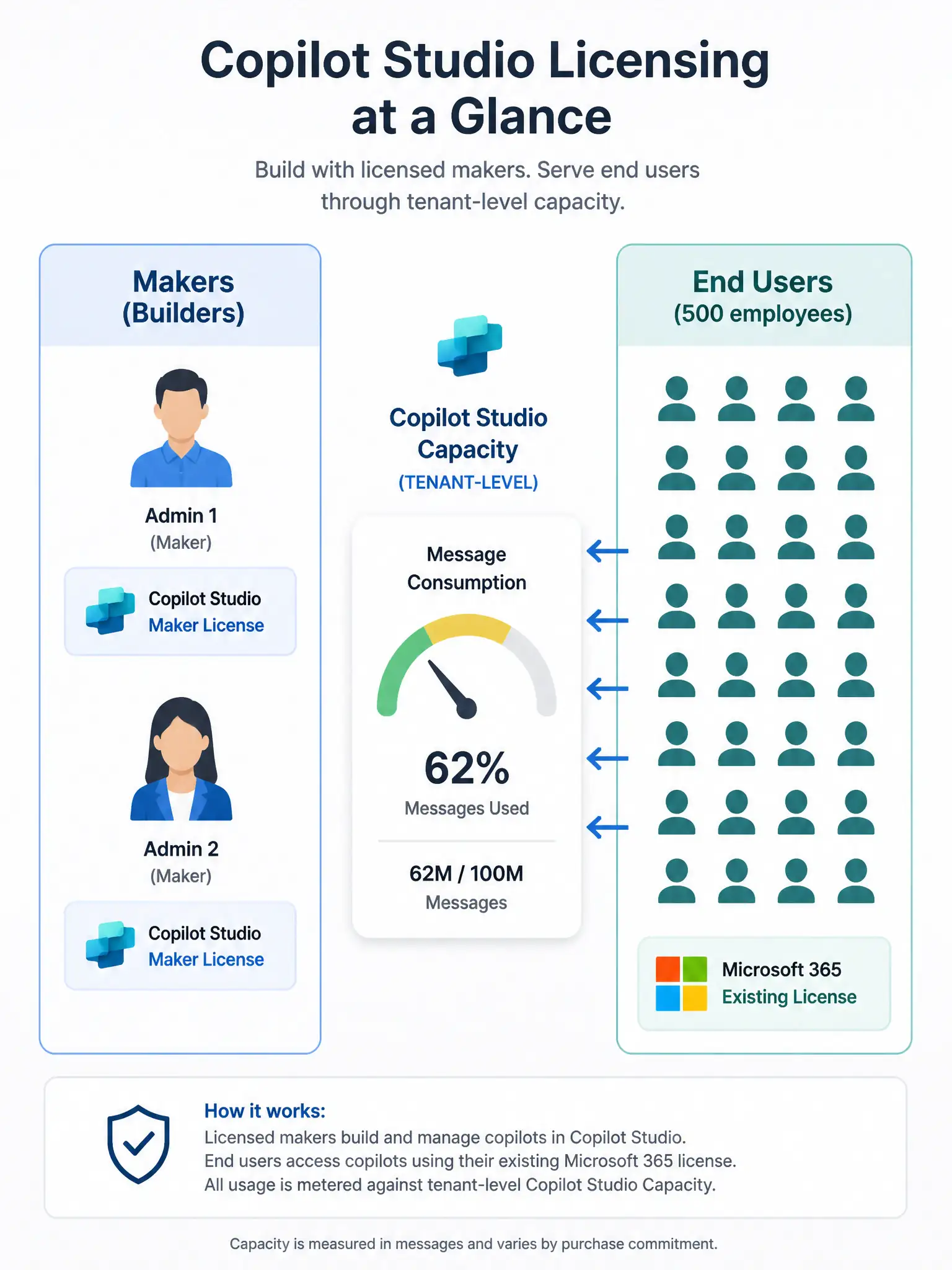
Copilot Studio bills at the tenant level with message capacity, so you buy capacity for the org and your Microsoft 365 users can chat with the agent without separate seats. You only need maker licenses for the people building and managing it.
Full Explanation
Copilot Studio licensing uses a consumption-based model at the tenant level, not a per-user seat model for end consumers.
The correct statement is the one saying the organization requires a Copilot Studio tenant license with sufficient message capacity, while individual users with Microsoft 365 licenses can interact without additional per-user seats. Organizations purchase a Copilot Studio capacity add-on, previously called Power Virtual Agents capacity, at the tenant level. This capacity is measured in messages or sessions depending on the SKU. Microsoft 365 licensed employees can interact with agents without needing individual Copilot Studio licenses, because the consumption charges are tracked against the tenant-level capacity purchase. The agent builders and administrators need Copilot Studio maker licenses, but not the end users.
The statement requiring each of the 500 employees to have an individual Copilot Studio per-user license is incorrect. End users do not need individual Copilot Studio per-user licenses to chat with an agent. Only the makers, meaning those who build and manage agents, require maker access licenses.
The statement saying no licensing is required because SharePoint Online is included in Microsoft 365 and covers all embedded agent interactions is incorrect. Microsoft 365 licensing does not include Copilot Studio agent interaction capacity. SharePoint Online being included in Microsoft 365 covers the SharePoint platform, not the AI agent interaction credits consumed when users chat with a Copilot Studio agent embedded on a SharePoint page.
The statement saying internal SharePoint agents are free as long as the agent does not call any Power Automate flows or external connectors is incorrect. There is no blanket 'free' tier for internal agents. Power Automate flow calls from agent topics consume flow runs, which have their own licensing, and connector calls are also subject to their respective licensing rules. The agent itself still requires message capacity regardless of whether flows are involved.
Exam tip: licensing awareness is tested. Distinguish between maker licenses, meaning who builds agents, and consumer capacity, meaning what it costs when users talk to agents.