
BlueStar Retail wants to deploy a Copilot Studio agent to a custom-built iOS and Android mobile app used by field sales representatives. The mobile app is built with React Native and is distributed through the company's MDM solution. The product manager asks whether the agent can display Adaptive Cards with interactive form controls inside the custom mobile app. Which statement about deploying Copilot Studio agents to custom mobile apps is accurate?
Select an answer to reveal the explanation.
Short Explanation
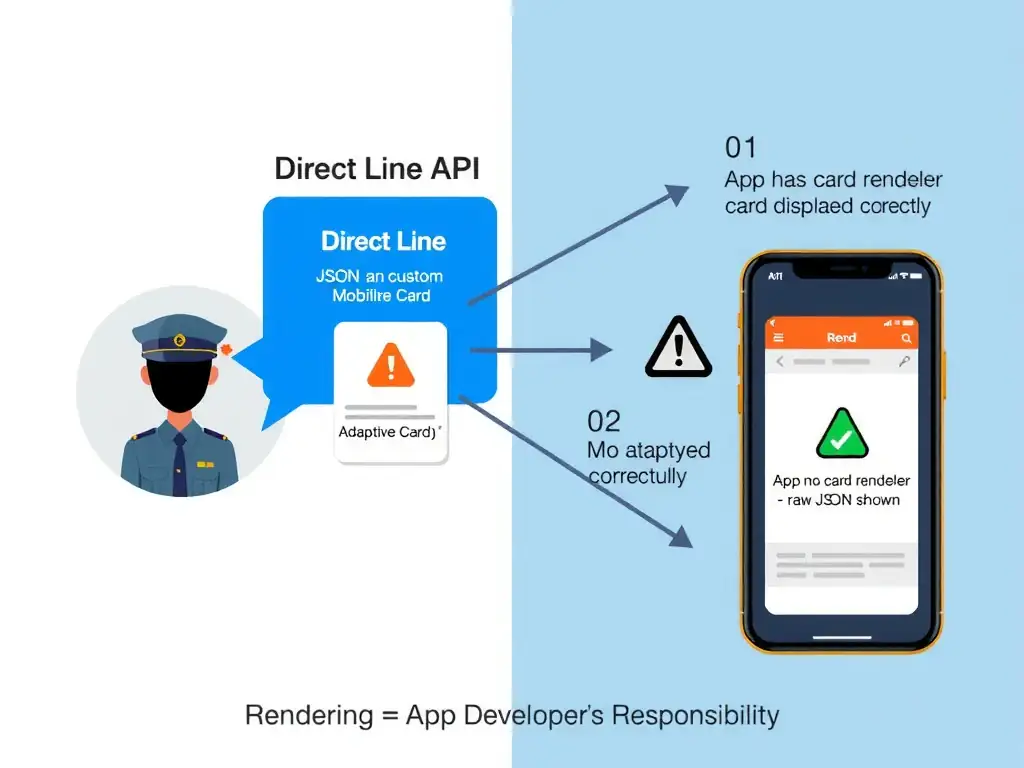
Connecting a custom mobile app to a Copilot Studio agent is like subscribing to a data feed — the agent sends structured messages over Direct Line, but your app's code has to decide how to draw them on screen. Adaptive Card rendering in a custom app requires your development team to implement the card renderer themselves. The channel doesn't draw the UI for you.
Full Explanation
Copilot Studio exposes the Direct Line API (part of the Azure Bot Service framework) as the integration point for custom applications — including custom mobile apps. The agent sends messages as Bot Framework Activity objects, which may include Adaptive Card attachments. However, the Direct Line API is a raw JSON protocol; it doesn't magically render UI. The mobile app's code must: 1. Connect to the Direct Line channel using the Direct Line token 2. Receive Activity objects from the agent 3. Parse any Adaptive Card JSON in the attachments array 4. Render the card UI using an Adaptive Card renderer library (which the team must integrate) 5. Handle submit actions from Adaptive Card form controls. The accurate statement is the one saying custom mobile apps can connect to a Copilot Studio agent via the Direct Line channel, but rendering of Adaptive Cards and rich UI components depends entirely on what the custom app's code implements using the Bot Framework SDK. It accurately describes this dependency: the connection works via Direct Line, but rendering fidelity depends entirely on the custom app's implementation. The statement claiming custom mobile apps fully support all Copilot Studio features including Adaptive Cards, provided the app uses the Direct Line API, is wrong. It's too absolute — saying the app fully supports all Copilot Studio features is incorrect. The Direct Line channel transmits all the data, but rendering is the app's responsibility. The app must implement each UI component; it doesn't get rendering for free. The statement saying Copilot Studio agents cannot be deployed to custom mobile apps at all, only Microsoft-published apps like Teams can host Copilot Studio agents, is wrong. Copilot Studio agents can absolutely be deployed to custom applications via the Direct Line channel. The platform isn't limited to Microsoft-published apps. The statement saying the mobile channel in Copilot Studio automatically generates a native iOS and Android SDK package that the development team can import into their React Native app is wrong. Copilot Studio doesn't generate native mobile SDK packages. There's no automatic iOS or Android SDK generation from Copilot Studio. The Direct Line client libraries are available separately from the Bot Framework, but they aren't auto-generated from the agent. Exam tip: The Direct Line channel is always the answer for custom mobile/web app integration with Copilot Studio. The critical nuance is that rich UI elements (Adaptive Cards, suggested actions) are only rendered if the consuming app explicitly implements them. This is a common exam trap — the channel transmits everything, but rendering isn't automatic.