
An enterprise using Dynamics 365 Sales has enabled the AI-driven relationship health scoring feature across all accounts. A regional sales director notices that several long-standing, high-revenue accounts are being scored as low health, even though the account teams report strong relationships and frequent informal contact through phone calls that are not logged in the system. What is the most likely explanation the consultant should investigate first?
Select an answer to reveal the explanation.
Short Explanation
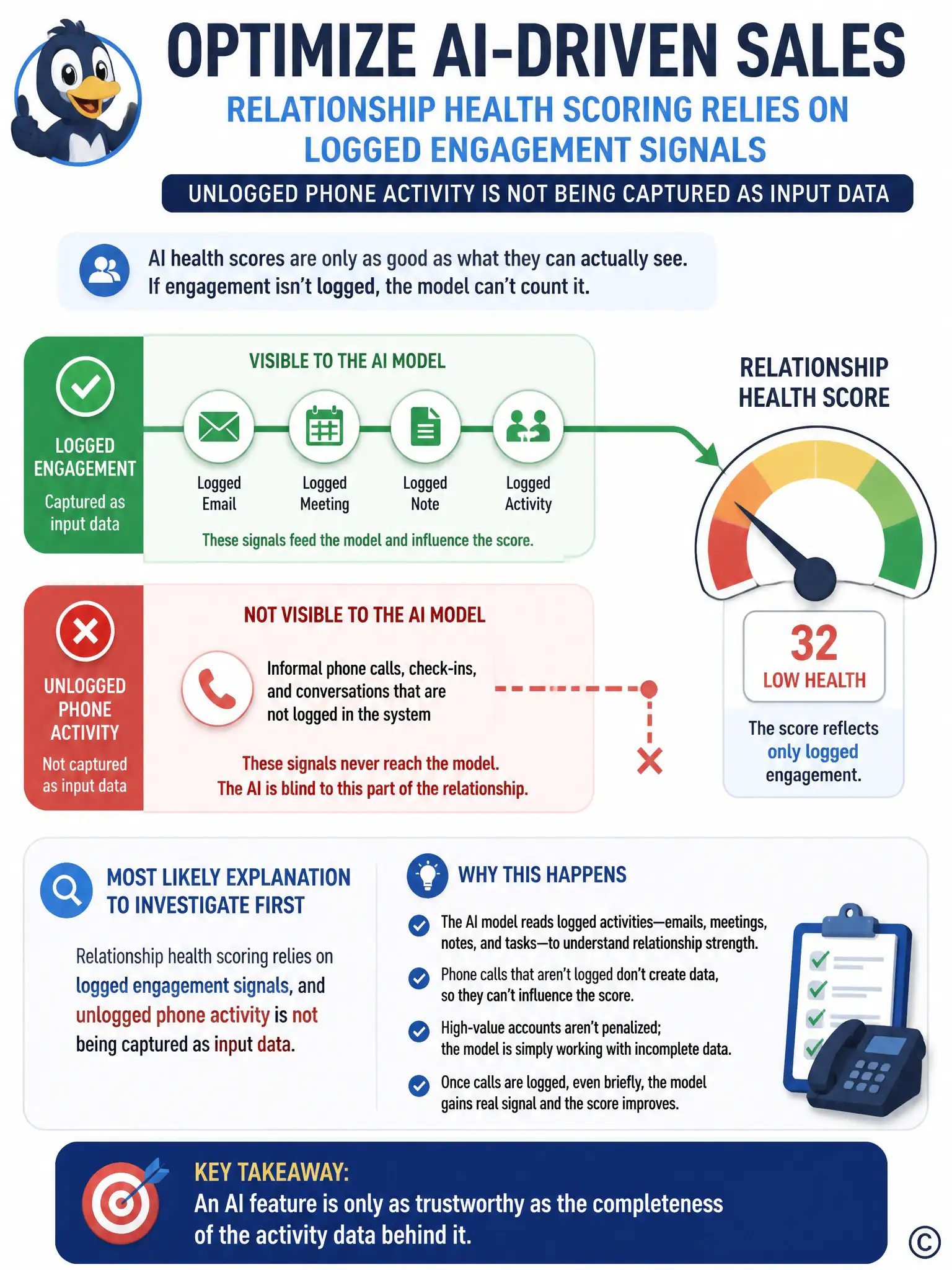
An AI health score is only as good as what it can actually see, so if phone calls aren't logged, the model is working blind on that part of the story. The gap isn't in the AI, it's in the data feeding it. Once the team logs those calls, even briefly, the score should start reflecting the real relationship.
Full Explanation
Relationship health and engagement scoring in Dynamics 365 Sales AI features are driven by signals the system can actually observe, such as logged emails, meetings, and activities; if account teams are having frequent phone conversations that never get logged into Dynamics, the model has no record of that engagement and will underscore the relationship despite it being healthy in reality. The idea that the AI model intentionally penalizes accounts with high historical revenue to reduce bias is incorrect because there is no mechanism in the feature that deliberately penalizes high-revenue accounts, and inventing an intentional bias mischaracterizes how the scoring works. The claim that the scoring feature only evaluates accounts created within the last 90 days is incorrect because relationship health scoring is not restricted to newly created accounts; it applies across the account base and would not explain low scores specifically on long-standing accounts. The statement that relationship health scores are static values set manually by administrators and do not use AI is incorrect because relationship health scoring is an AI-derived signal based on interaction data, not a static, manually set value, so it changes as engagement data changes. The practical fix the consultant should pursue is ensuring sellers log their phone activity so the model has accurate input to score against.