
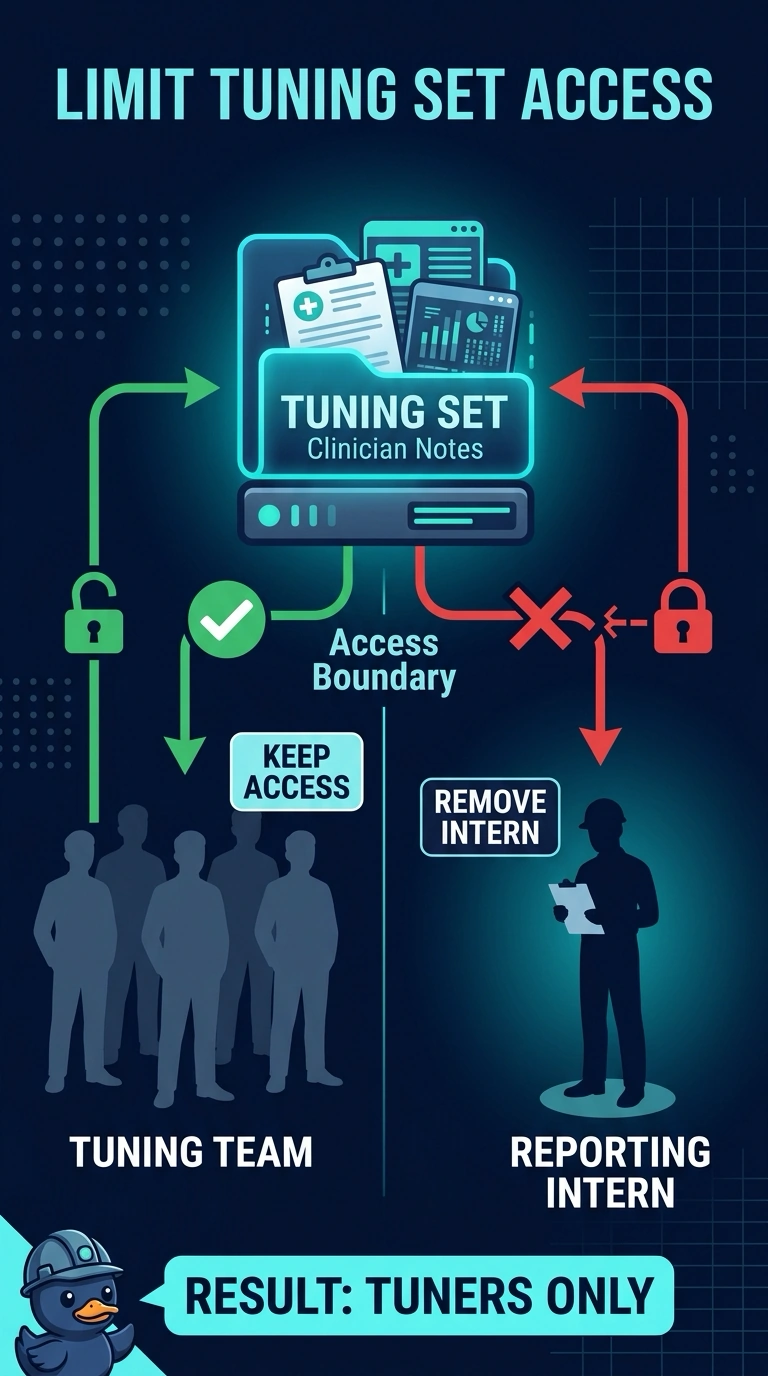
A hospital's tuning set of clinician notes is readable by the developers who tune the agent and by a reporting intern who does not tune models. What should the architect change?
Select an answer to reveal the explanation.
Short Explanation
You keep the chart room for the people who work the charts, not everyone who walks the hall. Remove the reporting intern from the tuning set and leave it with the people who tune the agent; that is least-privilege access. A wider reader list is the opposite of this fix.
Full Explanation
Access to model-tuning data is limited to the people who tune the agent. The developers who do that work stay on the tuning set of clinician notes, while the reporting intern, who does not tune, comes off it. Giving the intern the same tuning rights may make the access list look uniform, but it gives a non-tuner the ability to change or read a training set they do not need. Publishing the notes on the intranet spreads clinical text to departments that are not part of the tuning job. The intern can still use aggregate reports that do not contain the tuning notes. Pasting the notes into the system prompt abandons the file control and places the same sensitive text where the prompt is stored and copied. Exam caveat: removing the intern does not decide whether clinician notes may be used for tuning at all; that use still needs the hospital’s data approval. Practical check: open the tuning set’s access list, confirm the intern is absent and a developer who tunes the agent can still read it, then check a report the intern uses to confirm it does not include the note text.