
An insurer still has an old model key pasted in a notebook that the data-science channel shares. What should the team do?
Select an answer to reveal the explanation.
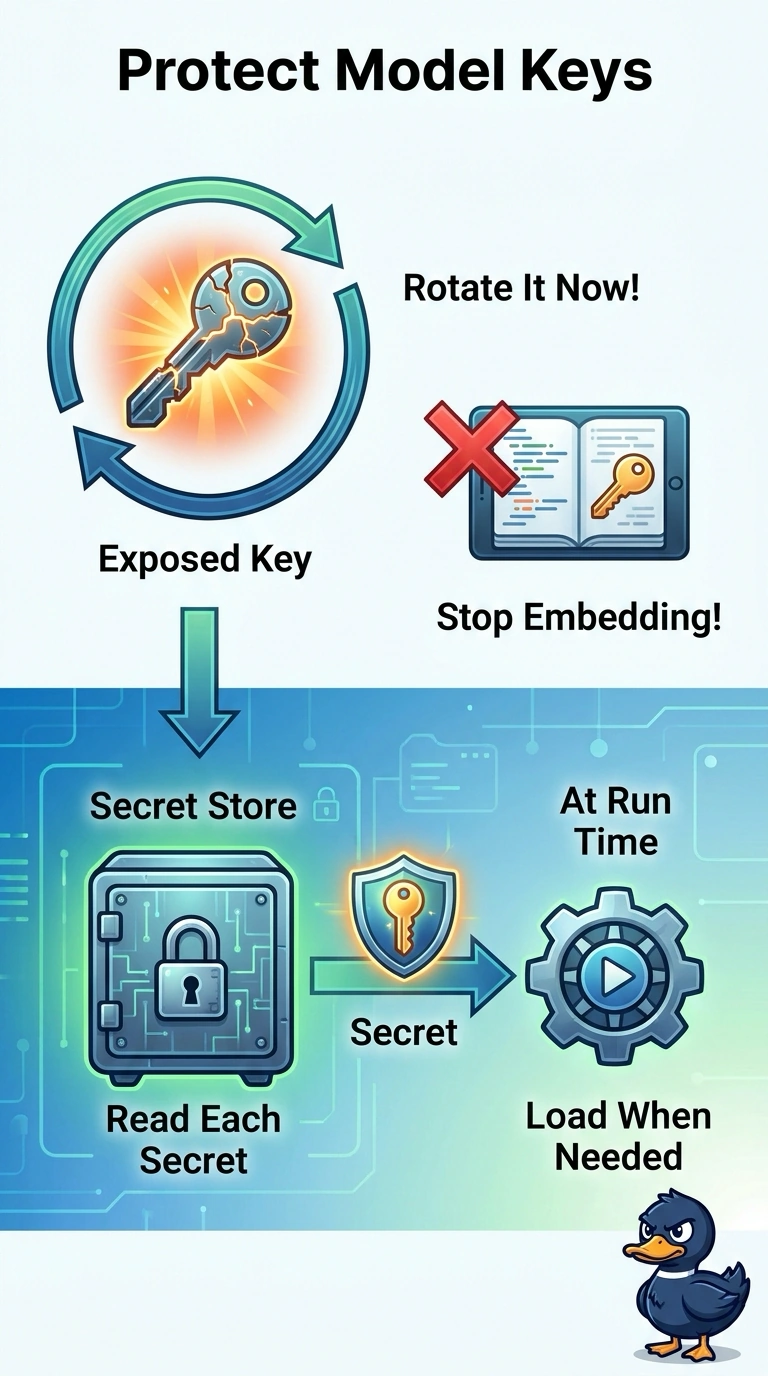
Short Explanation
A key taped inside a shared notebook is a key you have already handed out. You rotate that key and stop embedding model keys in notebooks. Renaming the file leaves the same secret sitting on the page.
Full Explanation
A model key in a shared notebook is a credential the channel already holds, and the old key stays usable until it is rotated. The team should rotate the exposed key and stop embedding model keys in notebooks, so the next run reads the secret from a store instead of from a pasted file. Leaving the key in place and asking people not to copy it relies on courtesy after the secret has spread. Sending the same key to a wider group multiplies the copies and does not retire the exposed value. Renaming the notebook changes the file name and leaves the pasted key readable under the new name. After rotation the old key should fail at the endpoint, and the notebook should contain no secret a reader can paste into another tool. The store the job reads at run time is where that key lives, with access limited to the job and its owners. Exam caveat: rotation means the exposed key stops working. Leaving that same key in the notebook, or renaming the notebook around it, does not retire the secret. Operational check: confirm the old key is rejected by the model endpoint, confirm the notebook no longer contains a key, and confirm the job still authenticates.