
An insurer replaces a custom model by overwriting the production model in place, and the previous behavior cannot be restored. What should the release do instead?
Select an answer to reveal the explanation.
Short Explanation
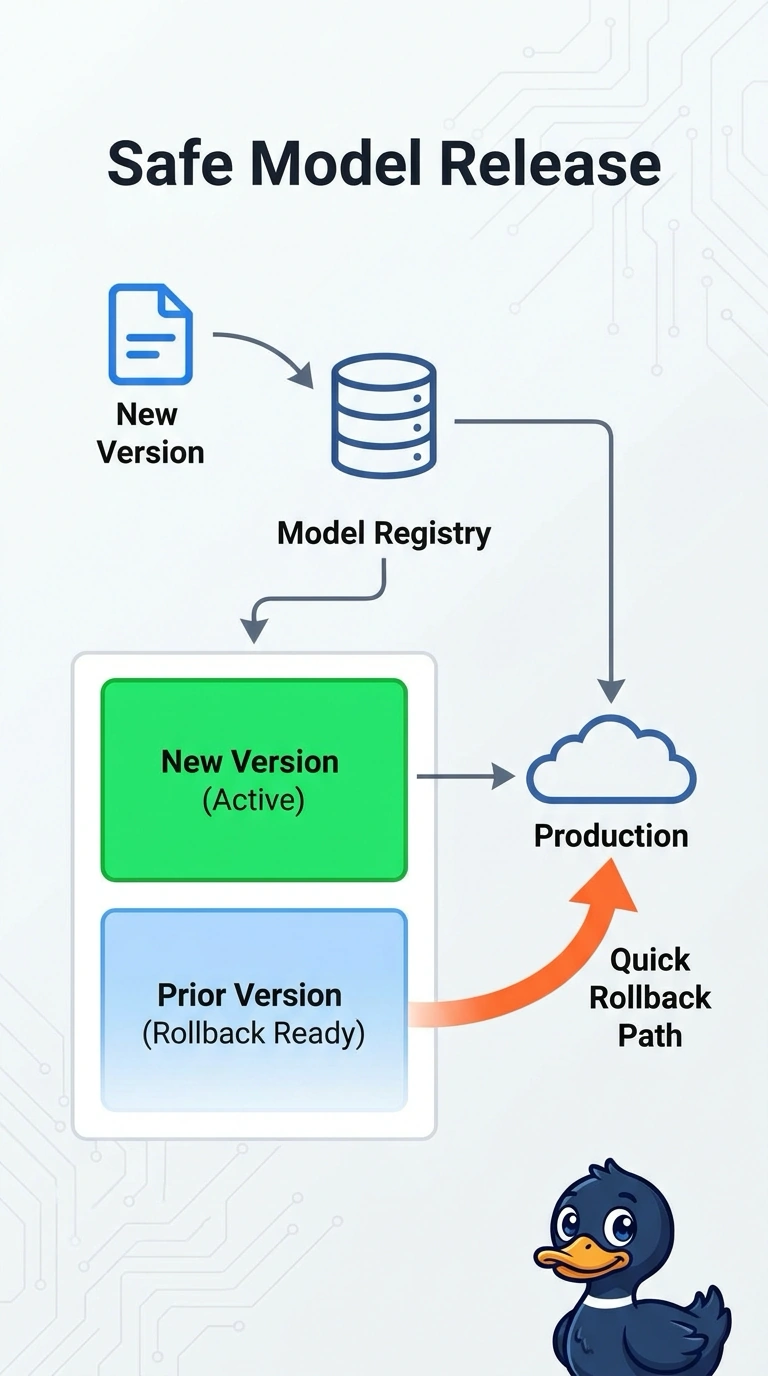
Replacing the only spare tire with the new one leaves you with nothing to mount when the new one fails. You register a new model version and keep the prior version so the insurer can roll back. Overwriting the production model in place throws that spare away.
Full Explanation
Custom-model release is a versioned promotion. Overwriting the production model in place destroys the artifact the deployment was running, so a bad release has no prior version to point back to. The release should register a new version, deploy that version, and keep the prior version available for rollback. Overwriting the same production model again if the new scores look worse repeats the loss and still leaves no earlier version. Deleting the prior model files so only the latest training run remains on the deployment removes the rollback target on purpose. Saving the training script in a mailbox and retraining from scratch if a rollback is required is a new training run, not the prior model, and it may not reproduce the behavior production had. Exam caveat: keeping the prior version is what makes rollback possible. It does not by itself decide that the new version passed validation. Operational check: deploy a new version to a test endpoint, confirm the prior version is still registered, and switch the test endpoint back to that prior version without retraining.