
A manufacturer's supply-chain copilot answers from a different knowledge set in development, test, and production, and nobody planned that split. What should the architect make part of the release?
Select an answer to reveal the explanation.
Short Explanation
If each kitchen keeps a different card for the same recipe, the dish changes by room. You put the supply-chain copilot's knowledge in the release so every environment gets that set. A morning edit in production is how the answers drifted.
Full Explanation
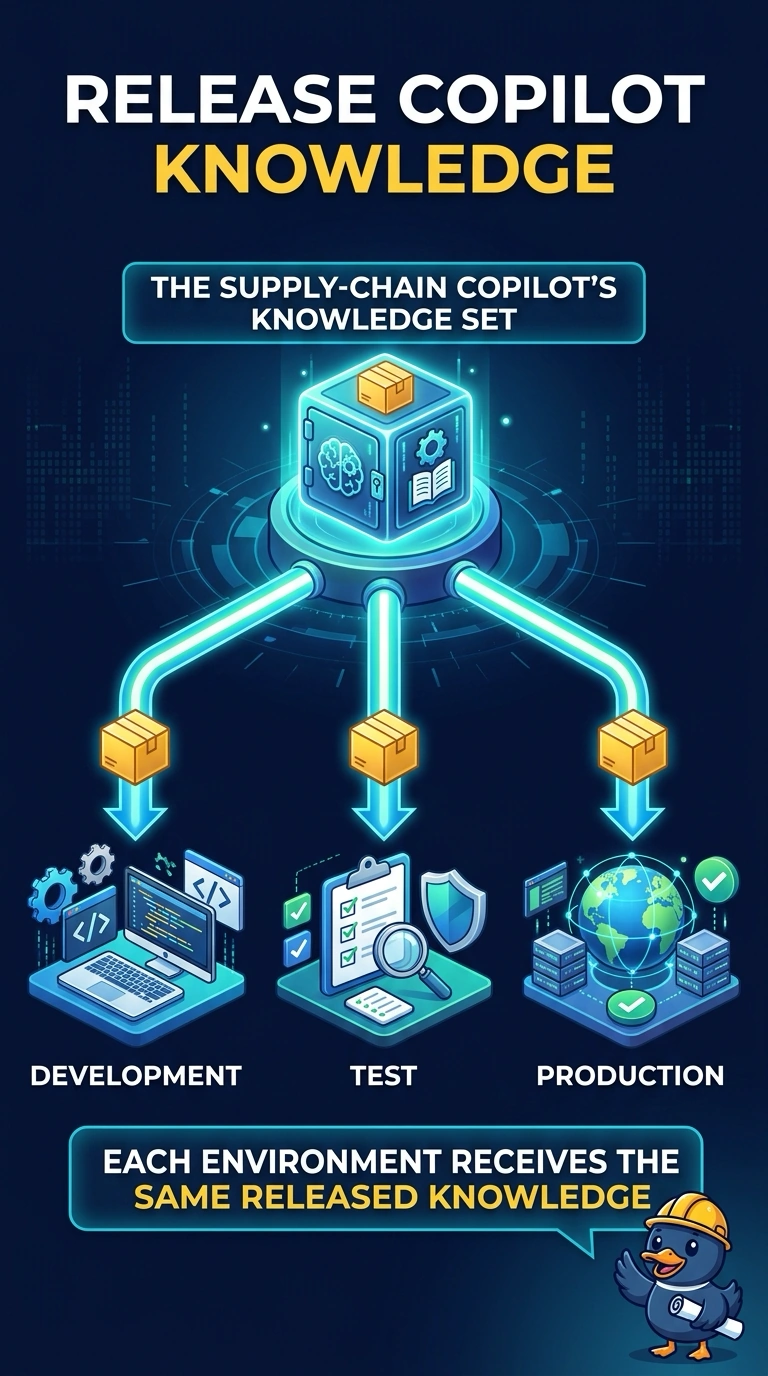
When a supply-chain copilot's knowledge differs by environment and nobody planned the difference, the knowledge is outside the release. The architect makes that knowledge set part of the release so development, test, and production receive the same released knowledge and a later change is promoted rather than rediscovered. A hand edit of production knowledge on go-live morning happens after test has signed off, so test did not see the knowledge production will use. A private folder on one planner's laptop cannot be what development and test run, so the other environments keep drifting. A separate custom model trained from scratch in every environment on local files multiplies the split and replaces a knowledge release with three unreviewed models. Exam caveat: making knowledge part of the release does not freeze it forever. It means the next change travels with a release instead of an unplanned edit. Operational check: compare one policy question in test and production after the release and confirm both answers use the same released knowledge set.