
At a distributor, the sales copilot drafts a quote, the finance copilot creates the invoice, and the service copilot opens a case. Each copilot looks right in its own app, yet the case names a different total than the invoice. What should the architect require?
Select an answer to reveal the explanation.
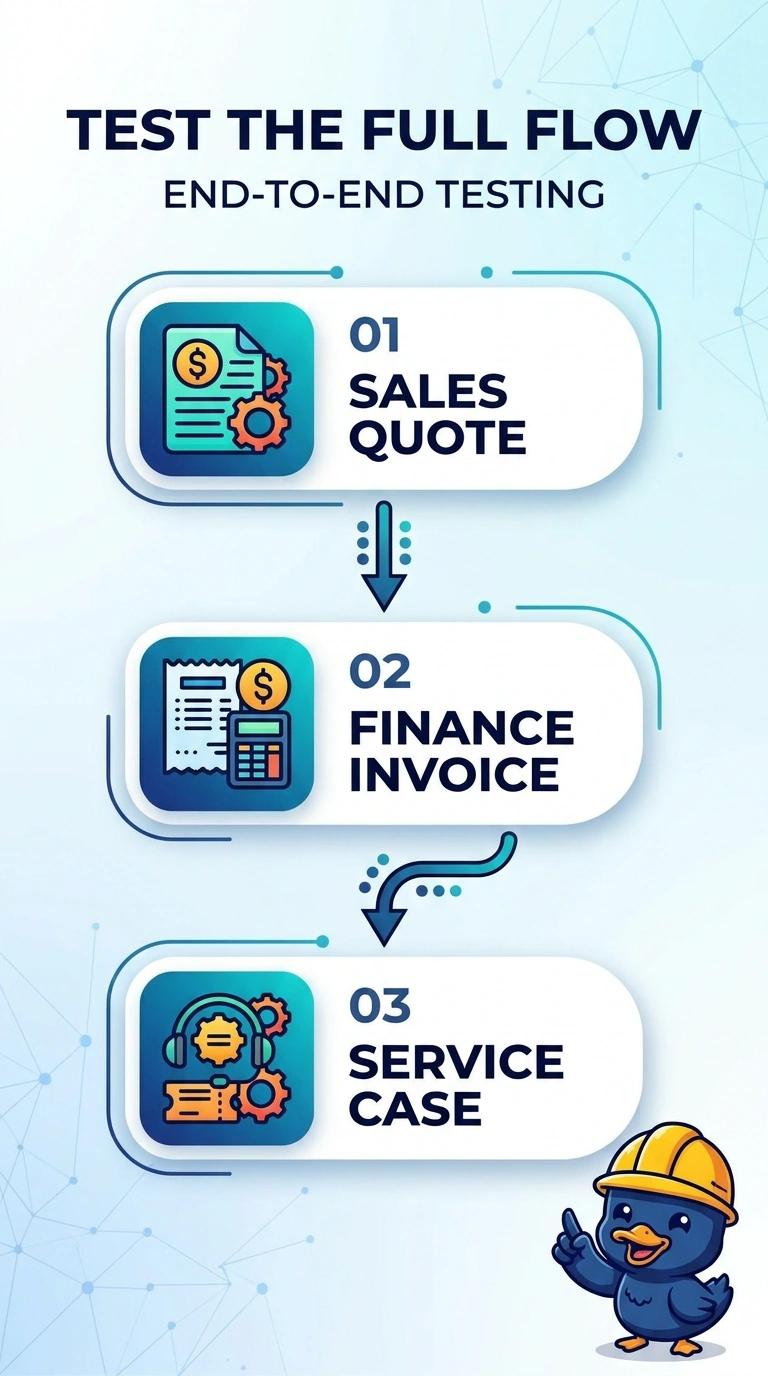
Short Explanation
Three solo rehearsals can still miss the handoff on opening night. You test the path from the sales quote through the finance invoice to the service case, because each copilot can look right alone and still disagree together. A longer prompt in the service app does not check the invoice total.
Full Explanation
When a process crosses Dynamics 365 apps, the test has to cross them too. The quote, the invoice, and the case are one path, and each copilot can be right in its own app while the case shows a different total, so the architect requires an end-to-end test from the sales quote through the finance invoice to the service case. A separate test of each copilot in its own app, with no document that passes through all three apps, is the testing already in hand, and it is how the mismatch survived. A new foundation model trained on a one-time export of quotes, with the three apps left untested together, adds a stale model and still does not walk a quote into an invoice and a case. A longer prompt in the service copilot that tells it to sound consistent with what the customer recalls changes tone and does not compare the case total with the invoice total. The defect is the handoff, not the prose. Exam caveat: a passing end-to-end case does not retire the single-app checks. It adds the path those checks cannot see. Operational check: create one quote in a test company, let it become the invoice, open the case, and confirm the case total matches the invoice total.