
A hospital portal agent starts refusing more questions in the hour after a handbook is published into its knowledge. Telemetry records both the publish and the refusals. What should operations examine first?
Select an answer to reveal the explanation.
Short Explanation
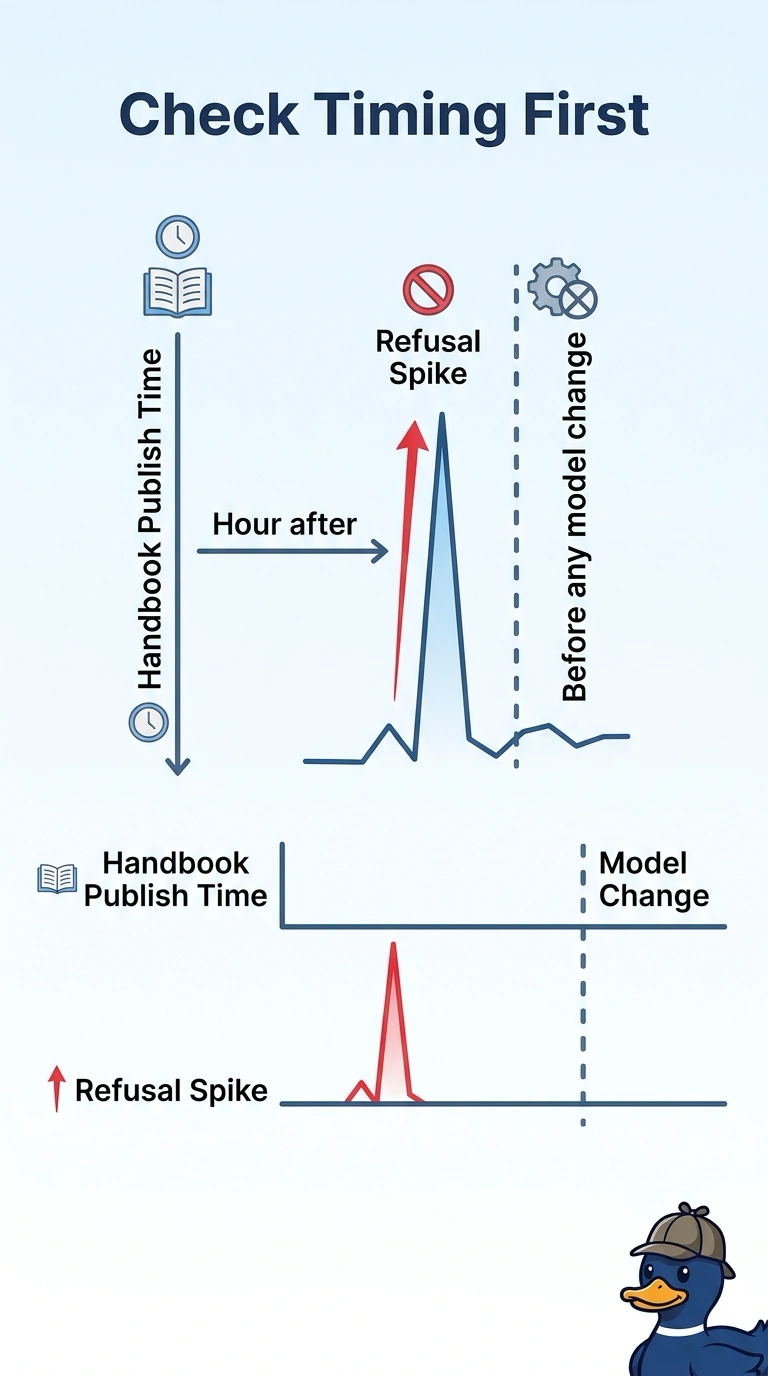
When the lights flicker in the minute after someone closes a breaker, you look at that breaker before you rewire the building. Line the handbook publish up against the refusal spike before you change the model. A bigger model does not explain a jump that started at a publish.
Full Explanation
Telemetry is how you connect a behavior change to the step that changed. The refusal count rose in the hour the handbook was published, so the first examination is whether those two events line up, before anyone swaps the model or rewrites the prompt. A larger model purchase treats the spike as a capacity problem, but nothing in the trace has shown the model failing on its own apart from the publish. Deletion of the fallback topic would stop a refusal from being written into the log, which hides the signal instead of explaining the handbook change. A longer system prompt tries to talk the agent into answering over a knowledge change, and instruction length is not evidence that the new handbook is a fit source. Exam caveat: lining the events up is the first cut, not proof that the publish was wrong. It tells you which change to test. Operational check: compare refusals on the same question set before and after the publish, open one refused turn, and note the publish identifier beside it so the comparison is tied to that one release and not to an older handbook.