
A retailer judges its returns agent by the CPU of the storefront web server. Leaders cannot tell whether a return was completed, refused, or handed to a person. What should operations monitor instead?
Select an answer to reveal the explanation.
Short Explanation
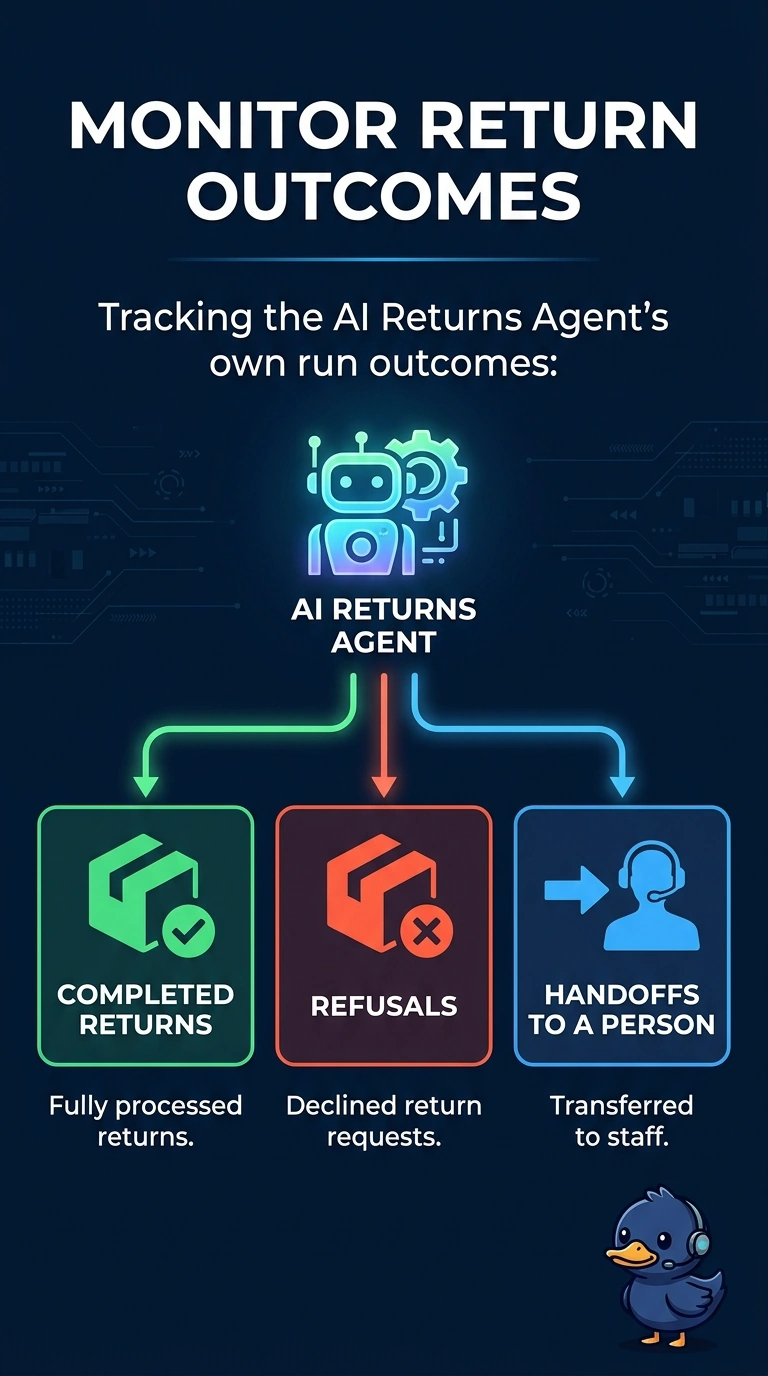
Watching the building's power meter will not tell you whether the clerk finished the return. You should monitor the returns agent's own outcomes: completed, refused, or handed to a person. Server CPU is a machine gauge for a different question.
Full Explanation
Agent monitoring has to see the work the agent did. For this returns agent the useful picture is the run outcome: a completed return, a refusal under the rule, or a handoff to a person. Leaders asked which of those three happened, and only the outcome answers them. The storefront web server's CPU chart measures a machine that also serves browsing, checkout, and images, so a busy processor does not mean a return was correct or even that this agent ran. The storefront license count says what the retailer is allowed to buy, not whether yesterday's returns finished. The length of the system prompt is an authoring detail, and a longer instruction is not evidence that a return was completed, refused, or handed off. CPU can still matter to the people who run the web tier. It is the wrong primary signal for this agent. Exam caveat: infrastructure health and agent outcomes answer different questions, and a green server does not clear a bad return. Operational check: pick a day's returns and confirm each one is tagged completed, refused, or handed off, without using the CPU chart as that tag.