
A government agency requires that prompts and grounding transcripts for a citizen agent stay inside the national boundary it named. A teammate suggests a global model deployment because the tenant home is in that country. What should the architect validate?
Select an answer to reveal the explanation.
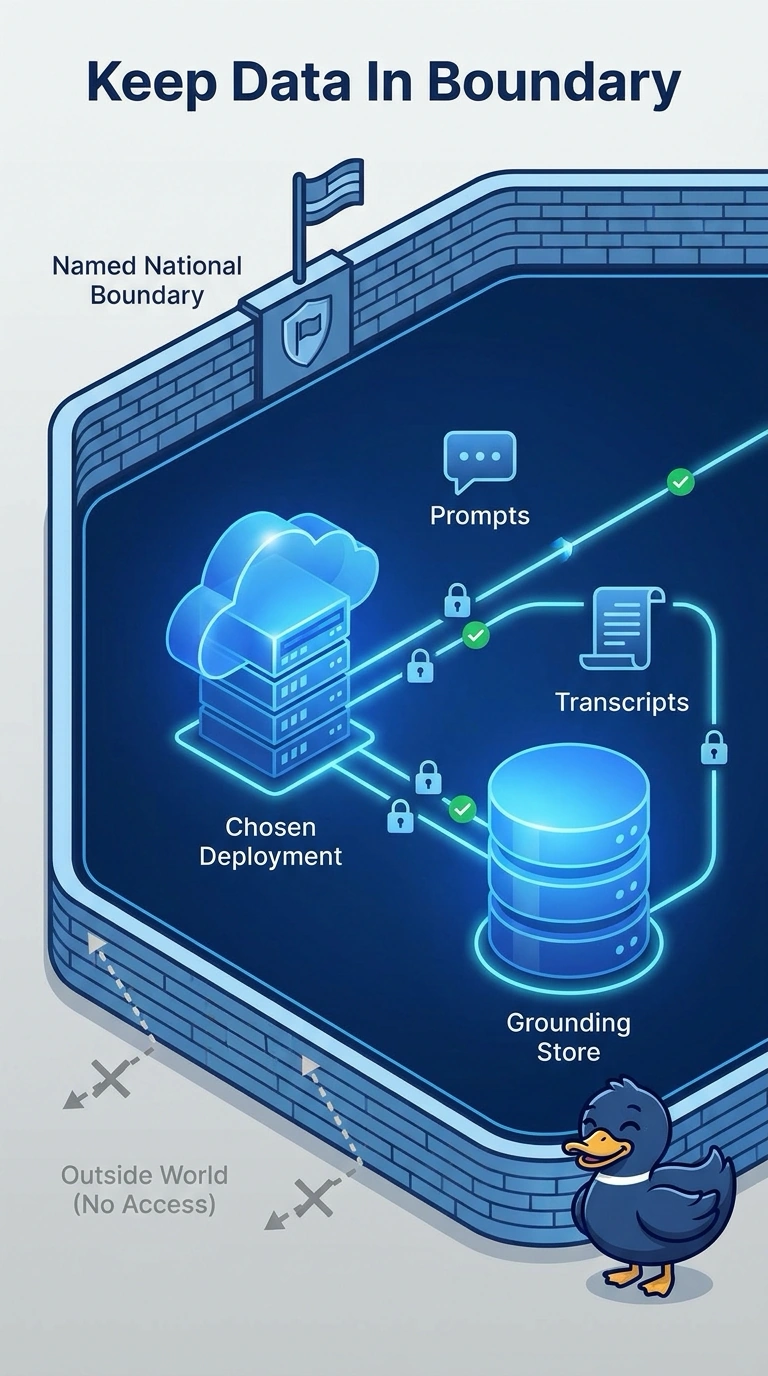
Short Explanation
The address on the building lease does not tell you where the filing cabinets were shipped. You check the model deployment and the store that holds the transcripts, and you keep both inside the boundary the agency named. A sentence in the agent's description moves no data.
Full Explanation
Data-residency validation has to follow the prompts and the grounding transcripts, not the tenant's billing address. A global deployment can process outside the national boundary even when the tenant is homed inside it, so the architect has to choose a deployment type and a knowledge location that keep both the prompts and the transcripts inside the boundary the agency named. The teammate's suggestion stops at the tenant home and never looks at the deployment. The tenant home country does not vouch for every deployment type. Text in the agent description is a label, and it does not control where bytes are processed or stored. Publishing to Teams changes the channel, not the processing location of the model or the grounding store. Exam caveat: residency and access control are different tests. A store can be in-country and still be readable by the wrong agent identity. Operational check: record the deployment type and the region of the grounding store for the citizen agent, and block release if either one sits outside the named boundary.