
A large AI vendor that sponsors MCP development asks whether it can hold a guaranteed seat among the project's Core Maintainers. What do the governance rules say?
Select an answer to reveal the explanation.
Short Explanation
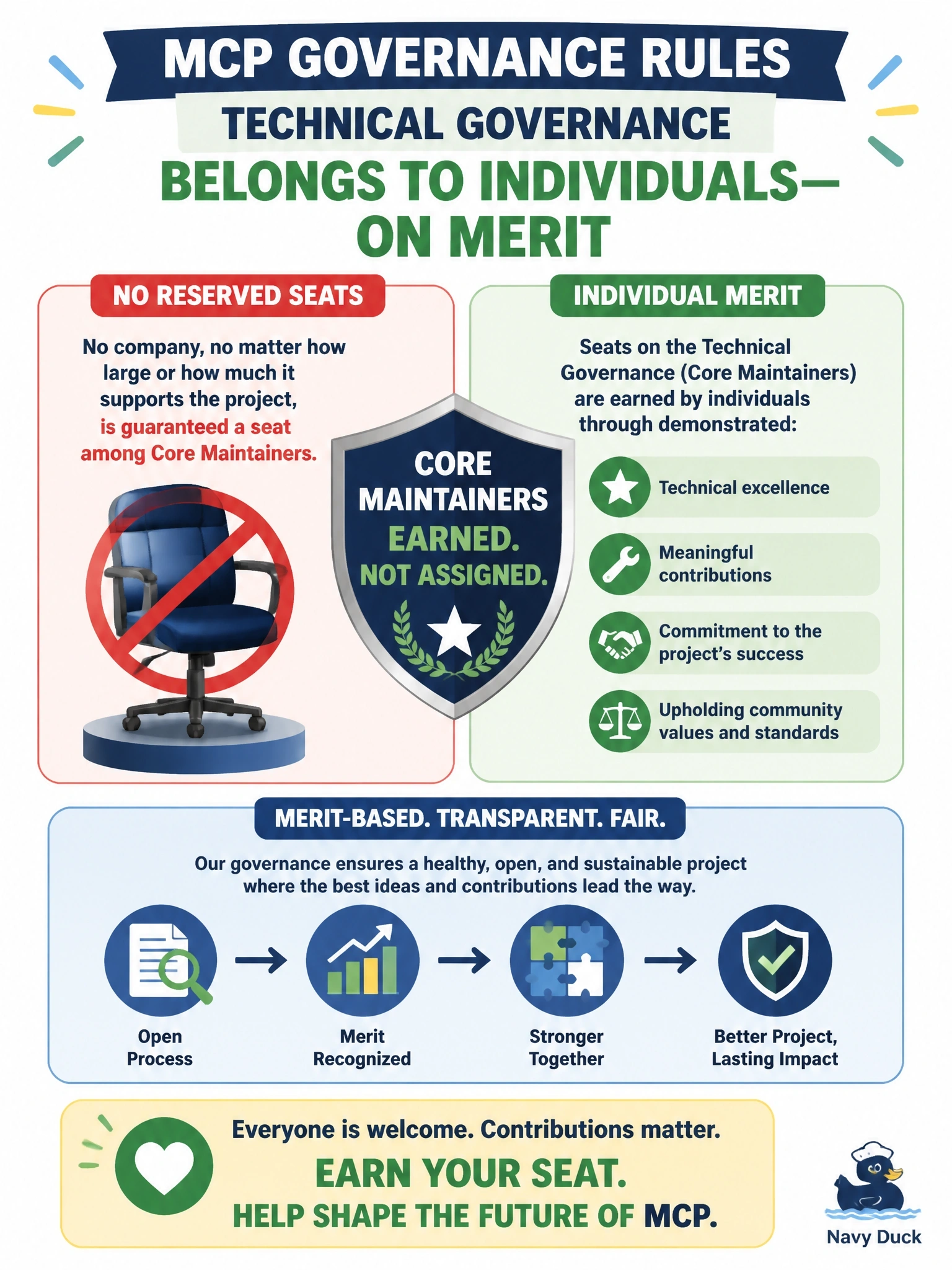
You can think of MCP seats like a lifetime achievement award: they go to a person for their work, not to the company they work for. The trap is assuming sponsorship buys a vote, and it doesn't.
Full Explanation
The MCP governance document states that membership in the technical governance process is for individuals, not companies. There are no seats reserved for specific companies, and membership is associated with the person rather than the employer. Maintainer group membership is granted on a merit basis after demonstrated expertise and alignment with MCP's direction, and it has no term limit. The hierarchy runs from Contributors to Maintainers, who steward areas such as SDKs or Working Groups, to Core Maintainers, who steer the specification, to Lead Maintainers, who hold final authority; together Maintainers, Core Maintainers and Lead Maintainers form the Steering Group. Funding the project does not buy a Core Maintainer seat. Shipping an official SDK does not create a company-owned Maintainer seat that can be handed between employees, since the role travels with the person. The governance rules define no observer seat for companies and no fixed terms, so a non-voting two-year seat is invented. Exam caveat: the Contributor Ladder is the canonical definition of each role, including advancement and inactivity rules. Operational check: an organization that wants influence should have its engineers contribute through issues, pull requests and SEPs, and advance individually through the Contributor Ladder.