
A team wants to prototype a new MCP extension idea inside the official MCP GitHub organization before writing a formal proposal. Which arrangement does the project provide for this?
Select an answer to reveal the explanation.
Short Explanation
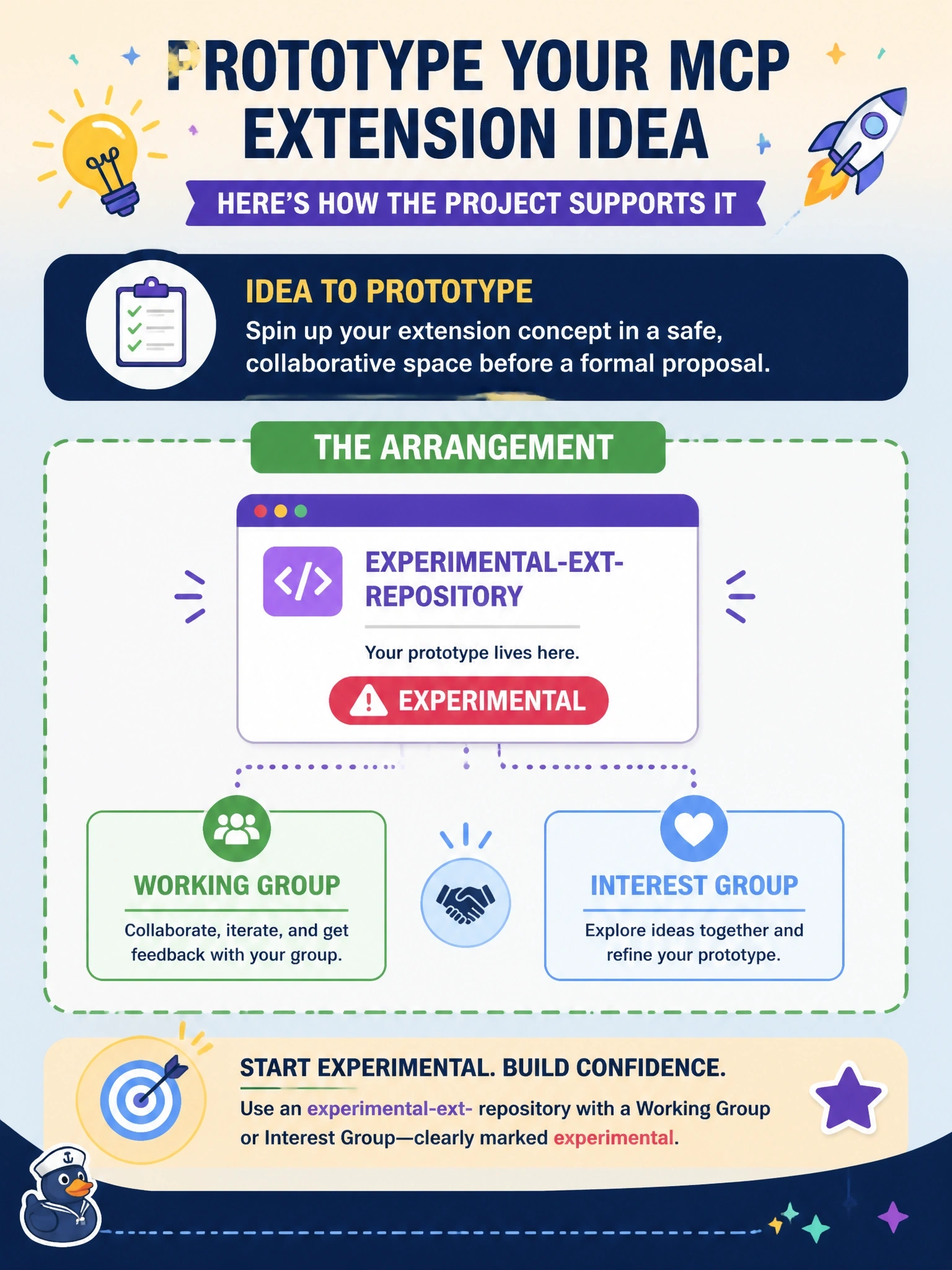
It's like a test kitchen next to the main restaurant: you can try recipes there, but the sign on the door says experimental. The trap is the ext- prefix, which is reserved for official extensions that already went through a SEP.
Full Explanation
MCP gives Working Groups and Interest Groups an incubation path for extension ideas. Experimental extension repositories live inside the MCP GitHub organization with the experimental-ext- prefix, for example experimental-ext-interceptors. The ground rules are that every experimental extension is associated with a Working Group or Interest Group, that repositories and published packages clearly indicate their experimental status, and that Core Maintainers retain oversight, including the ability to archive or remove them. To graduate, the extension goes through the standard SEP process on the Extensions Track, and the experimental repository and reference implementations can be cited as evidence. The ext- prefix denotes official extensions, so a team cannot self-create one and make it official by publishing a package. Experimental work does not become core specification on a timer; nothing merges automatically. Company ownership does not help either, because MCP governance membership belongs to individuals, not employers, and no seats are reserved for companies. Exam caveat: experimental status signals no stability guarantee, so production adopters should expect breaking changes. Operational check: confirm the repository name carries experimental-ext-, its README states experimental status and the sponsoring group, and any published package name signals the same.