
An implementer asks how an MCP specification feature is retired and how long it stays in the specification once it is flagged for removal. Which states and minimum window does the feature lifecycle policy define?
Select an answer to reveal the explanation.
Short Explanation
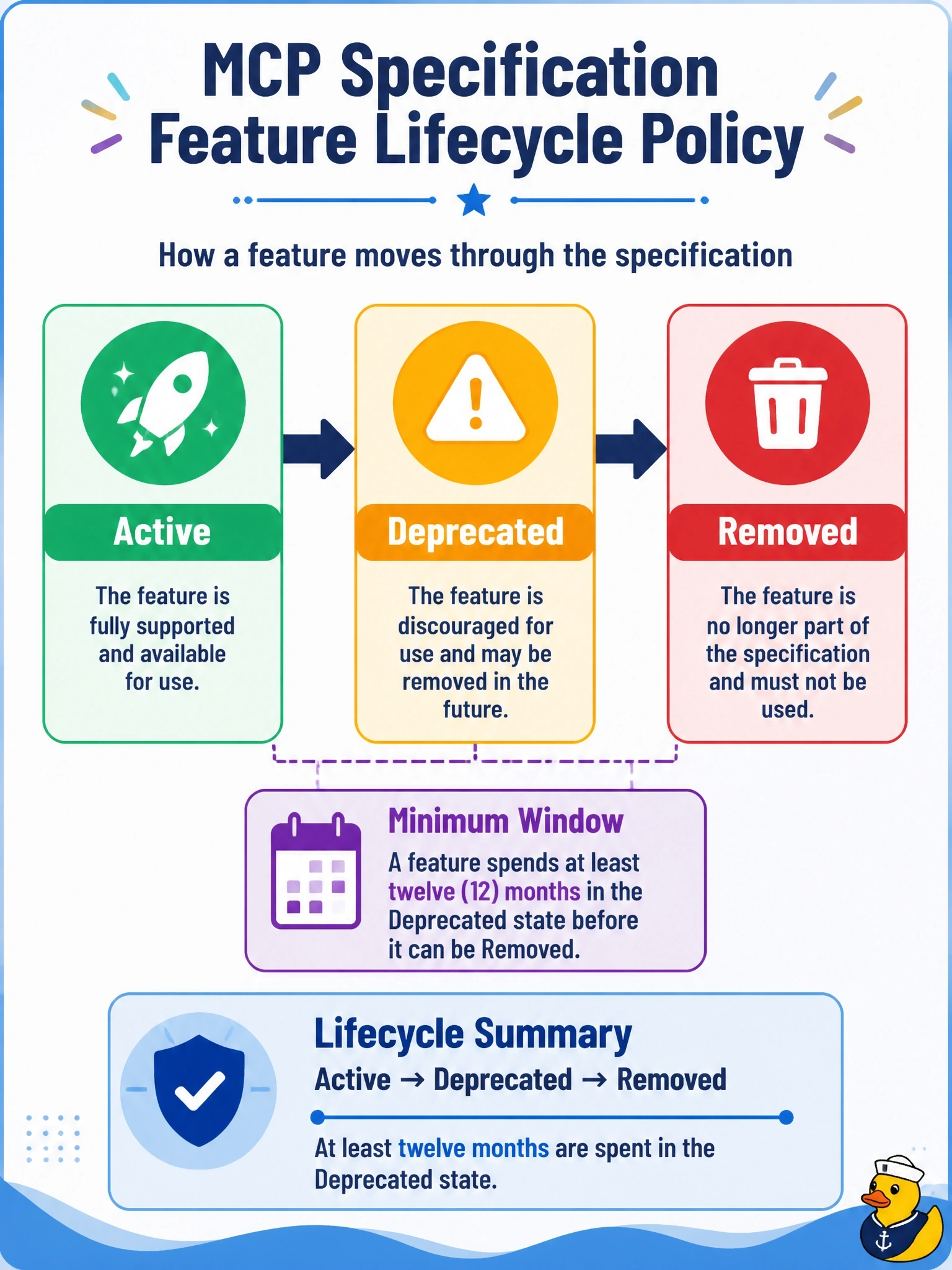
Features retire the polite way: Active, then Deprecated with a warning label, then Removed. The Deprecated stage lasts at least twelve months so you've got time to migrate. Draft and Final are about spec revisions, not individual features — that's the trap.
Full Explanation
The feature lifecycle and deprecation policy, adopted through SEP-2596, defines three states for individual specification features. Active features are part of the current revision; Deprecated features remain in the specification but are scheduled for removal with a documented migration path; Removed features are deleted from the draft and absent from the next current revision. A deprecation SEP must specify a minimum window of at least twelve months, measured from the release of the revision that first marks the feature Deprecated, and the feature becomes eligible for removal in the first revision released on or after that window; actual removal is a Core Maintainer decision and may come later. Experimental, Legacy and Archived are not states in this policy, and six months is below the floor. Frozen is not a state, and removal in the next revision would skip the window. Draft, Current and Final describe the lifecycle of specification revisions, not features, and SDK support policies govern when an SDK drops a feature, not the specification. Exam caveat: an expedited removal for an active security risk can shorten the window but must still leave at least ninety days. Operational check: consult the deprecated features registry for each feature your implementation uses and note its earliest removal revision.