
A diagnostics tool returns a large log file. The server wants the host to show the log to the human user while signaling that it is not meant for the model's context. Which mechanism fits this intent?
Select an answer to reveal the explanation.
Short Explanation
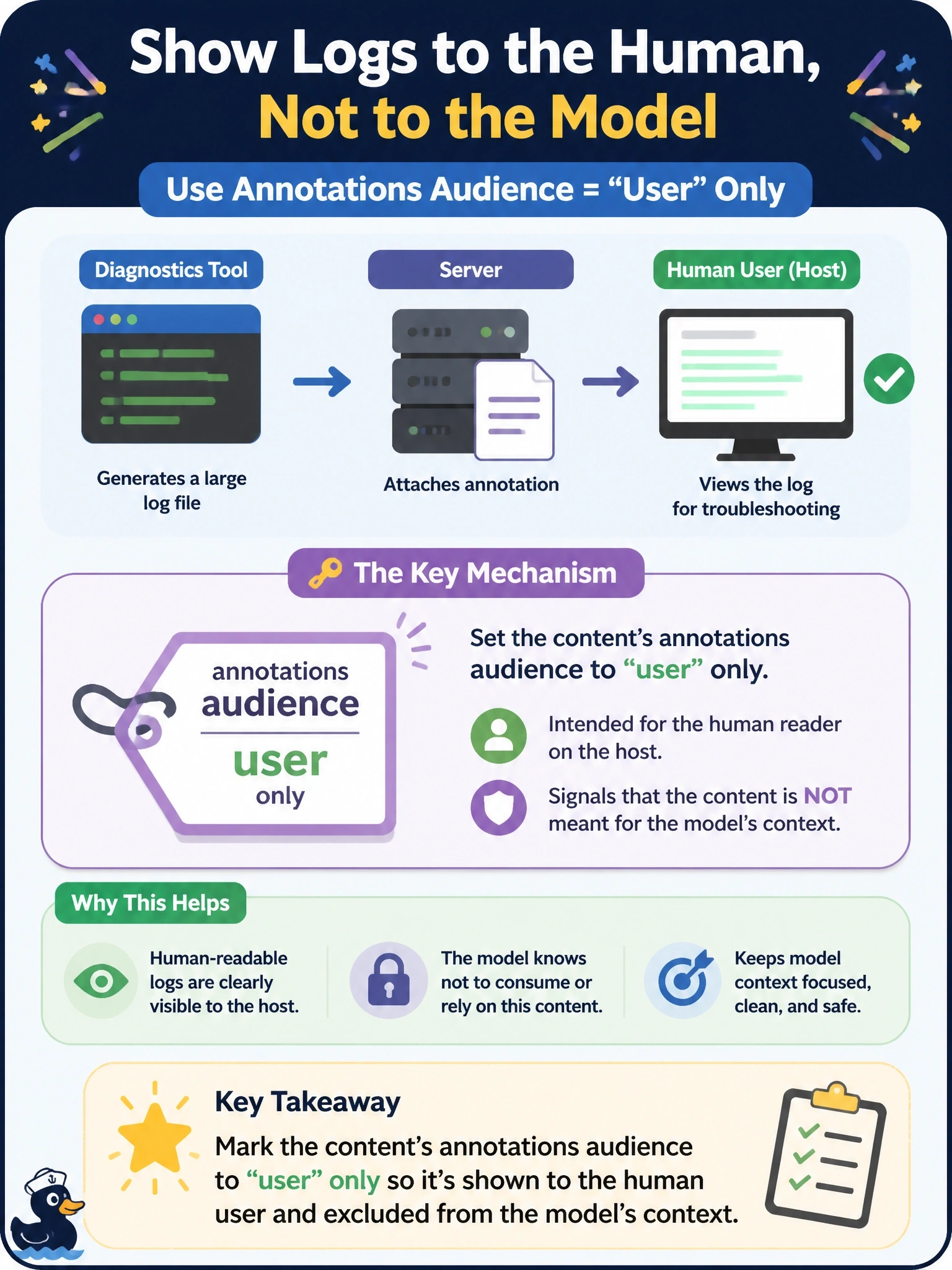
Annotations are sticky notes you put on content. The audience note says who it's for, and "user" means the human, not the assistant. Priority is about importance, and readOnlyHint is about the tool's side effects, so don't mix them up.
Full Explanation
Content blocks, resources and resource templates support optional annotations that give clients hints about use and display. The audience annotation is an array whose valid values are "user" and "assistant"; setting it to "user" alone tells the client the content is intended for the human, so a host can show the log in its interface while leaving it out of the model's context. Priority and lastModified are the other annotations, describing importance and freshness respectively. readOnlyHint is a tool annotation that describes whether the tool modifies its environment; it says nothing about who should see the tool's output. Priority expresses importance on a 0.0 to 1.0 scale, where 1 means most important and effectively required, so a high value would argue for including the log, not for routing it to the user. structuredContent is server-produced result data that clients may pass to the model; nothing in the specification requires hosts to hide it. Exam caveat: annotations are hints, so the host decides how to honor them, and a host remains free to apply its own context policy. Operational check: inspect the tool result, confirm the log block carries an audience annotation containing only "user", and verify the host displays it without inserting it into the model's context.