
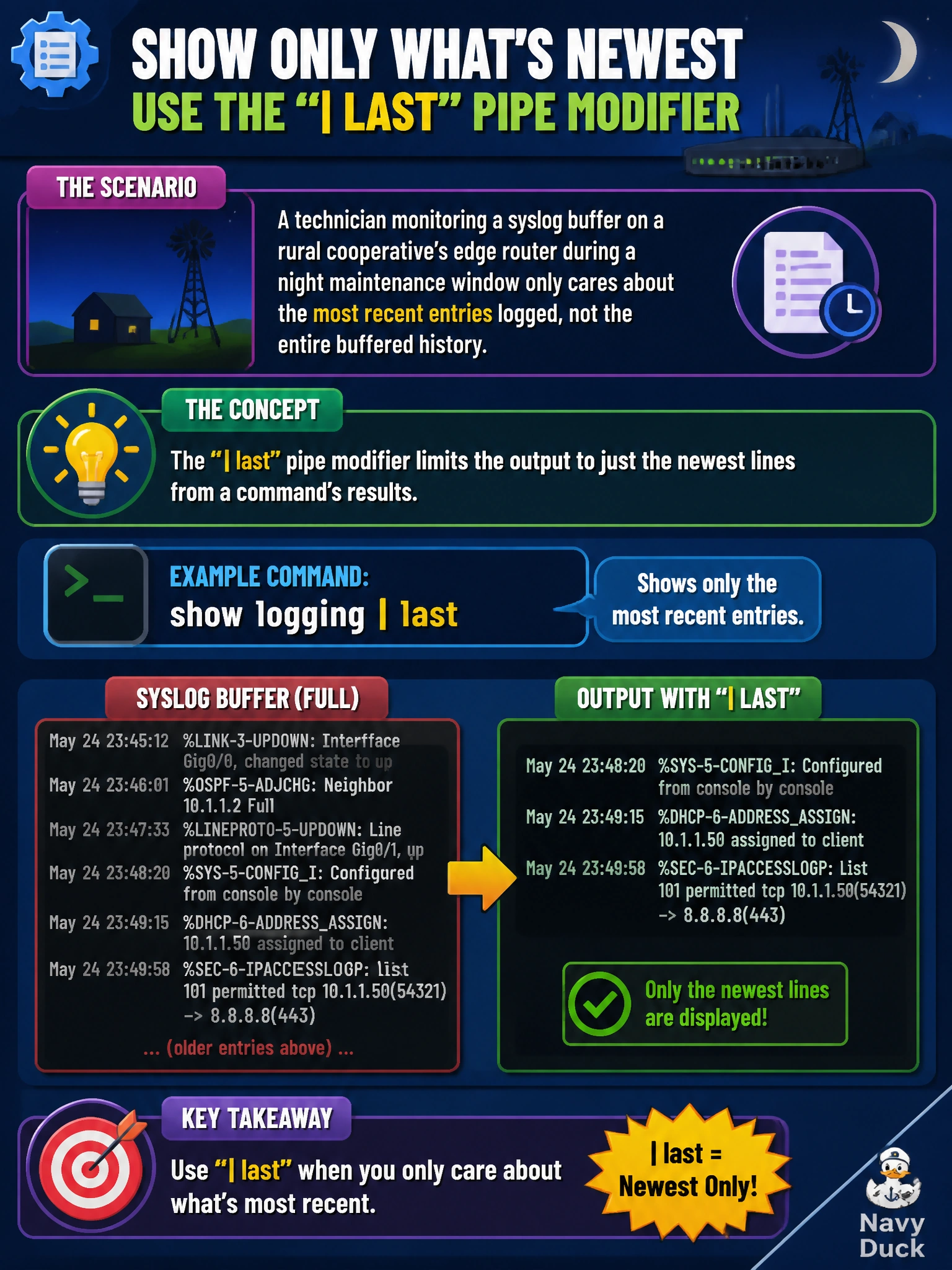
A technician monitoring a syslog buffer on a rural cooperative's edge router during a night maintenance window only cares about the most recent entries logged, not the entire buffered history. Which pipe modifier limits the display to just the newest lines?
Select an answer to reveal the explanation.
Short Explanation
No need to scroll through a whole log buffer looking for the newest entries. Pipe it into last, tell it how many lines you want, and Junos hands you just the tail end of the output.
Full Explanation
The last pipe modifier restricts displayed output to a specified number of lines counted from the end of the result set, which directly answers a need to see only the newest log entries out of a much larger buffered history without paging through everything that came before. Display xml changes the output's formatting into XML structure for programmatic consumption, which does nothing to limit how many entries appear and is unrelated to recency. Match filters lines based on whether they contain a given text pattern, which could narrow results by content but has no concept of chronological position, so it would not reliably isolate only the newest entries unless the pattern happened to correlate with them. No-more only disables the pause-and-continue pagination behavior for long output; it still displays the entire buffer from the beginning, just without stopping between screens. A related habit during active troubleshooting is combining last with a count, such as the ten or twenty most recent lines, since watching a live-scrolling full buffer during an ongoing incident often buries the entries that actually matter under older, already-understood noise.