
A company's SaaS contract is silent on what happens to customer data when the agreement ends. Legal counsel wants to close that gap before renewal. Which contract terms should be added?
Select an answer to reveal the explanation.
Short Explanation
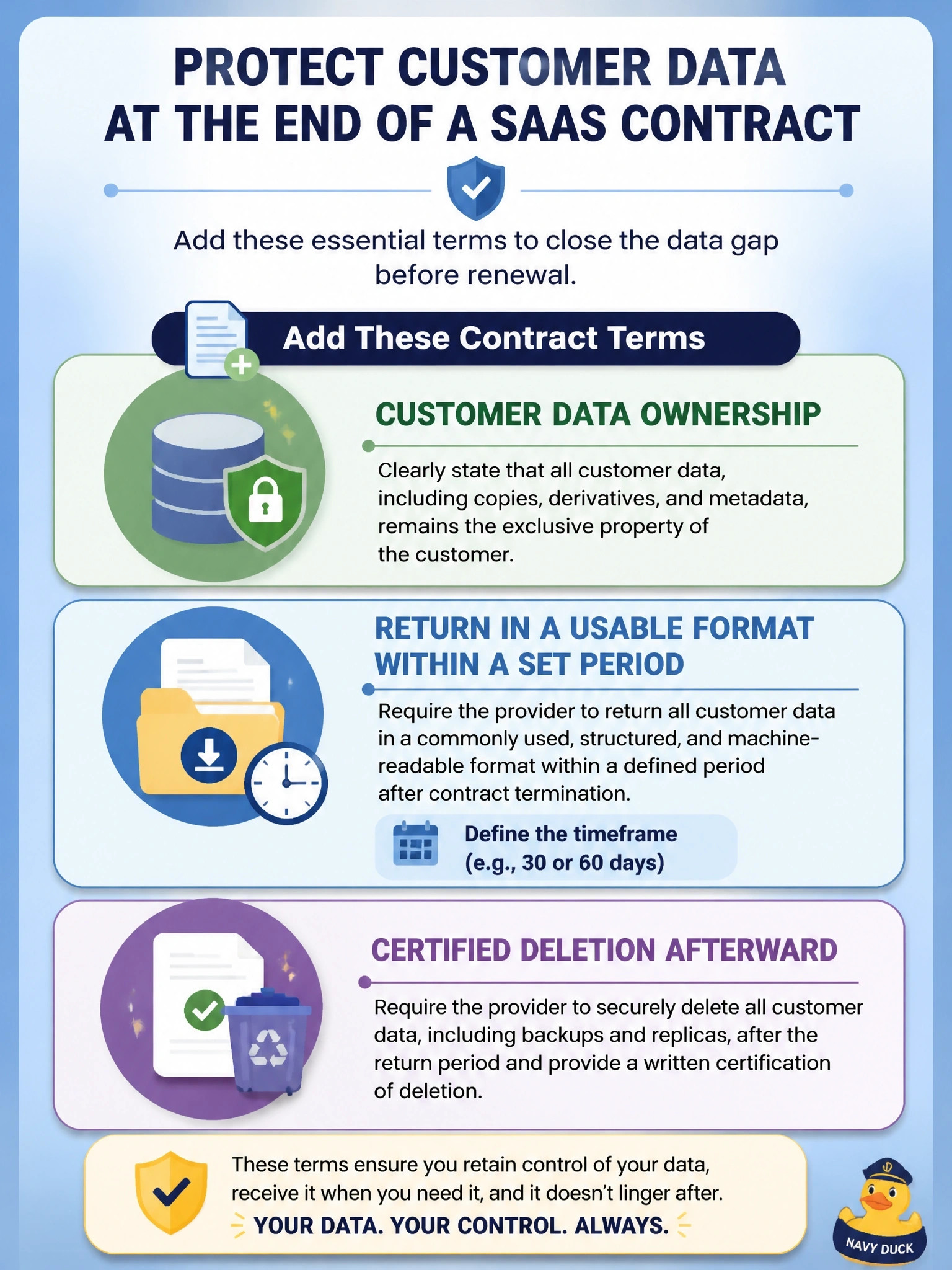
Ending a cloud contract without exit terms is like moving out without a clause about getting your furniture back. You want it in writing that the data is yours, that you'll get it back in a format you can use and that the provider deletes it and proves it. Auto-renewal just delays the problem.
Full Explanation
Termination provisions in cloud contracts should state that the customer owns its data, define how and when the provider will return it, in what format and with what assistance and set a transition period during which the service or data remains accessible. They should also require the provider to securely delete all remaining copies, including backups, within a defined time after return and to certify that deletion, with exceptions only where law requires retention. Together these clauses support portability, reduce lock-in and address privacy obligations at the end of the relationship. An automatic renewal clause only postpones termination; the gap reappears whenever the contract finally ends and it can trap the customer in an unwanted renewal. A perpetual license for the provider to retain anonymized copies benefits the provider and may conflict with the customer's confidentiality and privacy obligations, especially if anonymization is weak. A liability cap at one month of fees limits the customer's remedies rather than protecting its data. Exam caveat: deletion in multi-tenant clouds often relies on cryptographic erasure, so the contract should describe the method used. Operational check: confirm the contract specifies data ownership, export format, return timeline, transition assistance and a deletion certificate.