
A company's board wants independent assurance on the effectiveness of its cloud security controls that regulators and investors will accept, rather than a review by staff who report to the CIO and help run those controls. What should the company engage?
Select an answer to reveal the explanation.
Short Explanation
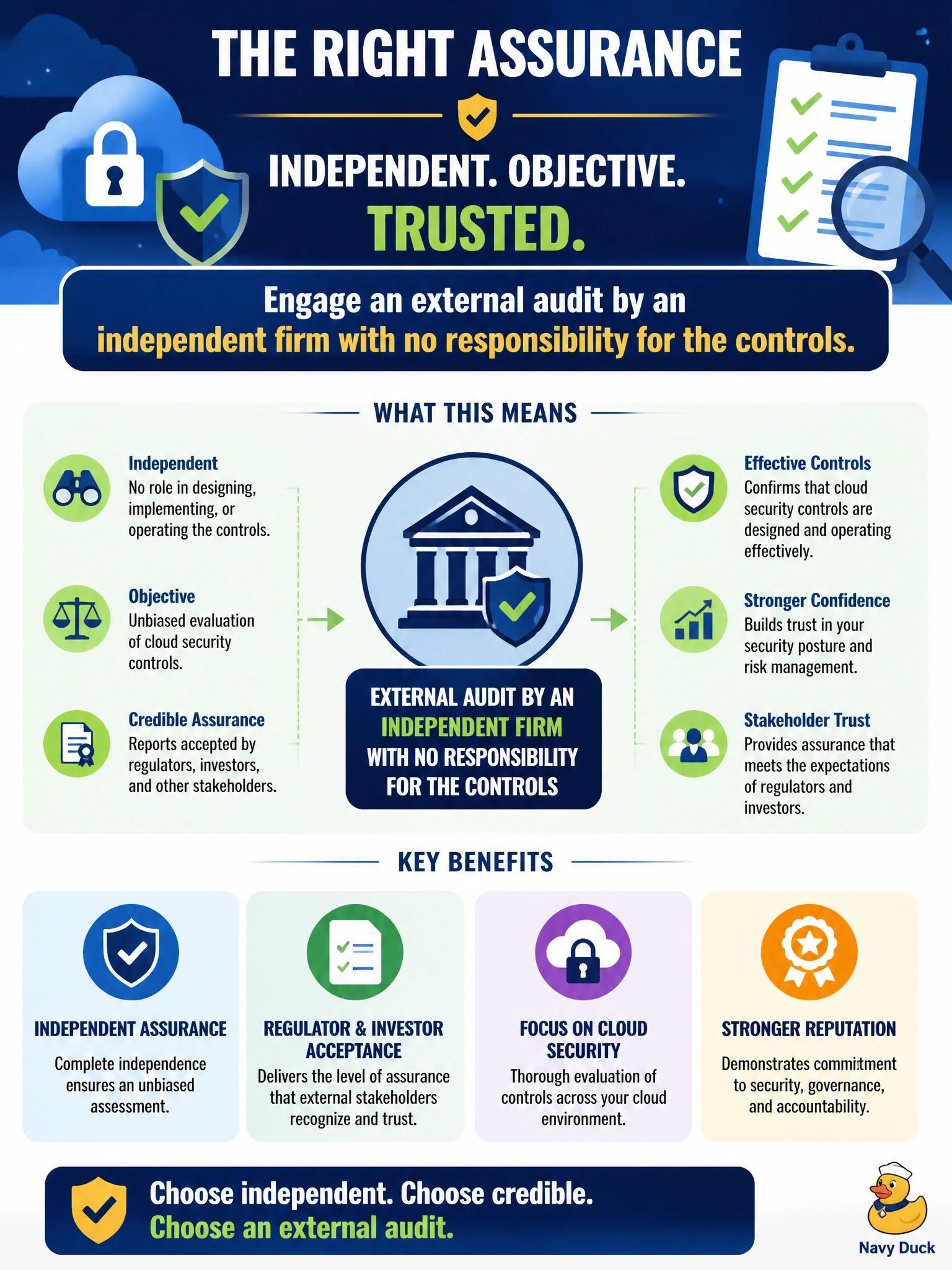
You can't grade your own homework and call it independent. When the board wants assurance outsiders will trust, you bring in an external auditor who doesn't own or run the controls. Self-assessments and internal reviews are useful, but they're the wrong tool for this job.
Full Explanation
Audit independence means the auditor has no responsibility for designing or operating the controls being assessed and no reporting relationship that could bias the result. An external audit by an independent firm provides that separation and follows professional standards, which is why regulators, investors and customers place reliance on its opinion. Internal audit can also provide valuable assurance when it reports to the board or audit committee, but an internal review performed by the operations team that built and runs the controls lacks independence entirely; it is a self-review, regardless of its title. A risk and control self-assessment is a management tool in which control owners rate their own controls; it supports risk management and audit planning but is not independent assurance. A vulnerability scanning program identifies technical weaknesses and supports remediation; it does not evaluate the design and operating effectiveness of the broader control environment, and summarizing results for the board does not make it an audit. Exam caveat: internal audit independence depends on its reporting line, so an internal function reporting to the audit committee differs from staff reporting to the CIO. Operational check: confirm the engagement letter states the audit scope, the criteria used and the auditor's independence from management.