
A multinational plans to roll out a SaaS human resources system. One country where it operates has a statute requiring that personal data about its citizens be stored and processed only within national borders. Which design response best satisfies this requirement?
Select an answer to reveal the explanation.
Short Explanation
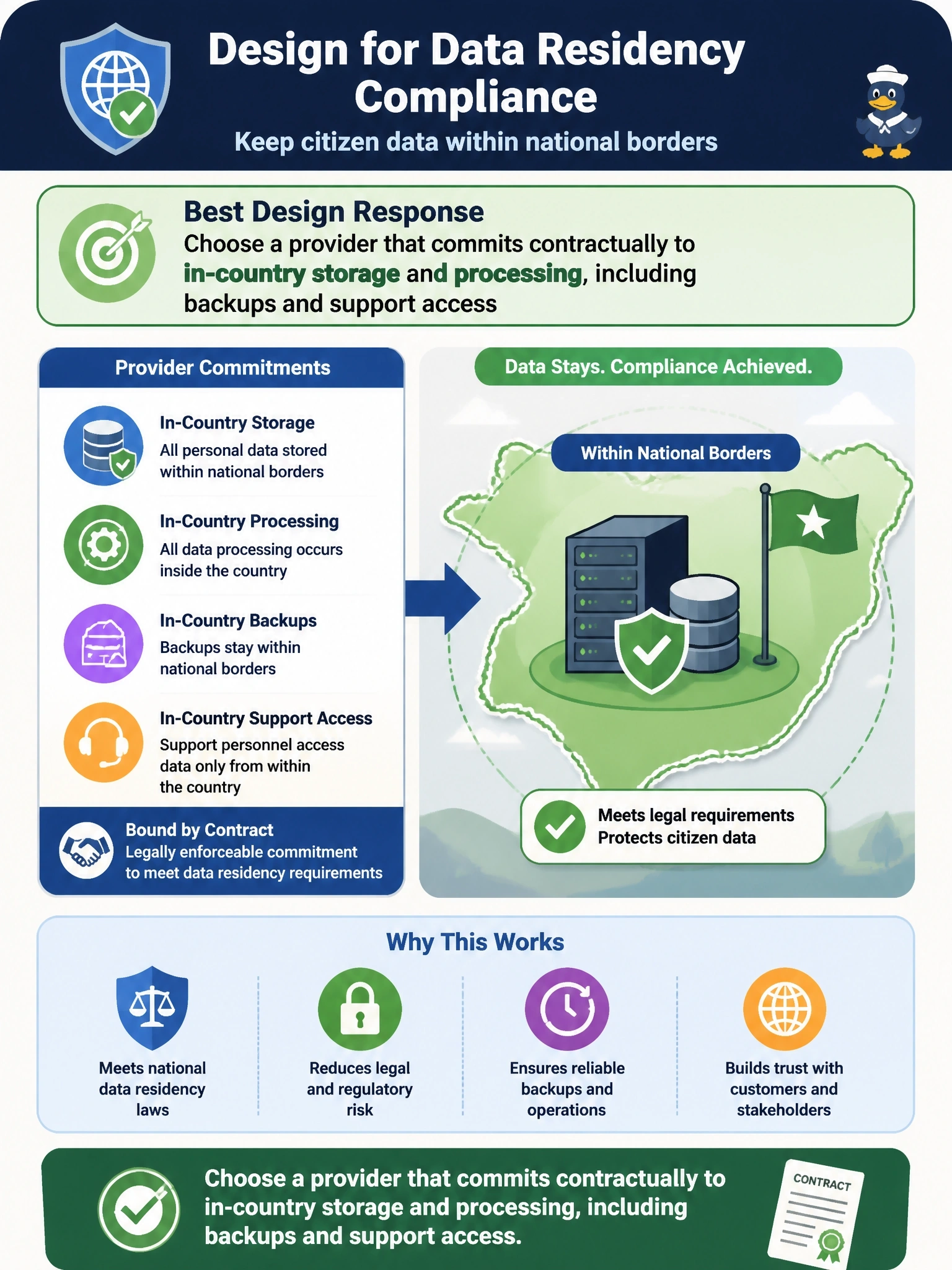
A localization law is a fence around the data, not a lock on it. Encryption is great, but the bits are still sitting on the wrong side of the fence. You need a provider that will put in writing that storage, backups and even support access stay inside the country.
Full Explanation
Data localization laws require certain categories of data to be stored, and sometimes processed, within a specific country. Meeting them in the cloud depends on selecting a provider and service configuration with in-country regions and on contractual commitments that every copy, including backups, replicas, logs and disaster recovery sites, stays inside the border, and that remote support or administrative access from abroad is restricted as the law requires. Encrypting data before upload is a strong security control, but most localization statutes regulate the location of the data, not its readability, so ciphertext stored abroad generally still violates the rule. Global multi-region replication improves availability while actively moving copies outside the country, which is exactly what the statute forbids. Individual consent rarely overrides a statutory localization mandate, and in employment relationships consent is often not considered freely given. Exam caveat: localization is related to but narrower than data sovereignty, which concerns whose laws apply; a compliant location can still face foreign legal access if the provider is subject to another jurisdiction. Operational check: verify the contract names permitted regions, prohibits transfers of backups and logs, defines support access locations and gives audit rights to confirm data residency.