
A company starts using a provider's generative AI service through an API. A product manager assumes that the provider is now responsible for whatever prompts and data the company's employees send to the service. Which statement best reflects shared responsibility?
Select an answer to reveal the explanation.
Short Explanation
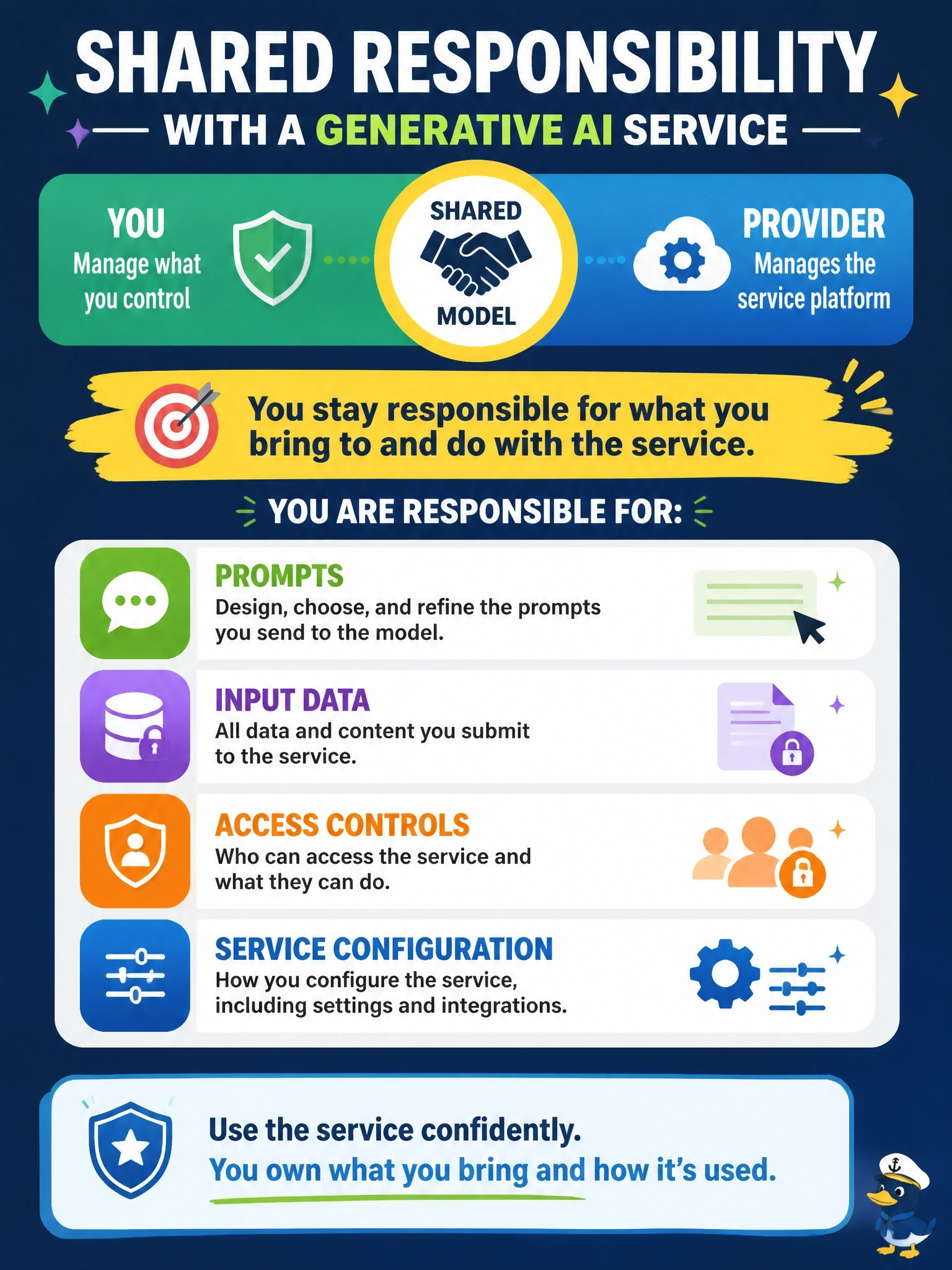
Mailing a letter doesn't make the post office responsible for what you wrote in it. With AI as a service, you still own the prompts, the data you send and who's allowed to send it. The trap is assuming the provider's model running the request means the provider owns the request.
Full Explanation
AI services follow the same shared responsibility logic as other cloud services. The provider is responsible for the infrastructure, the model hosting platform and the security of the service it operates, along with whatever commitments it makes about data handling, retention and use for training. The customer remains responsible for what it sends and how it uses the service: deciding which data may be submitted, classifying it beforehand, controlling which users and applications may call the API, configuring available data retention and logging options, and reviewing outputs before acting on them. Claiming the provider owns everything sent because the model runs on its infrastructure repeats the classic SaaS misconception; hosting a service does not make the host accountable for the customer's data decisions. The idea that responsibility shifts once data leaves the network has no basis, because accountability for data follows the data owner, not its location. Classifying the company's data is the data owner's job; a provider cannot know the business sensitivity of what it receives. Exam caveat: contract terms on training use and retention differ between offerings, and reviewing them is itself a customer responsibility. Operational check: confirm an acceptable-use policy names which data classes may be sent, and that API access is limited to approved identities and logged.