
A new business requirement states that a customer-facing workload must be movable to a different cloud provider within one quarter if commercial or regulatory conditions change. Which design choice best supports this functional security requirement?
Select an answer to reveal the explanation.
Short Explanation
If you want to move house fast, you buy furniture that fits through any door, not pieces built into the walls. Open formats and standard interfaces are the furniture that moves. The trap is the deletion clause, which handles leaving but does nothing to help you arrive somewhere new.
Full Explanation
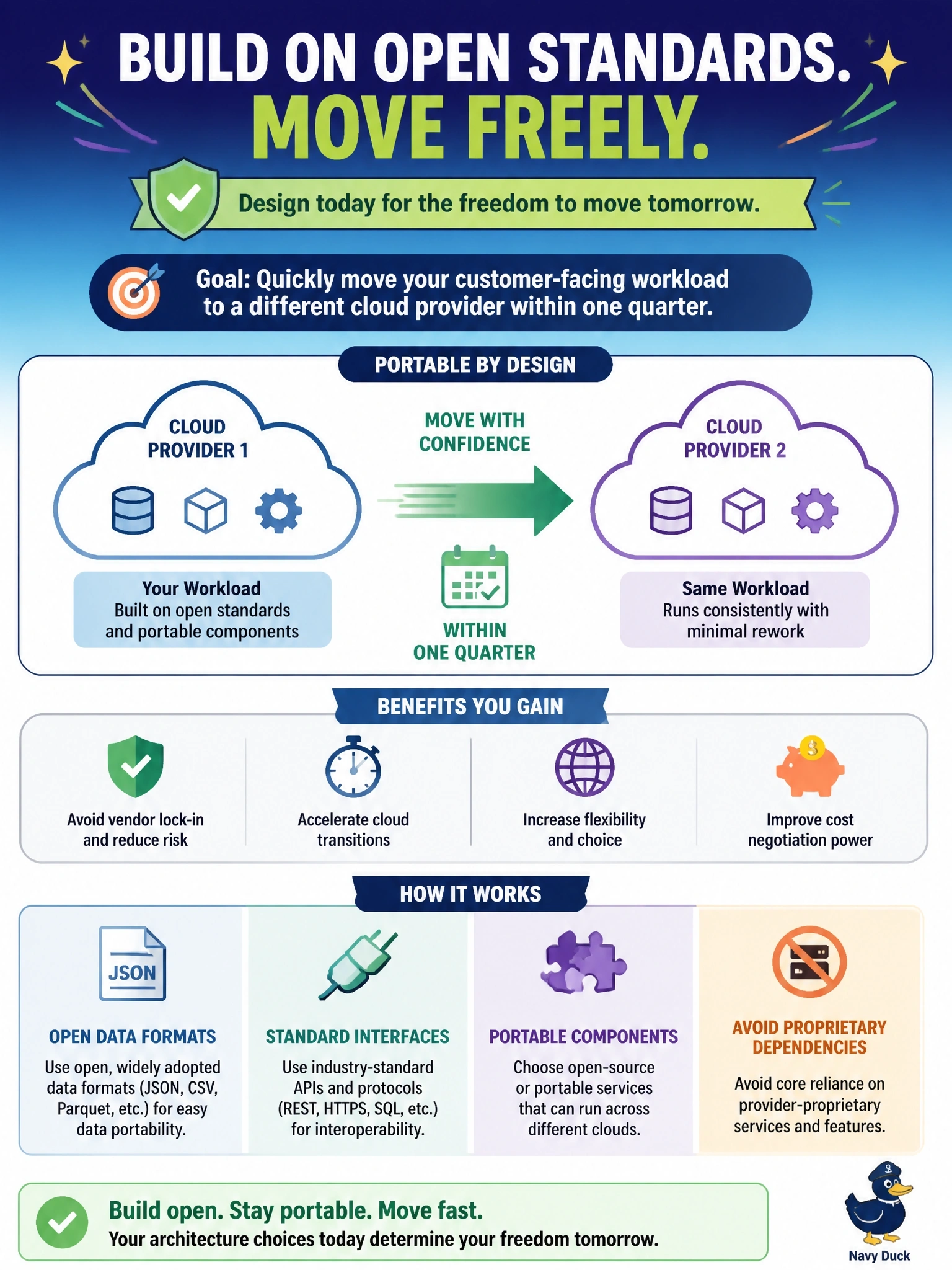
Portability is a functional security requirement because it protects availability and the organization's ability to respond to provider failure, price changes or regulatory shifts. Vendor lock-in occurs when a workload depends on proprietary services, data formats or interfaces that have no equivalent elsewhere, making migration slow and costly. Designing with open, standard data formats, standard interfaces and portable components such as containers, and isolating any provider-specific services behind abstractions, keeps the workload movable within the required timeframe. A longer contract term increases commitment to the current provider and does nothing to make the workload technically movable; it may even worsen lock-in. Proprietary migration tooling that moves workloads between one provider's regions does not help move to a different provider and can deepen dependence on that provider's ecosystem. A reversibility clause covering data return and deletion is valuable at exit, but deleting data within thirty days says nothing about whether the workload can run elsewhere. Exam caveat: the outline groups portability, interoperability and vendor lock-in as functional security requirements; full portability has a cost, so critical portions should be prioritized. Operational check: run a periodic exit test by exporting the workload's data and redeploying a component at a second provider within the stated window.