
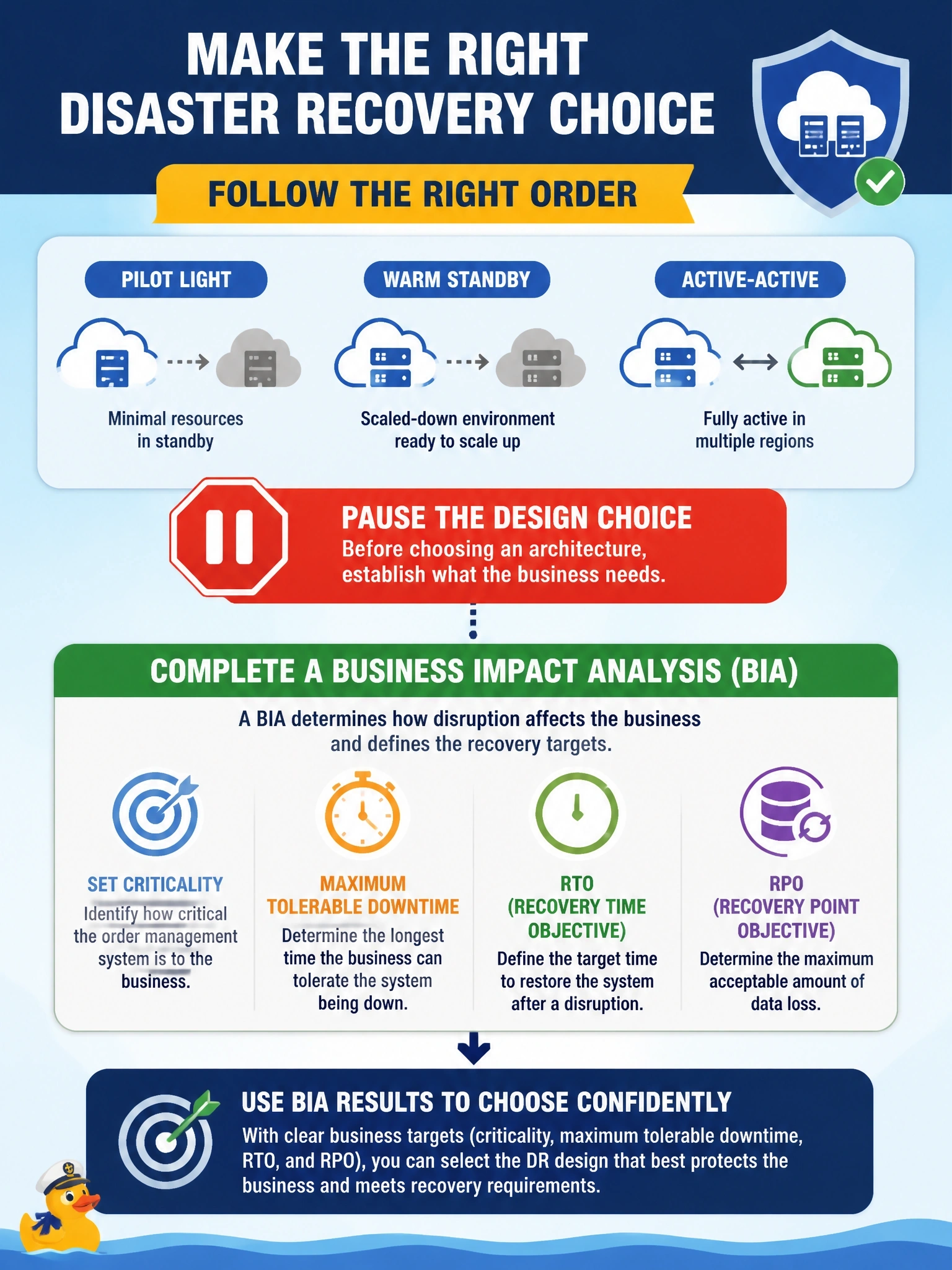
A cloud migration team is comparing pilot light, warm standby and active-active disaster recovery designs for the order management system. No one has yet determined how long the business can tolerate the system being down or how much data loss is acceptable. What should happen next?
Select an answer to reveal the explanation.
Short Explanation
You don't buy insurance before you know what the house is worth. The BIA tells you how much downtime and data loss the business can survive, and only then do you shop for a recovery design. The trap is picking a strategy first and letting an outage do the analysis for you.
Full Explanation
Business continuity and disaster recovery planning starts with the business impact analysis. The BIA identifies critical processes and their dependencies, estimates the impact of disruption over time, and establishes the maximum tolerable downtime, recovery time objective and recovery point objective. Those values are the selection criteria for a recovery strategy: pilot light, warm standby and active-active differ mainly in how quickly they restore service and how much data they can lose, and in cost. Without the BIA, the team has no basis to choose. Picking the cheapest design and learning from the first outage turns a real disruption into the analysis, accepting unknown and possibly unacceptable losses. Defaulting to active-active may overspend dramatically on a system that can tolerate hours of downtime, and it still requires defined objectives to configure replication and failover correctly. A full interruption test is the most disruptive test type, performed only after plans exist and less risky tests have succeeded; it measures the current setup rather than defining what the business needs. Exam caveat: the 2026 outline lists cost-benefit analysis and ROI as BIA examples, so cost enters the decision after impact is understood. Operational check: confirm the BIA has been signed off by the business owner, with recorded MTD, RTO and RPO, before the design review proceeds.