
Systems have been restored after an intrusion, and a team member asks why a root cause analysis is still needed, since everything is working again. What is the PRIMARY reason?
Select an answer to reveal the explanation.
Short Explanation
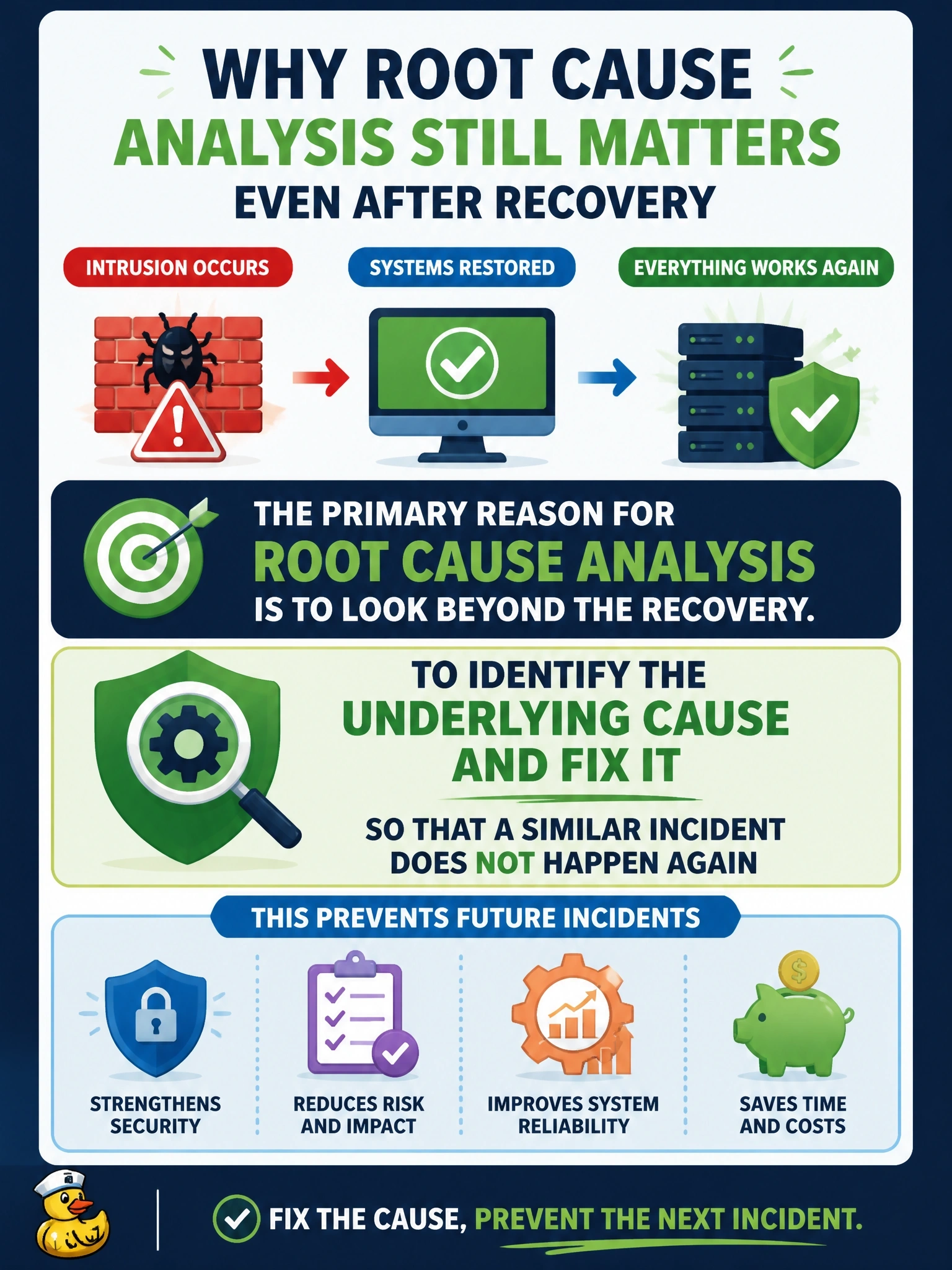
Fixing the flat tyre gets you home, but if you don't find the nail in the driveway, you'll be back on the side of the road next week. Root cause analysis finds the nail. It's about prevention, not blame or paperwork.
Full Explanation
Recovery restores service; it does not explain why the incident happened. Root cause analysis looks beyond the immediate technical trigger to the underlying conditions that allowed the incident, such as a missing control, a process gap, an unpatched vulnerability or unclear responsibility. Addressing those causes prevents recurrence and strengthens the security program, which is the central purpose of the post-incident phase. Identifying an individual for discipline confuses root cause analysis with a blame exercise; focusing on individuals discourages open reporting and usually misses systemic causes such as inadequate processes or training. Producing documentation for an insurer's questionnaire may be a secondary use of the findings, but it is not why the analysis is performed, and analysis done only for paperwork tends to be shallow. Confirming that recovered systems perform at normal capacity is part of recovery validation, not root cause analysis, and says nothing about why the compromise occurred. Exam caveat: root cause analysis can identify multiple contributing causes, and corrective actions should address each according to risk rather than stopping at the first technical fault found. Operational check: confirm the analysis documents the causal chain, each cause has a corrective action with an owner and progress is reported to management.