
A flood will make the head office inaccessible for several weeks, although IT systems hosted in a remote data center are unaffected. Which element of the business continuity plan is MOST relevant?
Select an answer to reveal the explanation.
Short Explanation
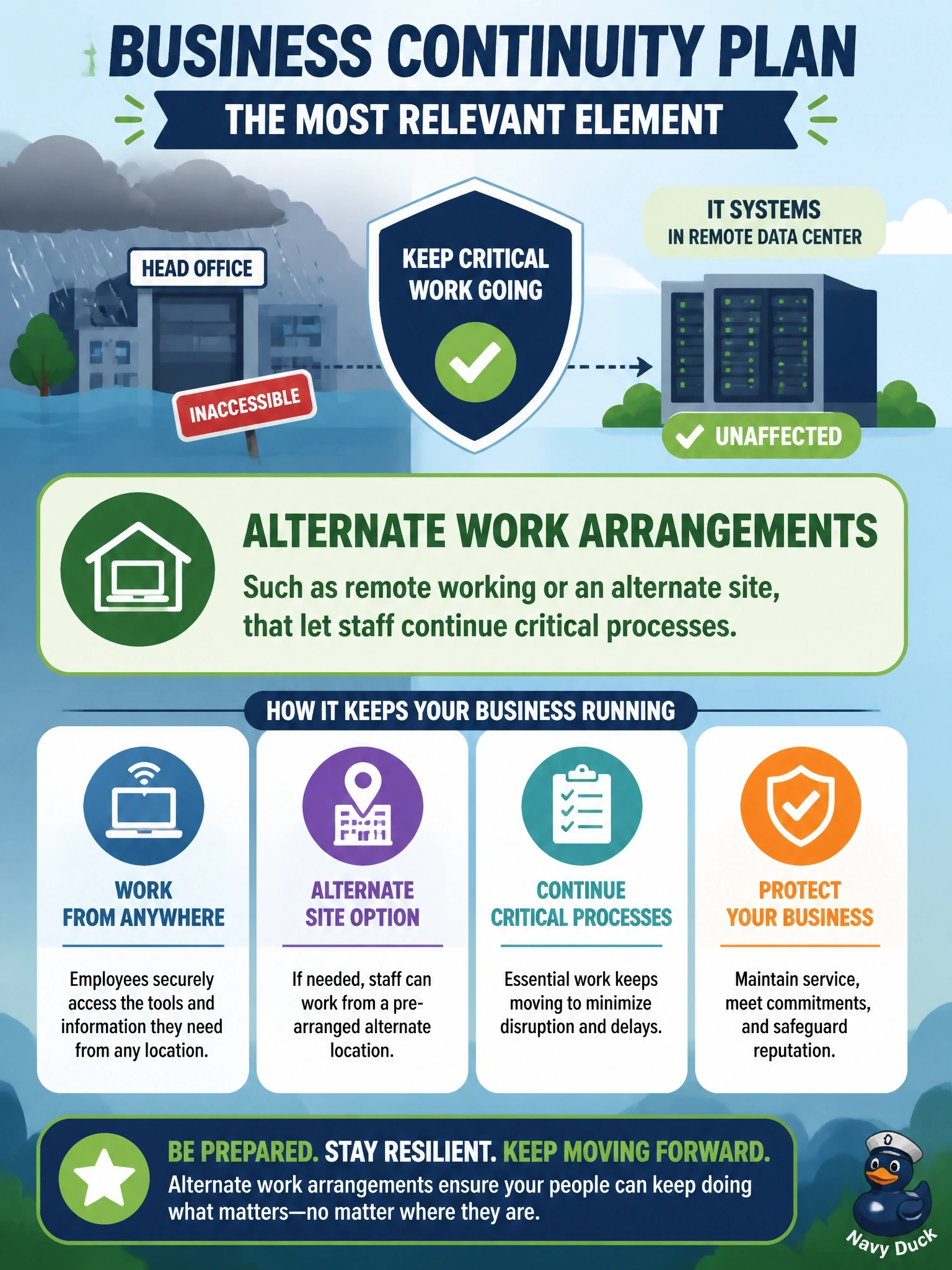
The servers are fine; it's the people who've lost their desks. So the part of the plan you reach for is where staff will work: from home or at an alternate site. Jumping to data center failover is the trap; nothing in the data center is broken.
Full Explanation
Business continuity covers people, facilities, processes and technology, not only systems. When a facility is lost but technology is intact, the relevant provisions are alternate work arrangements: remote working capability, alternate office space, relocation of critical teams and the logistics that support them, such as equipment, connectivity and communication with staff. These let critical processes continue until the head office is usable again. Failing over the data center to the recovery site addresses a technology outage, and the stem states the data center is unaffected, so invoking it would add risk and cost without solving the actual problem. Incident response procedures for containment and eradication apply to security incidents involving a threat actor or malicious code; a flood that blocks access to a building involves neither. The backup schedule concerns potential data loss, but nothing indicates data has been lost; the files on the remote systems remain available. Exam caveat: alternate work arrangements must be planned and tested in advance, including whether remote access capacity can support the whole workforce at once. Operational check: confirm the BCP lists which critical roles work remotely or relocate, the capacity available for each, and the date the arrangement was last exercised.