
The information security manager finds that the incident response plan was written by the security team without reference to the business continuity and disaster recovery plans. What is the PRIMARY risk of this situation?
Select an answer to reveal the explanation.
Short Explanation
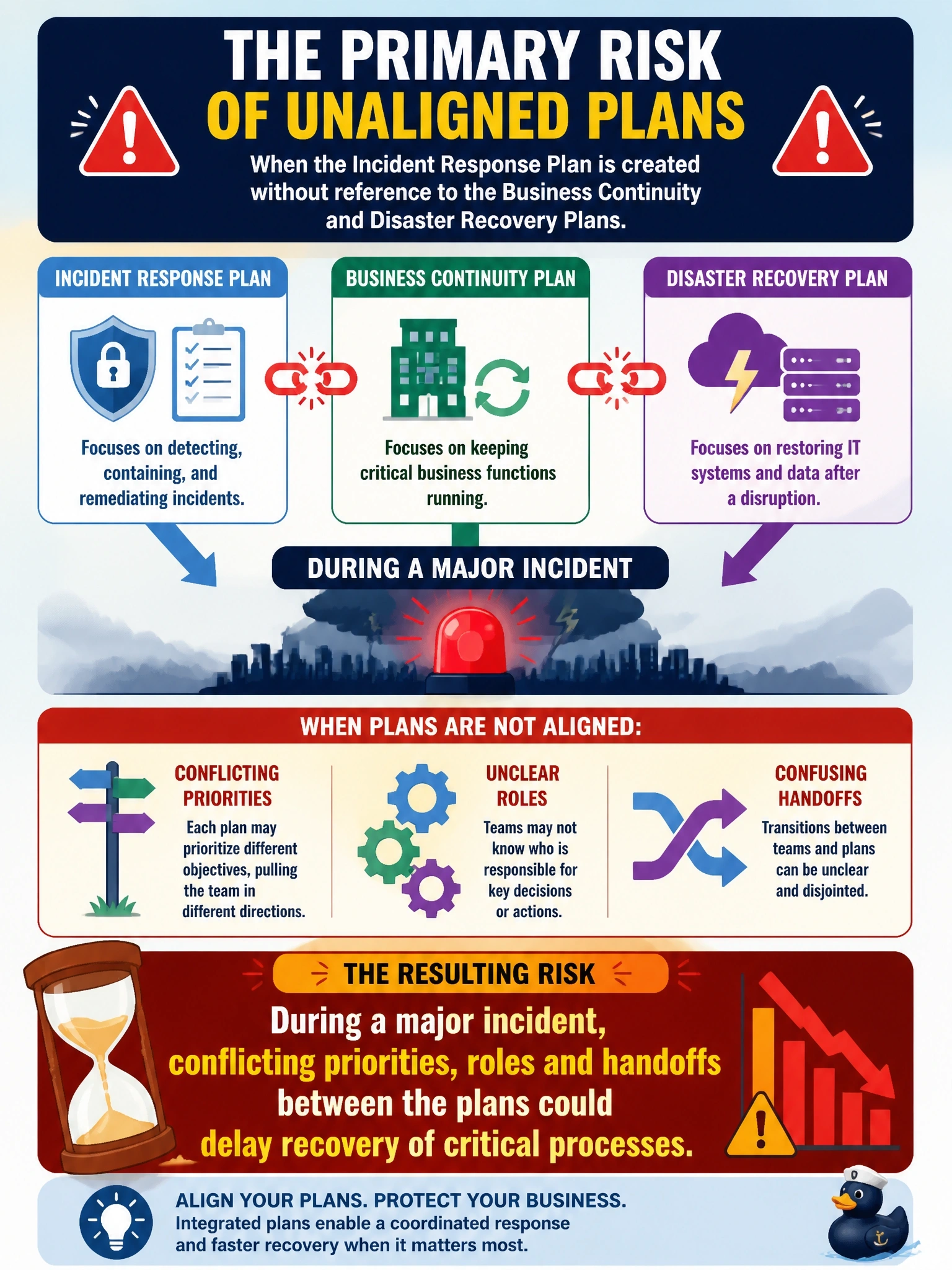
Three plans written in three separate rooms are like three conductors leading one orchestra. When a big incident turns into an outage, you need them to hand off cleanly, and if they don't, recovery slows down right when it matters most. Document length and storage location are housekeeping, not the real risk.
Full Explanation
Incident response, business continuity and disaster recovery plans are invoked together in a serious incident: response contains and eradicates the threat, continuity keeps critical processes running, and recovery restores technology. If they are written in isolation, they can assign the same decisions to different people, set conflicting priorities, for example restoring a system the response team still needs isolated, and leave gaps in escalation and communication between teams. The primary risk is therefore a slower, uncoordinated response that extends the impact on critical business processes. Duplication of content is an efficiency concern; it may make documents harder to maintain but does not by itself harm the response. Storage in different repositories is an administrative matter and, while it might attract an observation, it is not the main exposure. Additional maintenance budget is a minor cost issue compared with the operational consequences of misaligned plans. Exam caveat: alignment does not mean merging the plans into one document; it means consistent roles, triggers, priorities and handoffs. Operational check: walk through one scenario, such as ransomware on a critical system, and confirm each plan's triggers, decision makers and handoff points match those in the other two.