
The information security manager sends a single 40-page program report to both the infrastructure engineering team and the executive committee. Executives say it is too technical, and engineers say it lacks the detail they need. What should the manager do?
Select an answer to reveal the explanation.
Short Explanation
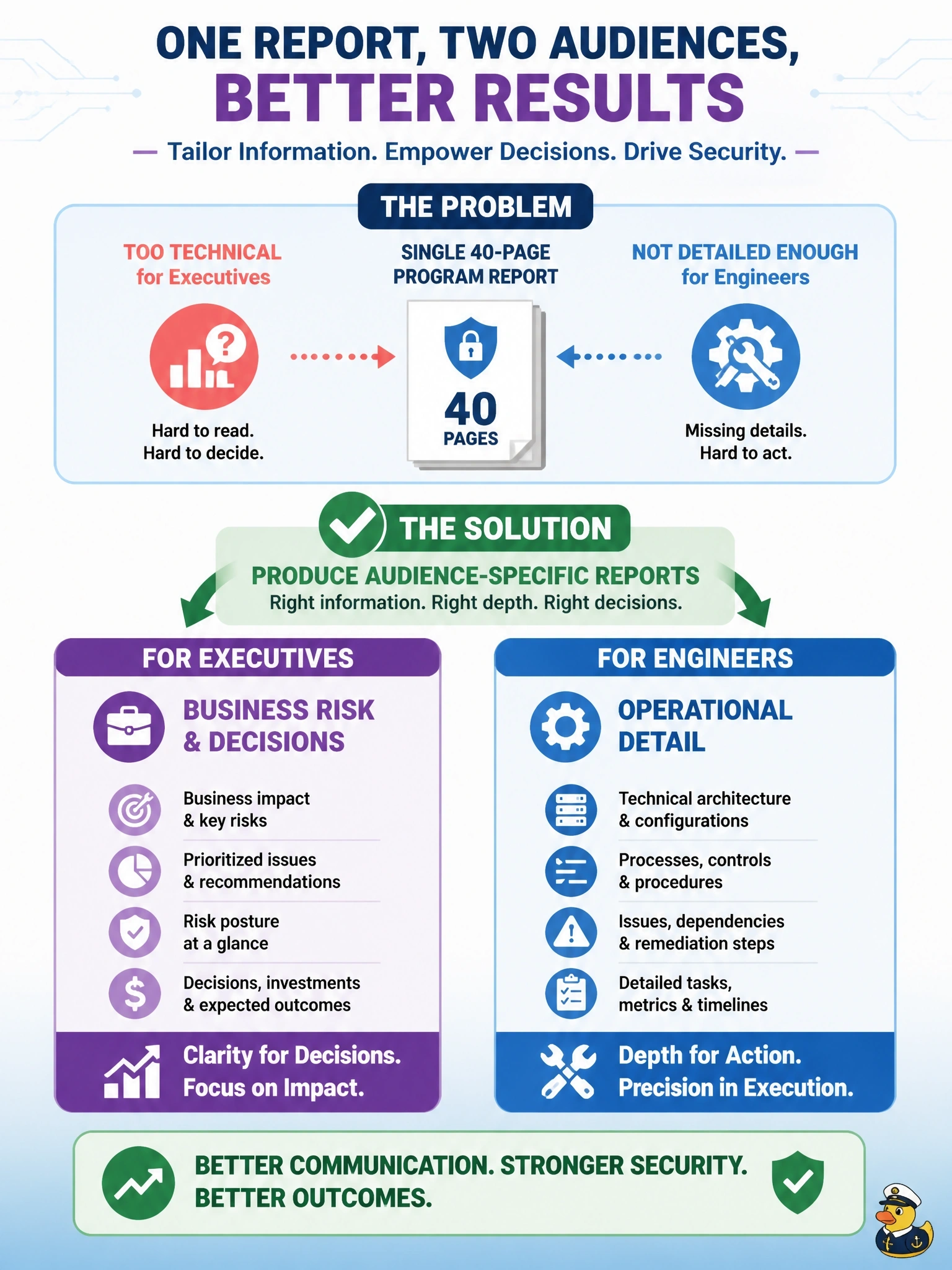
One report for everyone usually ends up working for no one, and here you've got complaints from both ends to prove it. You tailor the message: executives get risk and decisions, engineers get the nitty-gritty. A one-page dashboard for both just moves the problem; now the engineers have even less.
Full Explanation
Effective program communication starts from the audience: what each group needs to know, what decisions or actions it owns, and the language it uses. Executives need business risk, trends, program progress and requested decisions; engineering teams need technical findings, remediation priorities and operational detail. Producing tailored reports from the same underlying data keeps the message consistent while making it usable for each group. A single one-page dashboard for both audiences may suit executives but strips away the detail engineers have said they need, so it fixes one complaint by worsening the other. Sending the report only to executives leaves engineers without program direction and assumes tool output replaces management communication, which it does not; tools show events, not priorities or decisions. A joint meeting presenting the full report to both groups repeats the original problem in a different format and consumes more of everyone's time. Exam caveat: tailoring changes depth and language, never the facts; executives and engineers must not receive contradictory pictures of risk. Operational check: for each report, list its audience, the decisions or actions expected from that audience, and confirm the content and level of detail support exactly those.