
A mid-size company with no existing data classification is designing its first scheme. Staff will classify information themselves as they create it. Which design is MOST likely to succeed?
Select an answer to reveal the explanation.
Short Explanation
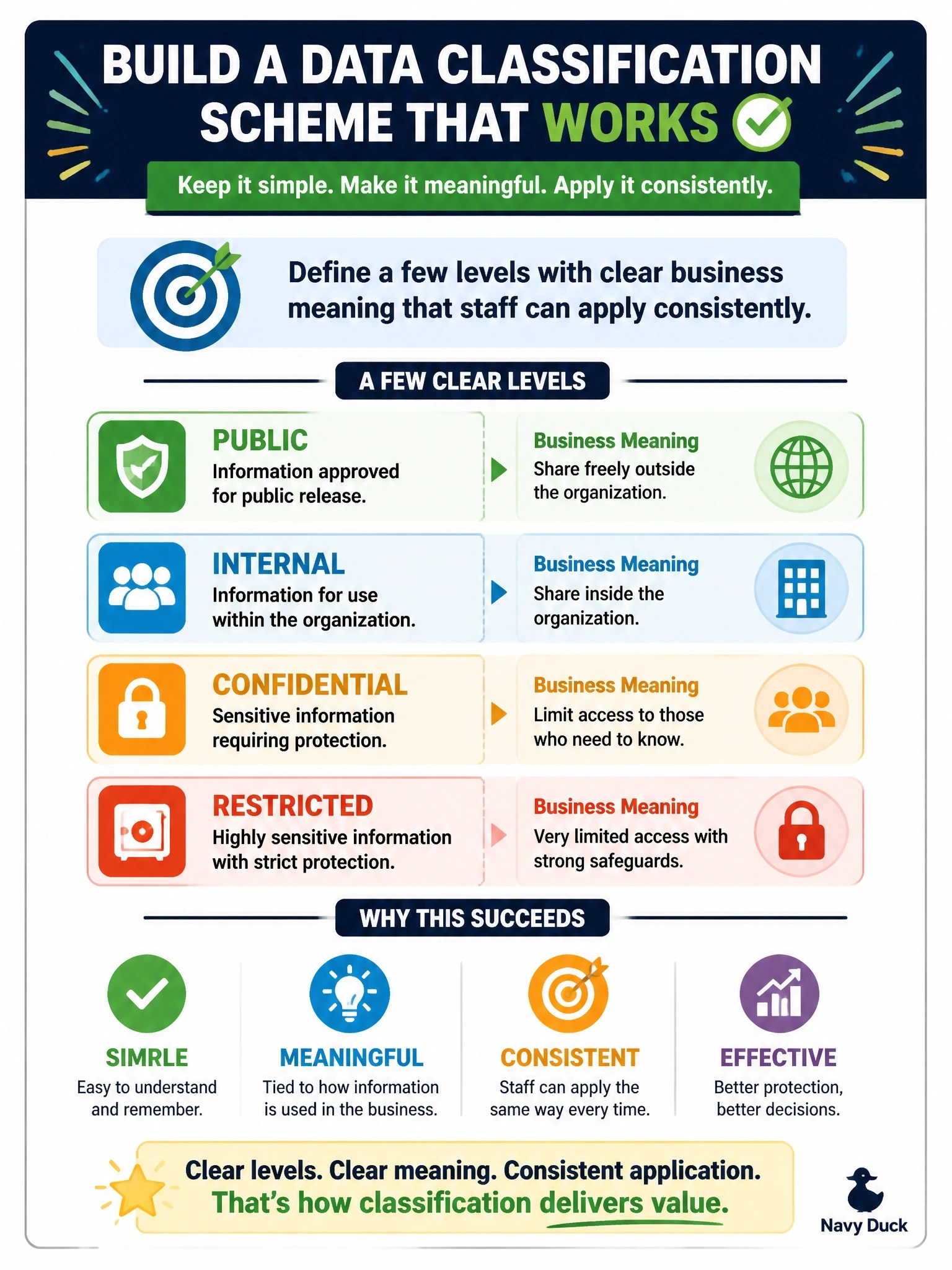
If you give people sorting bins with twenty slots, they'll just toss everything in the first one. A handful of levels that make business sense is what staff will actually use, and that beats a perfect scheme nobody follows.
Full Explanation
A classification scheme works only if the people applying it understand it and use it consistently. A small number of levels, each defined by business impact and tied to clear handling rules, is easy to learn, reduces disagreement and makes automated enforcement simpler. This is particularly important when staff classify information at creation. A government-style scheme with many levels and compartments is designed for very different requirements and staff; in a mid-size company it causes confusion, inconsistent labeling and over-classification, undermining the precision it promises. Separate levels for each department fragment the scheme, making labels mean different things in different places and complicating sharing and protection across the organization. A single confidential label for everything removes the distinction the scheme exists to make; it either over-protects public and internal information at unnecessary cost or encourages people to ignore the label entirely. Exam caveat: regulated data types may need specific handling within a level, which can be handled through handling rules rather than more levels. Operational check: sample recently created documents and measure how consistently staff applied the levels; low consistency indicates the definitions need simplifying or better guidance.