
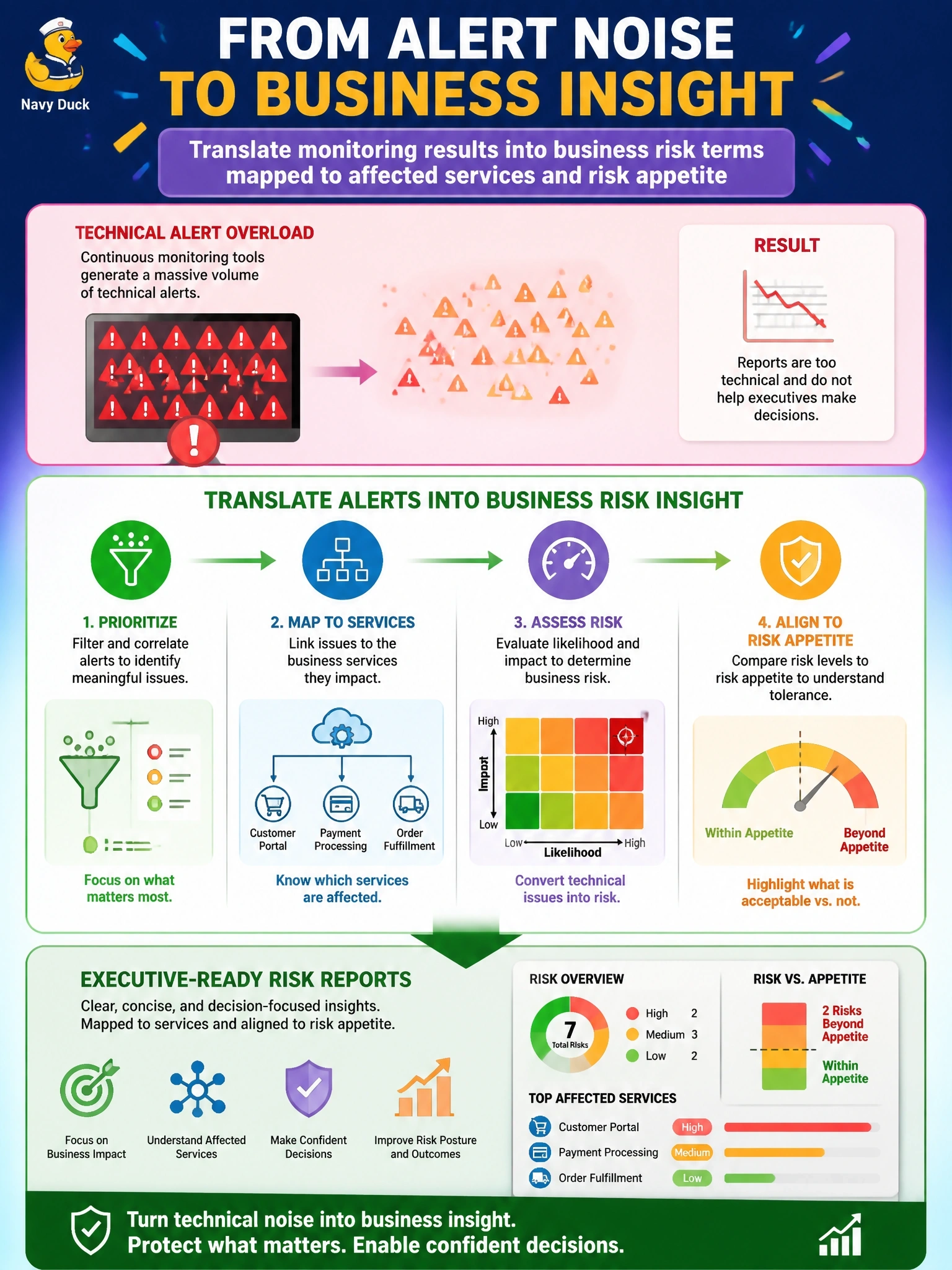
Continuous monitoring tools generate a large volume of technical alerts, and executives say the resulting security reports do not help them make decisions. What should the information security manager do?
Select an answer to reveal the explanation.
Short Explanation
Executives don't want the engine's sensor readings; they want to know whether the car will get them where they're going. Your job is to turn alerts into business risk language, not to teach the CFO how to read packet logs.
Full Explanation
Continuous monitoring produces data that is valuable to analysts but meaningless to most executives unless it is interpreted. The information security manager adds value by translating technical findings into business risk: which services or processes are affected, how the exposure compares with risk appetite, and what decisions or resources are needed. This links monitoring to governance and lets leaders act on it. Providing direct access to dashboards and raw alerts increases the volume of unfiltered data without supplying the context executives lack, and it may cause unnecessary alarm or false reassurance. Training executives on alert categories puts the burden of interpretation on the wrong audience; leaders should not need tool-specific knowledge to understand their risk position. Reporting monthly alert counts converts technical noise into activity statistics; the numbers rise and fall with tuning and attack volume and do not show whether risk is changing. Exam caveat: operational teams still need the detailed alerts, so the answer is a separate, tailored layer of reporting rather than less monitoring. Operational check: confirm each executive report item names the business service affected, its position against appetite and the decision or action requested.