
A regional bank's security team usually learns of relevant attack campaigns from news reports, often after peer institutions have already been hit. The information security manager is considering joining the sector's information sharing and analysis center. What is the PRIMARY benefit of membership?
Select an answer to reveal the explanation.
Short Explanation
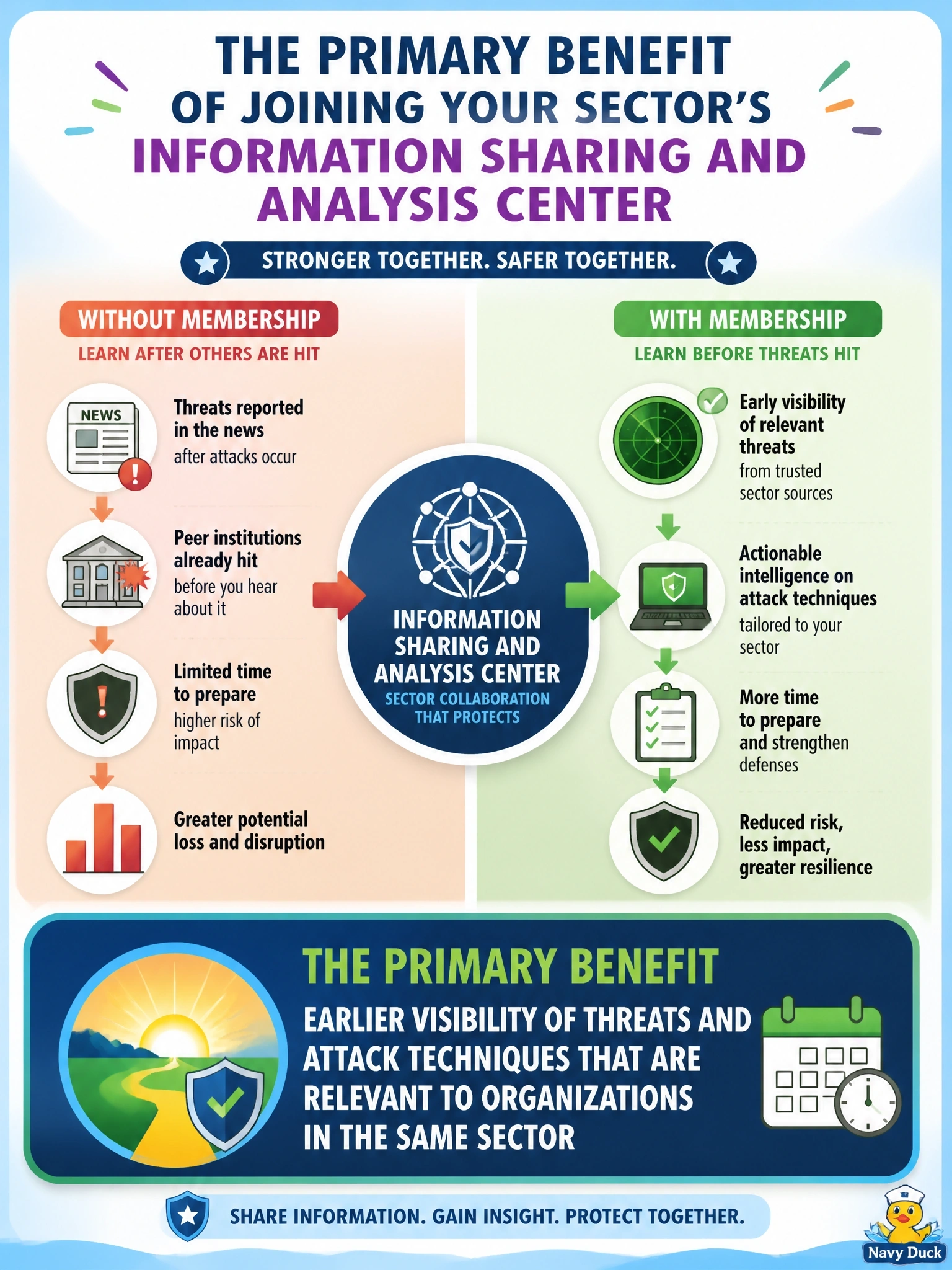
It's like a neighborhood watch for banks: when the house down the street gets hit, you hear about it before the burglars reach your door. A sharing center gives you earlier, sector-relevant warning. The trap is thinking membership hands off liability or replaces your own risk work.
Full Explanation
Information sharing and analysis centers exist so organizations facing similar adversaries can exchange indicators, tactics, alerts and lessons learned quickly and in trusted channels. For a bank that currently learns of campaigns from the news, the main gain is earlier, more relevant warning: peers that are attacked first share what they saw, allowing members to check for the same techniques and adjust defenses before they are hit. That intelligence then feeds the bank's own risk assessment and detection priorities. Membership does not transfer liability; the bank remains accountable for protecting its customers and its own systems regardless of what the center reported. Sector-wide ratings can inform the bank's assessment, but they cannot replace an assessment of the bank's specific assets, controls and appetite. Sharing centers do not certify regulatory compliance; that is the role of regulators, auditors and assessors. Exam caveat: sharing also carries obligations, such as protecting shared information and contributing back, which the bank should accept through governance. Operational check: confirm a named contact receives the center's alerts, that alerts are triaged against the bank's assets, and that resulting actions are tracked.