
The security operations team subscribes to several commercial and open-source threat intelligence feeds and now receives thousands of indicators a day. Analysts say they cannot act on most of it. What would MOST improve the value of the threat intelligence program?
Select an answer to reveal the explanation.
Short Explanation
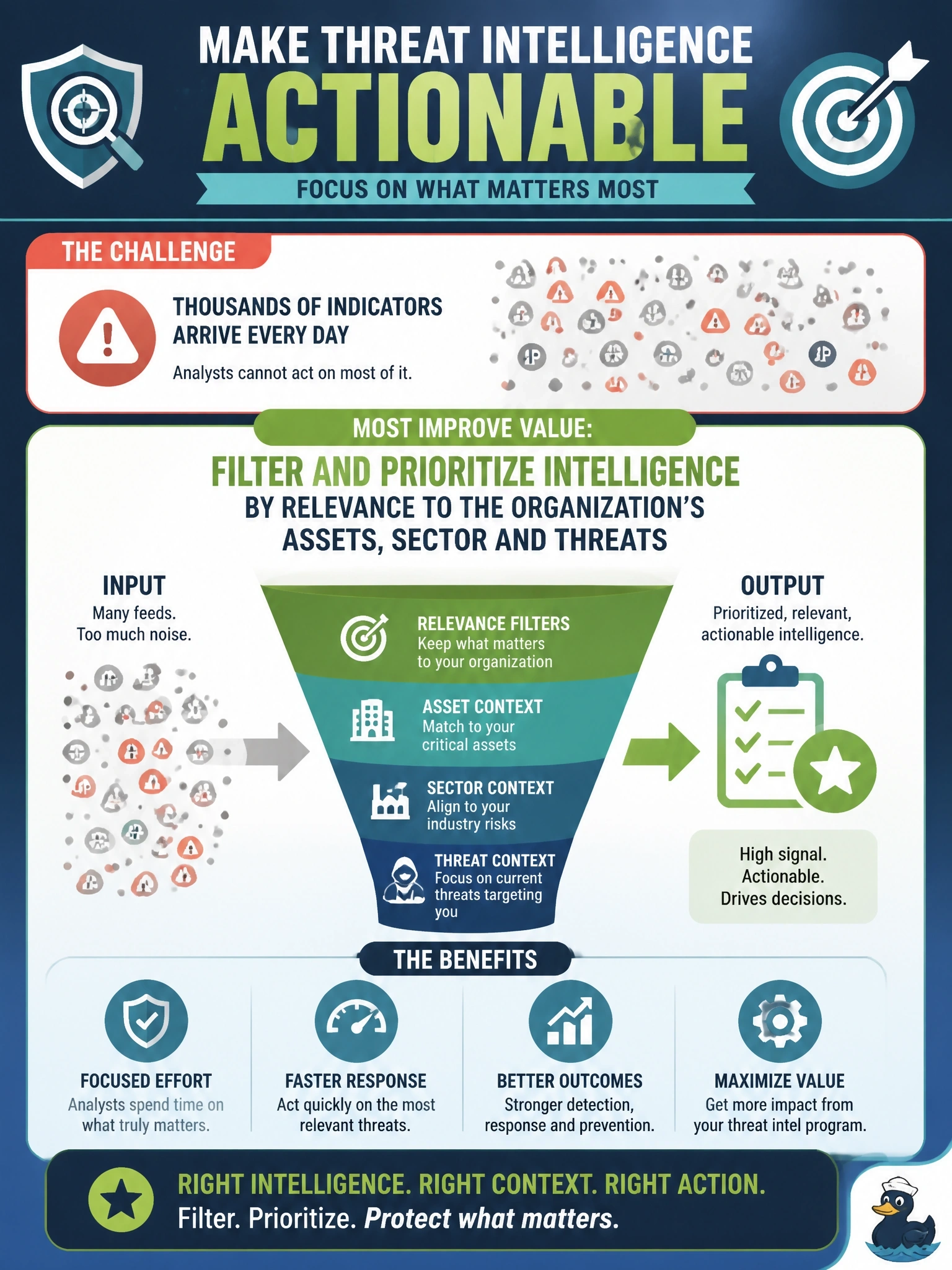
More water doesn't help someone who's already drowning. Intelligence is only worth something when it's about your assets, your sector and the attackers who actually care about you, so you filter for relevance first. Don't fall for 'buy another feed' or 'hire more people' when the real problem is noise.
Full Explanation
Threat intelligence has value only when it informs a decision, and that requires relevance. The program should define intelligence requirements tied to the organization's critical assets, technologies, sector and likely adversaries, then filter, score and prioritize incoming data against them so analysts see the indicators and campaigns that matter. That converts raw data into actionable intelligence and connects it to risk assessment and detection priorities. Adding another feed, even a high-quality one, increases volume and repeats the problem unless relevance filtering exists. Hiring analysts to review every indicator scales cost with noise; most of the effort would still go to data that does not apply to the organization. Blocking every indicator automatically, without validation, invites false positives that disrupt legitimate business traffic, and it still does not tell management which threats matter. Exam caveat: automation is helpful for enrichment and scoring, but the decision about what is relevant must reflect business context set by management. Operational check: confirm documented intelligence requirements exist, that feeds are mapped to them, and that the share of indicators leading to an action is tracked over time.