
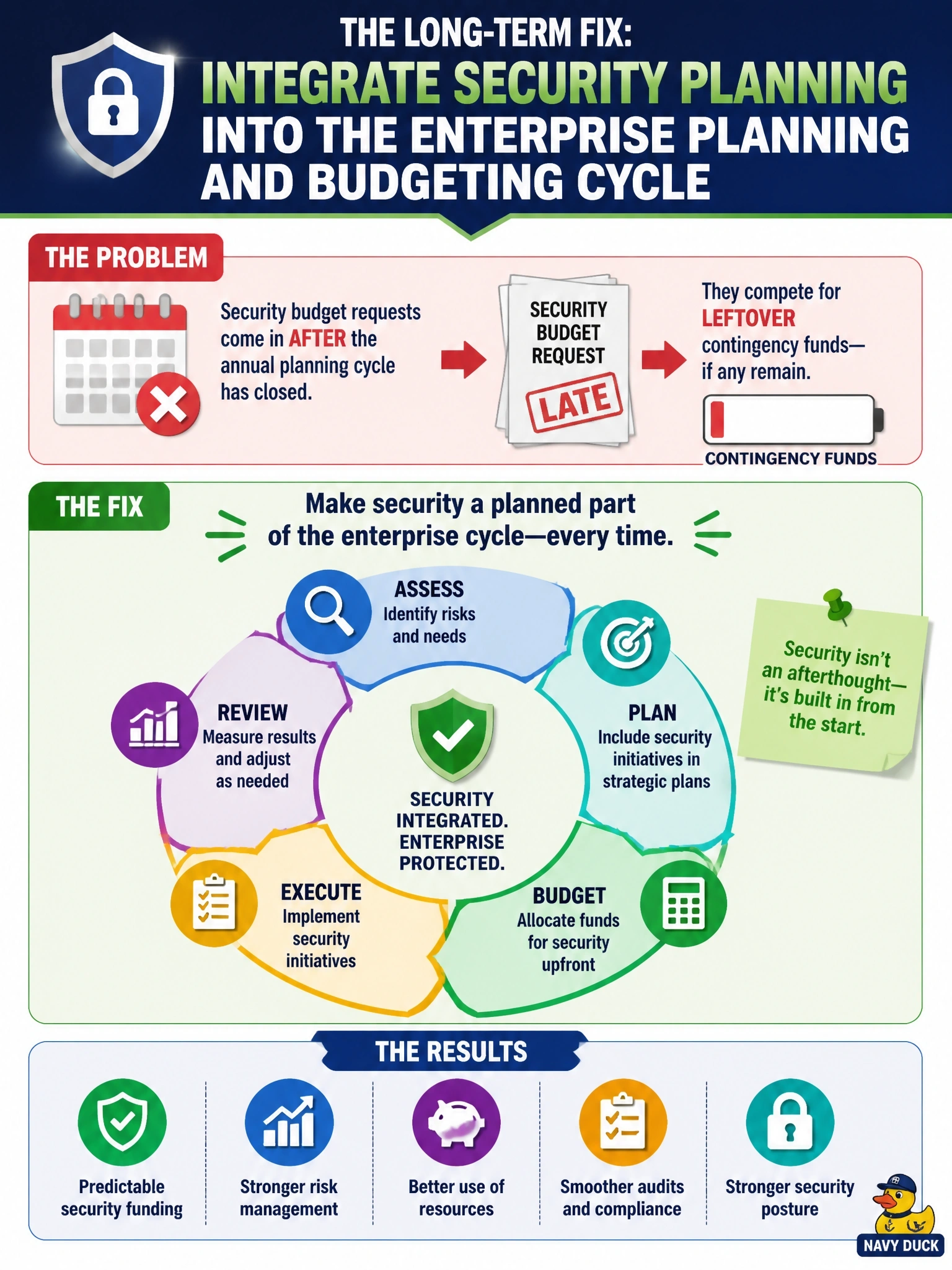
Security budget requests are repeatedly submitted after the enterprise annual planning cycle has closed, so they compete for leftover contingency funds. What is the BEST long-term fix?
Select an answer to reveal the explanation.
Short Explanation
If you show up after the meal's been served, you get leftovers. Getting security into the enterprise planning cycle means your priorities get weighed alongside everyone else's, on time and on merit. The trap is treating workarounds like emergency asks or back-channel requests as if they were a fix.
Full Explanation
Strategic planning for information security should be part of the organization's overall planning and budgeting process so that security needs are identified, justified and prioritized alongside other business investments. Integrating security into the enterprise cycle means aligning security planning timelines with corporate planning, contributing to business unit plans where security is a dependency, and presenting business cases when funding decisions are made. This improves the likelihood of adequate funding and reinforces that security is a business function rather than an afterthought. Requesting emergency allocations whenever needs arise relies on exceptions, undermines credibility and makes long-term programs difficult to sustain. Funding security from the IT department's discretionary contingency ties security to IT's leftover resources, reinforces the perception that security is purely an IT matter and leaves funding vulnerable to IT's own priorities. Submitting requests directly to the chief executive outside the process bypasses governance, can damage relationships with peers and still does not create a sustainable funding mechanism. Exam caveat: genuinely urgent risks may justify out-of-cycle requests, but they should be exceptions, not the normal route. Operational check: confirm the security planning calendar aligns with the enterprise cycle and that security initiatives appear in the approved annual plan.