
A proposal to buy a data protection platform shows the purchase price and implementation fees but nothing beyond go-live. What key information is missing that management needs to make a sound decision?
Select an answer to reveal the explanation.
Short Explanation
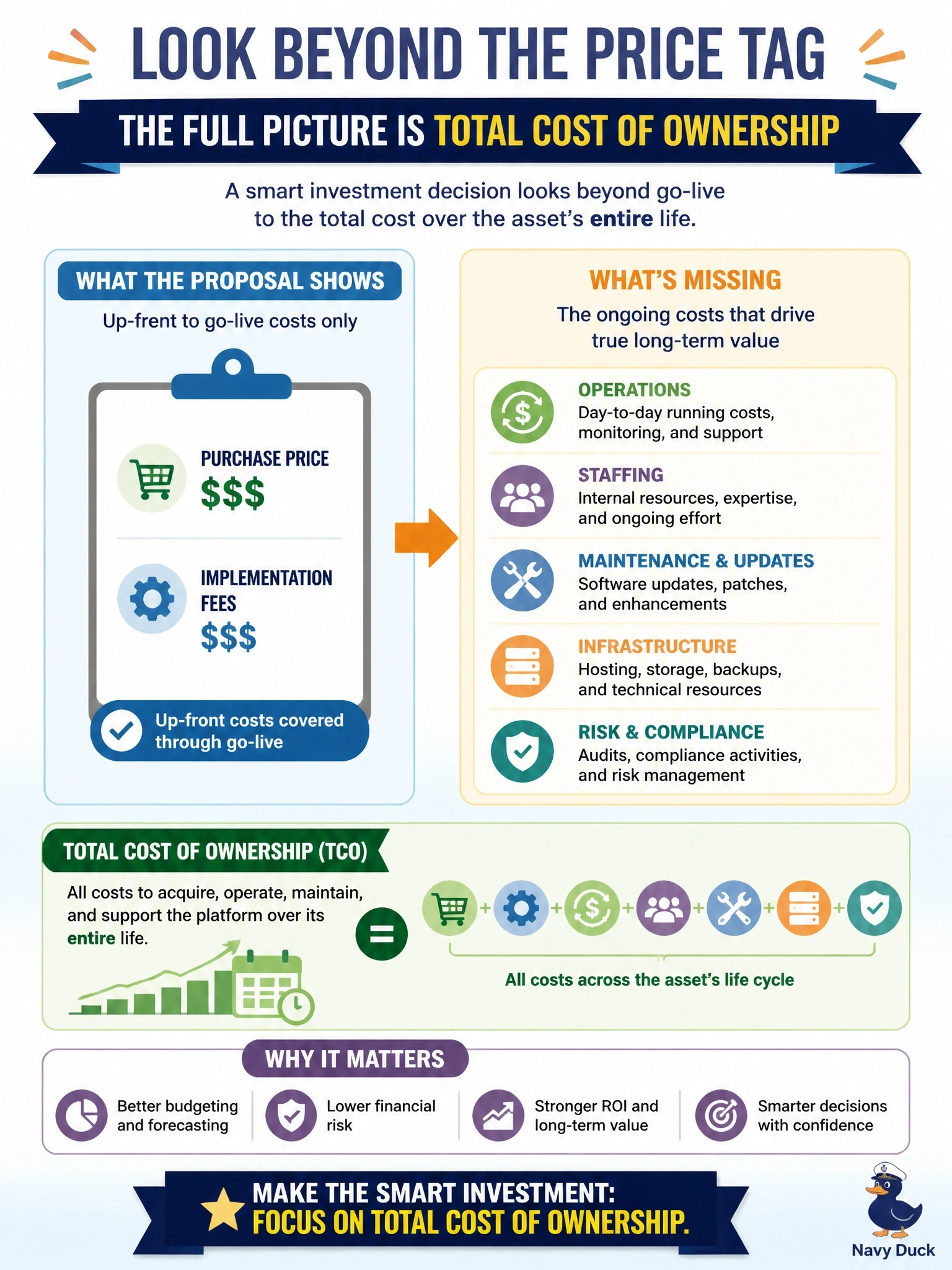
Buying the tool is like buying a car: the sticker price is only the start. You've also got to fuel it, maintain it and pay someone to drive it. Without total cost of ownership, management is approving a number that will quietly grow every year after go-live.
Full Explanation
Investment decisions should be based on the full cost of a solution across its expected life, not only the initial outlay. Total cost of ownership includes licensing and subscriptions, infrastructure, ongoing operation, staffing and training, maintenance and support, upgrades, integration effort and eventual decommissioning. Security tools in particular often require significant operational effort, such as tuning, monitoring and incident handling, which can exceed the purchase price over a few years. Without this information, management cannot compare the proposal fairly with alternatives or confirm it can be sustained within future budgets. The vendor's market share and analyst ranking may inform product selection but say nothing about what this organization will actually spend. A multiyear discount affects the price but is again a component of acquisition cost, and committing for longer may increase lock-in risk. An approval deadline for quoted pricing is a negotiating detail; pressure to decide quickly is not a substitute for understanding the full financial commitment. Exam caveat: total cost of ownership should be weighed against expected benefits and risk reduction; the lowest-cost option is not automatically the best. Operational check: confirm the proposal includes a multiyear cost model covering each cost category, with staffing assumptions validated by the team that will operate the platform.