
The steering committee returns a draft business case for a new identity management platform because it presents only the chosen product and its benefits. Which addition would MOST improve the business case?
Select an answer to reveal the explanation.
Short Explanation
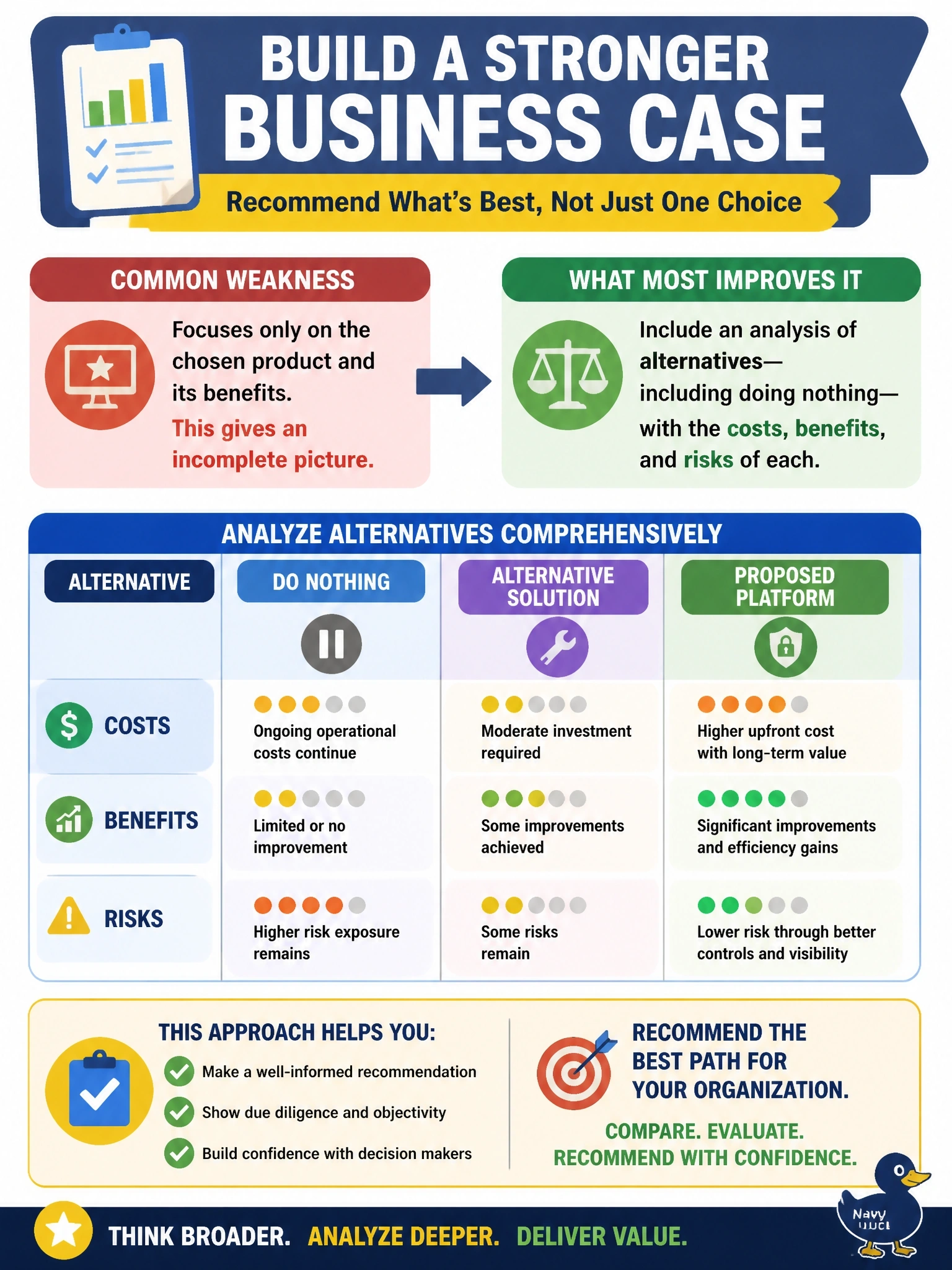
A business case with only one option isn't a case; it's a sales pitch. Decision makers need to see the alternatives, including 'do nothing,' so they can tell whether your pick is actually the best use of the money. The trap is adding more detail about the same single option.
Full Explanation
A business case supports a decision, and a decision requires choices. A complete case therefore presents the options considered, typically including doing nothing or maintaining the status quo, and compares their costs, benefits, risks and alignment with business objectives, so decision makers can see why the recommended option is preferred and what the consequences of declining it would be. The steering committee returned the draft precisely because it lacked this comparison. Adding more technical detail about the chosen product deepens the description of one option without enabling a choice and is more relevant to implementation than to approval. Letters of support from IT operations demonstrate stakeholder buy-in, which is helpful, but they do not address whether the investment represents the best value among available options. A longer, more detailed timeline improves project planning, yet it again describes the chosen path rather than justifying it. Exam caveat: the do-nothing option is important because it makes the current level of risk explicit and shows the cost of inaction, which is often the most persuasive element. Operational check: confirm the revised business case includes at least two alternatives plus the status quo, each with total cost, expected benefits, risks and a clear basis for the recommendation.