
The security manager is preparing a business case for a security monitoring platform to present to the executive committee. Which content would be MOST persuasive to that audience?
Select an answer to reveal the explanation.
Short Explanation
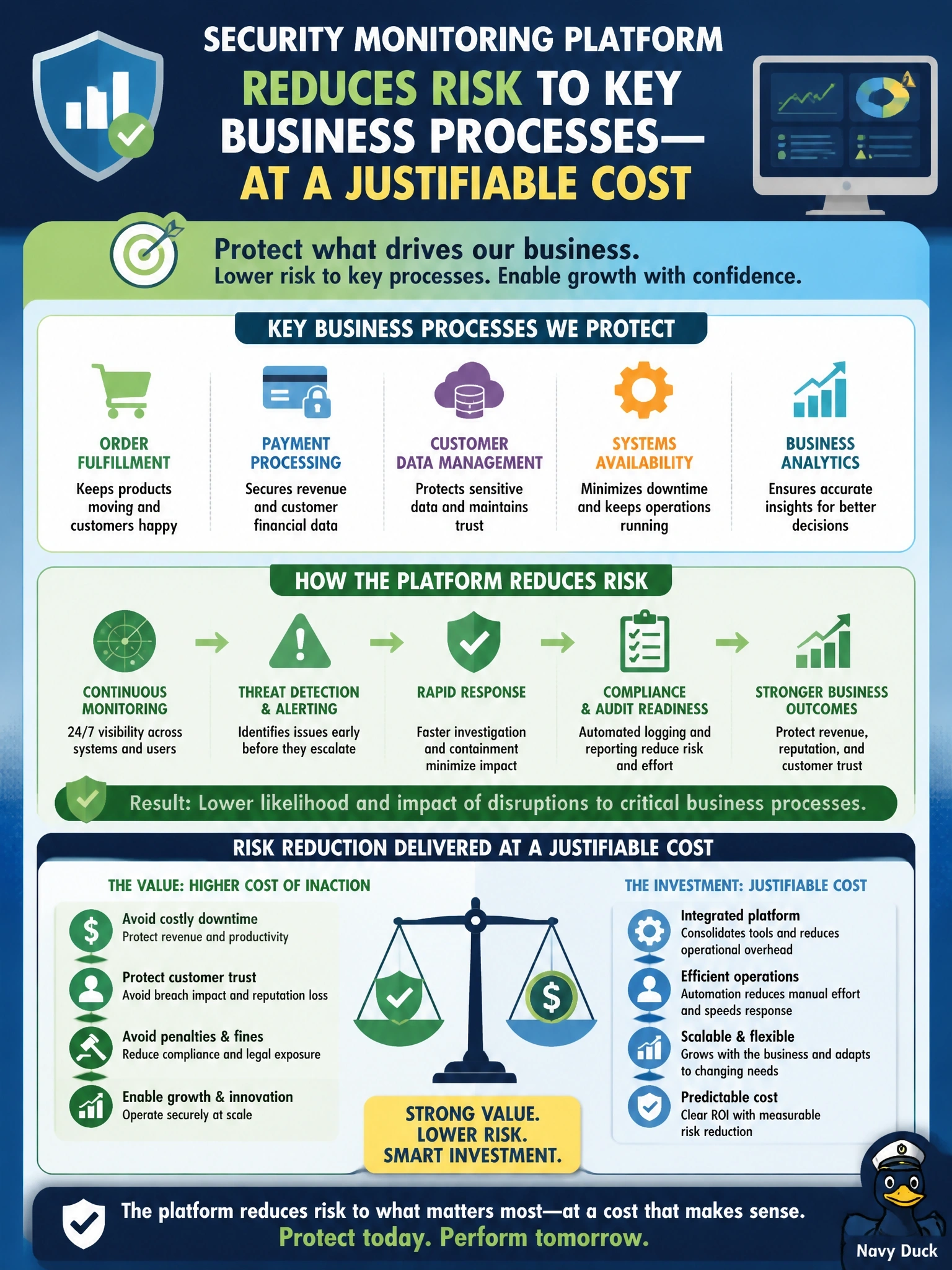
Executives buy outcomes, not features. Show them which business processes get safer, by how much, and what it'll cost to get there. Feature comparisons and network diagrams are great for your team's buying decision, but they're the trap when the audience is signing the check.
Full Explanation
Executives evaluate investments by their contribution to business objectives and their cost relative to alternatives. A persuasive security business case therefore explains which business processes and assets the platform protects, how it reduces the likelihood or impact of risks to them, how that reduction relates to the organization's risk appetite, and what the total cost is, so the committee can judge value. A detailed feature comparison is important for selecting a product, but it answers a procurement question that executives expect management to have already resolved and does not show business value. Industry attack statistics provide context, yet generic figures do not demonstrate the organization's own exposure or how the investment would change it, and heavy reliance on them can come across as fear-driven. A technical integration architecture is necessary for implementation planning but is too detailed for an executive audience and again does not connect the spend to outcomes. Exam caveat: the most persuasive case is still honest about uncertainty and alternatives; overstated benefits damage credibility for future requests. Operational check: confirm the business case names the business processes protected, the risks addressed with current and expected ratings, total cost of ownership, and the alternatives considered.