
Permitting operates a prompt firewall. Which monitoring practice best measures that control’s performance?
Select an answer to reveal the explanation.
Short Explanation
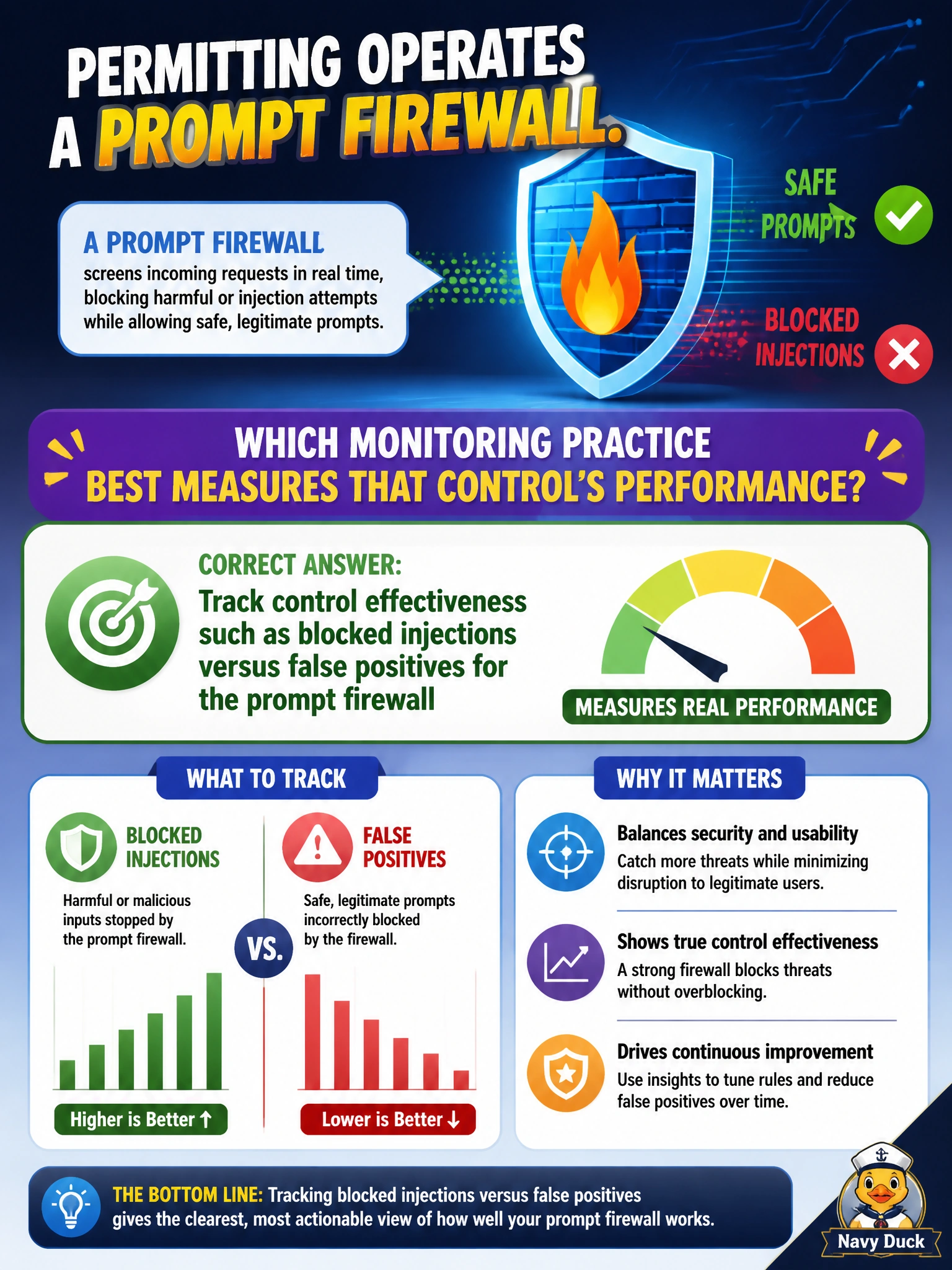
A prompt firewall that never reports how it is doing is flying blind. Track blocked injections versus false positives so permitting can tune the control.
Full Explanation
Tracking control effectiveness such as blocked injections versus false positives for the prompt firewall is how permitting measures whether that AI security control actually performs. The correct monitoring practice works because effectiveness metrics reveal both security value (true blocks of injection and policy-violating prompts) and operational cost (false positives that frustrate legitimate applicants or staff), enabling tuning rather than blind faith. Monitoring daily prompt throughput volume and average response latency fails by measuring operational performance rather than whether the firewall actually blocks injection attempts or produces false positives. Tracking firewall policy version counts and rule deployment frequency fails by measuring change administration instead of control efficacy. Measuring infrastructure resource utilization such as CPU and memory for the prompt firewall hosts fails by measuring host health instead of whether the control blocks malicious prompts. Exam caveat: blocked-injection counts can be gamed by noisy attackers or weak detectors; pair volume metrics with sampled true-positive review and coverage of known attack techniques. Operational check: instrument the permitting prompt firewall for block, allow, and false-positive labels; dashboard effectiveness weekly; sample blocked and allowed prompts for quality review; and adjust rules only through change control with before/after metrics.
Prefer to study offline? Printable PDF study book + test engine ($7.50, unofficial). These questions stay free here.