
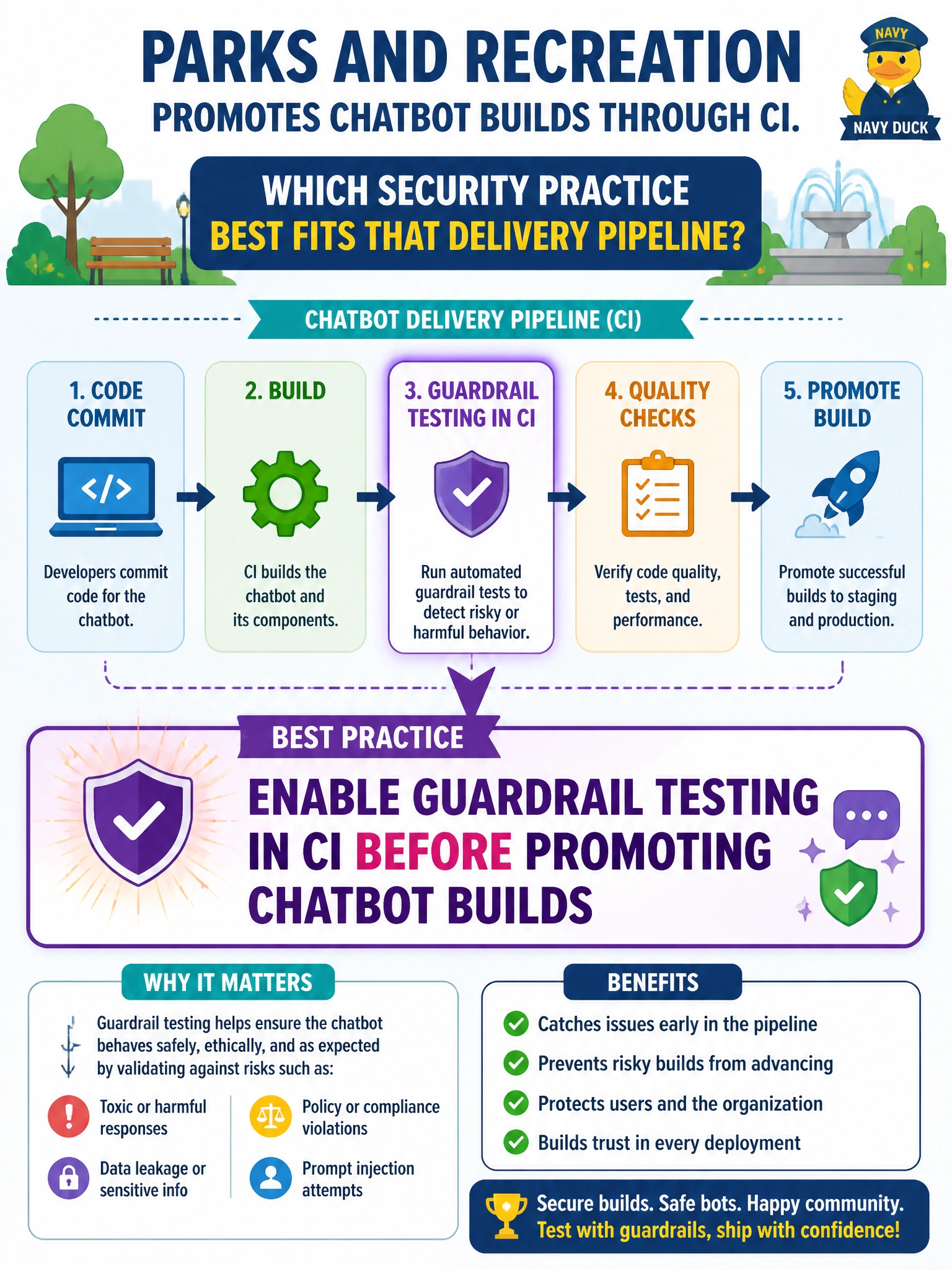
Parks and recreation promotes chatbot builds through CI. Which security practice best fits that delivery pipeline?
Select an answer to reveal the explanation.
Short Explanation
Park chatbots should fail the pipeline before they fail the public. Guardrail testing in CI—before promotion—is the delivery control that matters.
Full Explanation
Enabling guardrail testing in CI before promoting parks-and-recreation chatbot builds is the delivery-pipeline security practice that fits municipal AI: safety and policy checks should fail the build before residents ever see a regression. The correct practice works because CI gates make guardrail evaluation a required quality bar alongside unit tests, preventing "ship now, safety later" promotions. Requiring secrets scanning in CI before promoting chatbot builds fails by treating secret hygiene as sufficient while ignoring harmful-output controls. Enabling penetration testing in CI before promoting chatbot builds fails by targeting exploitable vulnerabilities rather than validating chatbot safety and policy behavior on every build. Enabling audit logging in CI before promoting chatbot builds fails by providing traceability without blocking unsafe builds, leaving harmful-output regressions to reach residents. Exam caveat: guardrail suites must be maintained as prompts and tools change; stale tests create false confidence, and flaky guards need triage rather than silent disablement. Operational check: add guardrail test jobs to the chatbot CI pipeline as required checks, block promotion on failure, trend failure categories, and re-run the suite on prompt, model, or tool-connector changes before parks chatbot releases.
Prefer to study offline? Printable PDF study book + test engine ($7.50, unofficial). These questions stay free here.