
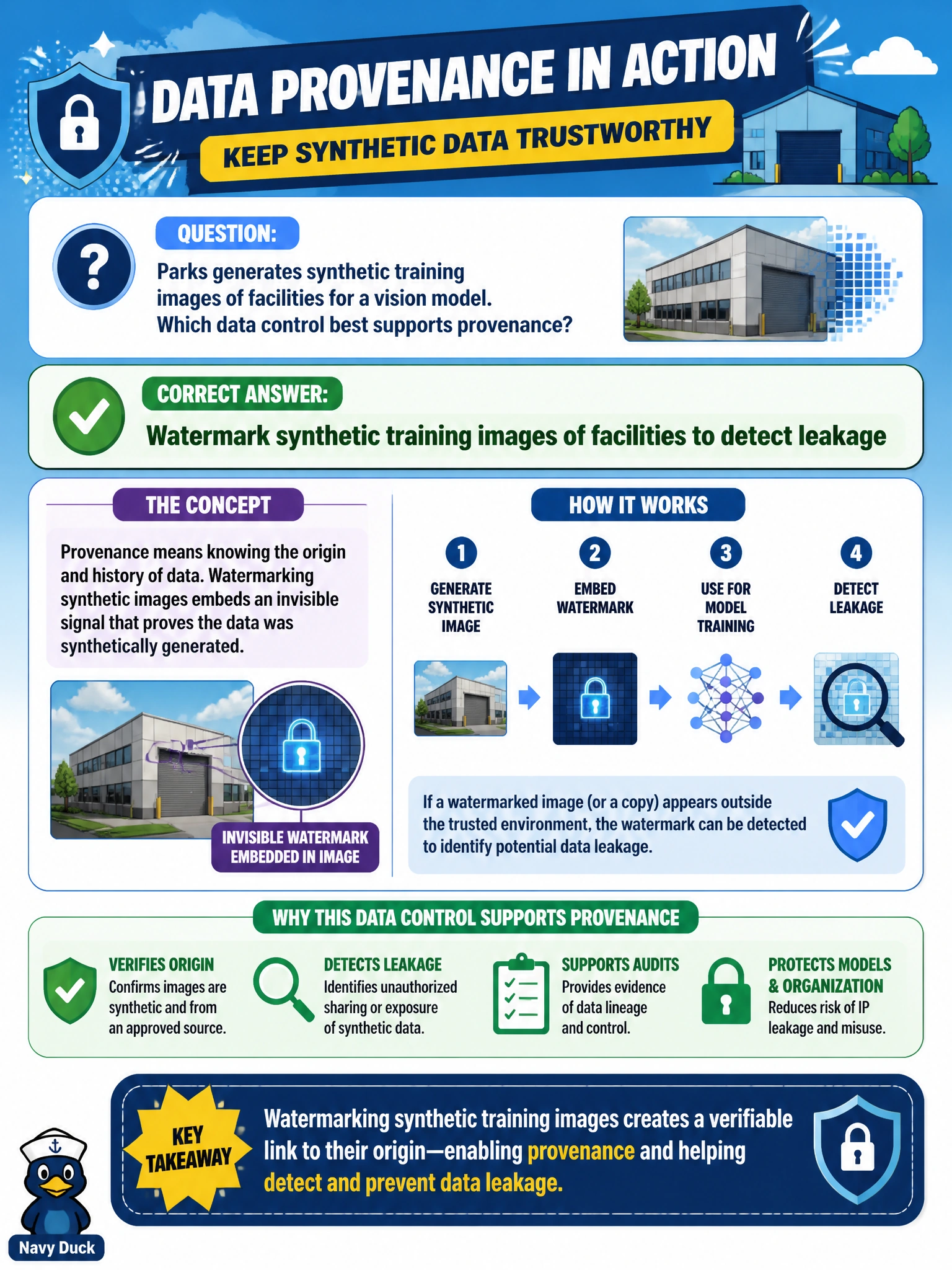
Parks generates synthetic training images of facilities for a vision model. Which data control best supports provenance?
Select an answer to reveal the explanation.
Short Explanation
Synthetic park photos still need a telltale mark. Watermark them so if those training assets leak, you can spot the fingerprints instead of guessing.
Full Explanation
Parks synthetic training images of facilities still require provenance so leakage, misuse, or accidental publication can be detected and attributed. Watermarking those synthetic assets creates a durable signal that distinguishes generated training media from authentic facility photography and supports investigation if images appear outside approved channels. Checksumming synthetic training images of facilities to verify integrity ensures data integrity but does not create a provenance signal or detect leakage, so it cannot support attribution or investigation if images are misused. Encrypting synthetic training images of facilities to protect confidentiality protects confidentiality in storage and transit but does not create a provenance signal or detect leakage once images are decrypted, so it cannot support attribution or investigation if images appear outside approved channels. Tagging synthetic training images of facilities for access control helps enforce access policy but does not create a durable provenance signal in the image content or detect leakage, so chain-of-custody and leakage response lose critical evidence. Exam caveat: provenance controls—including watermarking of synthetic facility images—are part of AI data management, not optional branding; checksumming synthetic training images of facilities to verify integrity addresses data integrity but not provenance or leakage detection. Operational check: watermark parks synthetic facility images at generation, record watermark IDs in a provenance registry, restrict distribution, and periodically scan public channels for watermark hits that indicate leakage.
Prefer to study offline? Printable PDF study book + test engine ($7.50, unofficial). These questions stay free here.